8 min read
4.8
· 153 Amazon ratingsShare This Review
The Official Game of Thrones Cookbook by Chelsea Monroe-Cassel Review: A Feast Rooted in Westeros
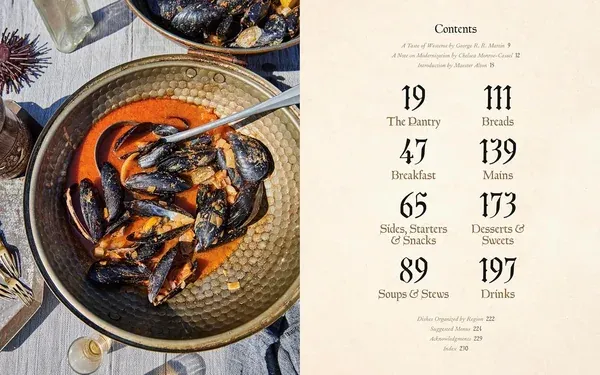
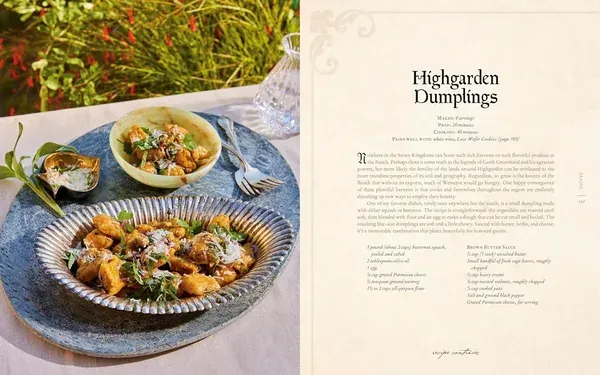
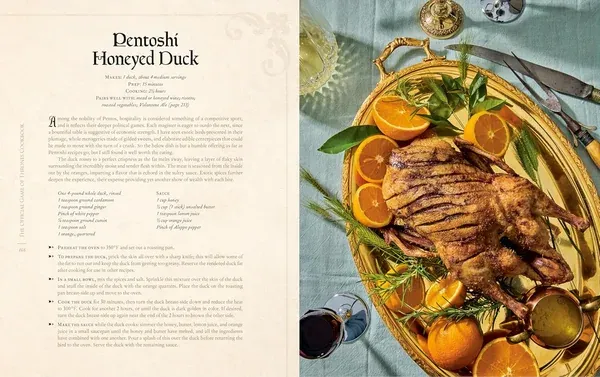
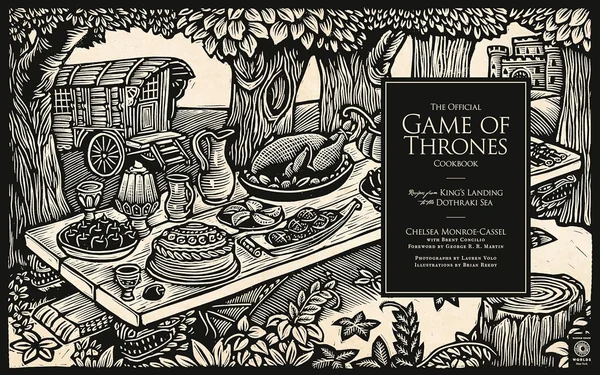
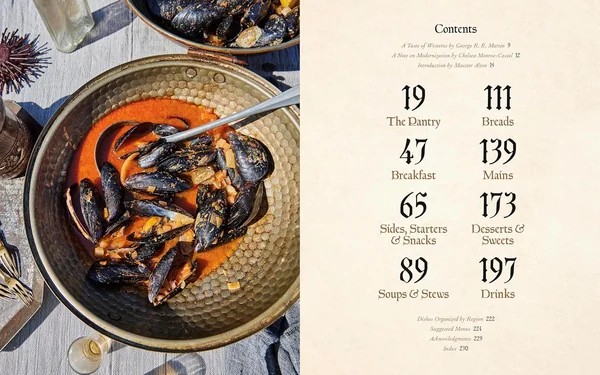
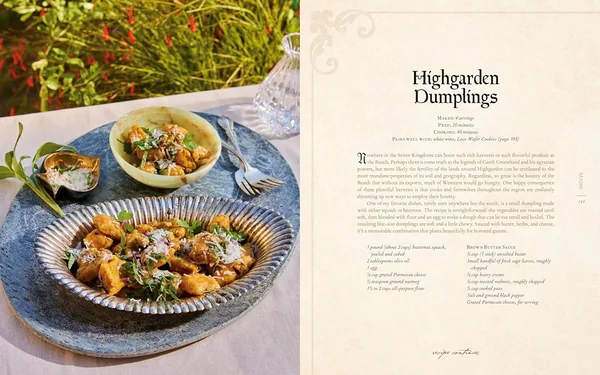
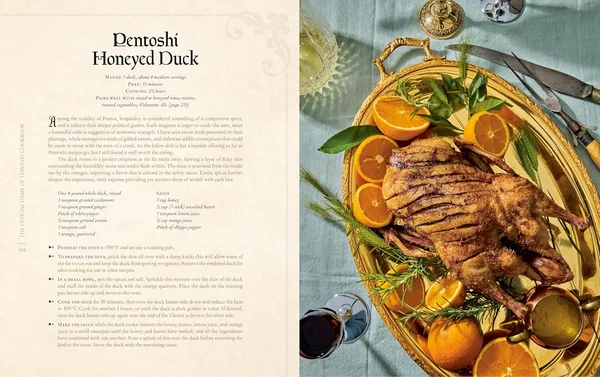
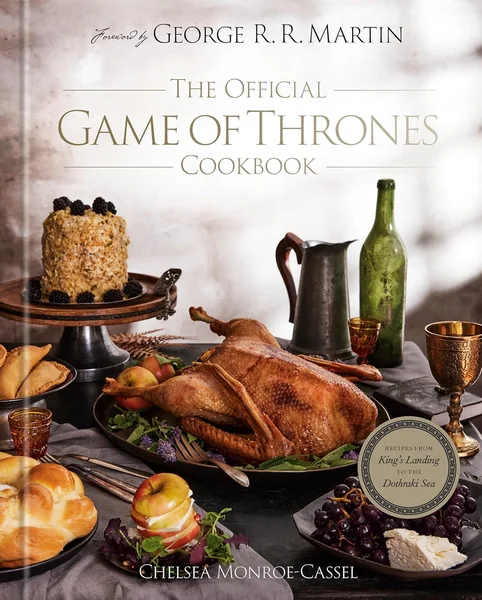
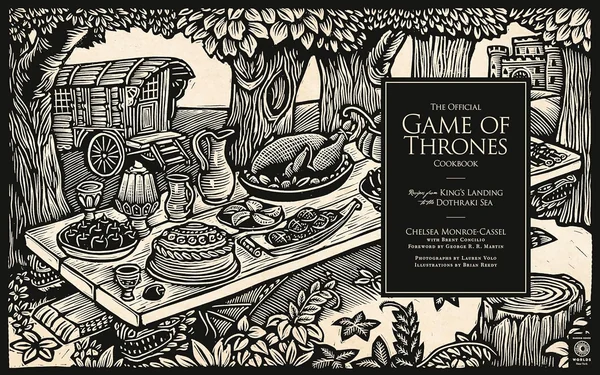
Chelsea Monroe-Cassel's The Official Game of Thrones Cookbook (Random House Worlds, May 2024) collects eighty recipes drawn from the world of George R. R. Martin's A Song of Ice and Fire, framed as the in-world manuscript of a Citadel maester and introduced by Martin himself — a satisfying convergence of worldbuilding and culinary craft for dedicated fans of the franchise.
 Tap to enlarge
LuvemBooks Verdict
Best for
Dedicated fans of A Song of Ice and Fire or Game of Thrones who want to cook their way through the fictional world's food culture, and collectors who value an officially sanctioned volume bearing George R. R. Martin's foreword and the Random House Worlds imprint.
Worth it if
You're a fan of A Song of Ice and Fire who wants both a genuinely immersive in-world experience — anchored by the maester's manuscript conceit — and a practical collection of eighty recipes spanning the full geography of Westeros and beyond.
Skip if
Readers unfamiliar with the novels or television series will find the geographical organisation and lore-heavy framing largely opaque, and fans who already own Monroe-Cassel's earlier A Feast of Ice and Fire should be aware that some thematic overlap is inevitable given both books draw from the same fictional universe.
What readers & critics say
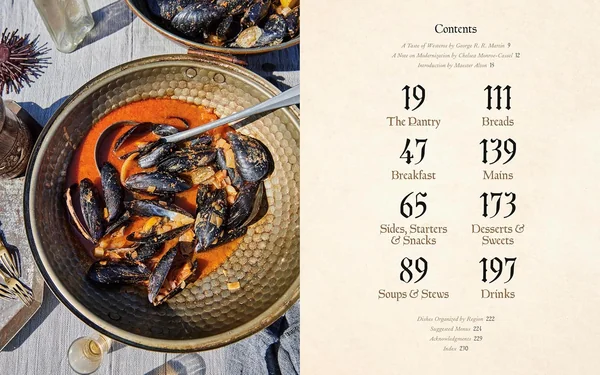
Westeros.org, in the only dedicated critical review retrieved, praised Monroe-Cassel's decision to frame the collection as the work of an in-world maester — drawing a favourable parallel to the narrative device used in The World of Ice and Fire — and noted the approach will resonate particularly with lore-conscious fans. Publisher and retailer descriptions retrieved from randomhousebooks.com and mcnallyrobinson.com highlight that the maester narrator's "charming and knowledgeable voice" evokes the world's distinct regions, histories, and stories across eight chapters covering every meal of the day.
Sources: Westeros.org, randomhousebooks.com, mcnallyrobinson.comPreview the book
Ask LuvemBooks
Was this helpful?
- Is it worth reading?
- For fans of A Song of Ice and Fire or Game of Thrones who have spent years imagining what those fictional feasts actually tasted like, LuvemBooks finds the cookbook a compelling acquisition — Monroe-Cassel's in-world framing delivers a depth of engagement that a straightforward recipe index would not. The Martin foreword, the Random House Worlds imprimatur, and Monroe-Cassel's established reputation via Inn at the Crossroads give the book credibility both as a practical cookbook and as a piece of franchise worldbuilding. Readers with no familiarity with the source material, or those who already own A Feast of Ice and Fire and expect entirely fresh territory, should temper expectations accordingly.
- Similar books
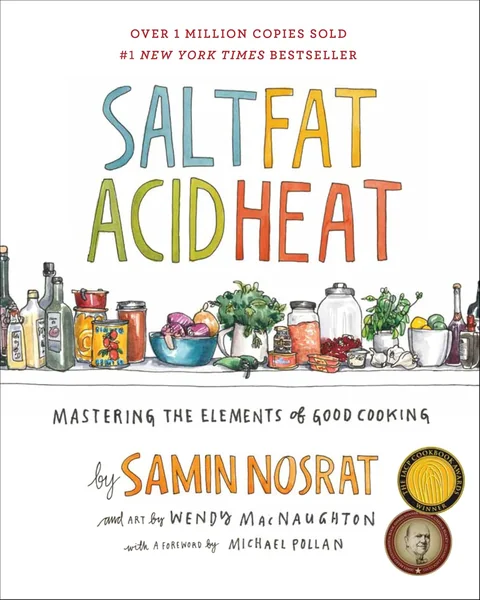
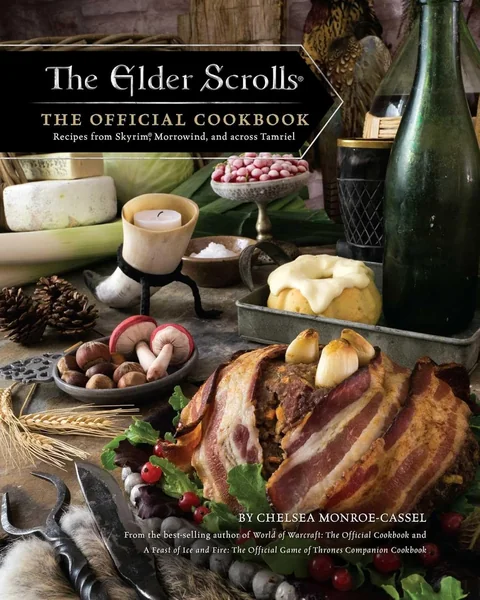
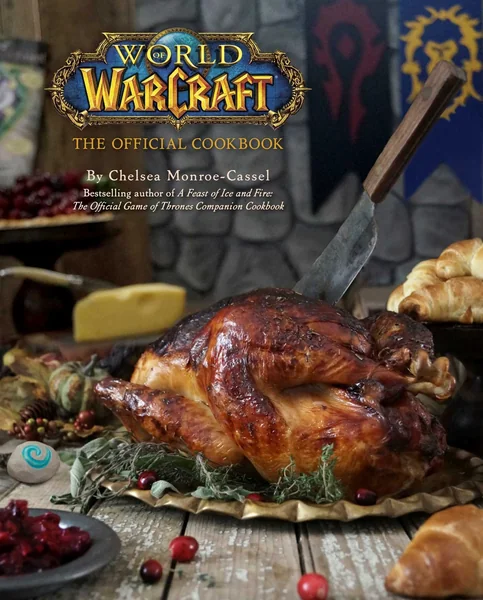
- Readers drawn to this cookbook have several strong companion options. Monroe-Cassel's own The Elder Scrolls: The Official Cookbook and World of Warcraft: The Official Cookbook apply the same fandom-cookbook formula to other beloved fantasy franchises, making them natural next reads for fans of her approach. Her earlier co-authored volume, A Feast of Ice and Fire: The Official Game of Thrones Companion Cookbook, is the direct predecessor in the same universe — essential context for understanding what's new here. For readers interested in fantasy-inspired cooking beyond major IP, The Unofficial Harry Potter Cookbook by Dinah Bucholz and The Wyvern's Treasury: A Fantasy Cookbook by Victoria Grace Elliott are notable titles in the same space. For readers who want to sharpen the real-world culinary skills that underpin any of these cookbooks, Salt, Fat, Acid, Heat: Mastering the Elements of Good Cooking by Samin Nosrat is a foundational companion.
- Who should read this?
- The cookbook is aimed squarely at fans of A Song of Ice and Fire and Game of Thrones who want to bring the world's food culture into their own kitchens — particularly those who have imagined what the feasts of King Robert I's court or the flavours of the Dothraki Sea might actually taste like. Collectors of official Game of Thrones merchandise who value the Martin foreword and the Random House Worlds imprimatur will also find it a satisfying acquisition. Readers with no familiarity with the source material, or those seeking a broadly accessible culinary survey of medieval cooking traditions without fictional scaffolding, are not the intended audience.
- About Chelsea Monroe-Cassel
- Chelsea Monroe-Cassel is an author specialising in fantasy and pop-culture cookbooks. She is the coauthor of A Feast of Ice and Fire: The Official Game of Thrones Companion Cookbook and the author of titles including World of Warcraft: The Official Cookbook, Hearthstone: Innkeeper's Tavern Cookbook, The Official Black Spire Outpost Cookbook, and The Star Trek Cookbook, among others.
- How does this compare to A Feast of Ice and Fire?
- Both books are drawn from the same fictional universe and share Monroe-Cassel as an author, but the 2024 Official Game of Thrones Cookbook is a new and expanded official collection — not a re-edition of A Feast of Ice and Fire. The 2024 volume carries George R. R. Martin's foreword and the Random House Worlds imprimatur, making it the most current official culinary companion to the franchise. Some thematic overlap is an inherent feature of both books covering the same culinary world, so readers who already own A Feast of Ice and Fire should weigh how much new territory matters to them.
- Where to start with Chelsea Monroe-Cassel?
- For Game of Thrones and A Song of Ice and Fire fans, the 2024 Official Game of Thrones Cookbook is the most current and comprehensive official entry point — though A Feast of Ice and Fire remains relevant as the earlier volume in the same universe. Fans of other fantasy franchises may prefer to start with World of Warcraft: The Official Cookbook or The Elder Scrolls: The Official Cookbook, both of which LuvemBooks has reviewed and which demonstrate her consistent fandom-cookbook approach across different source worlds.
Summarize this book
Follow up
Synthesized from verified book data & published reviews · How we review
Press Enter to ask. Answers come from our editorial Q&A — start typing to see related questions.
Age & Reading Level
Recommended age
Adult
Reading level
Adult
who it suits
Skip if you're unfamiliar with A Song of Ice and Fire or Game of Thrones and want a broadly accessible culinary or historical cookbook without fictional scaffolding.
Our Review
What the Book Is and What It Contains
Chelsea Monroe-Cassel's Credentials and Approach
The World-Building Frame as a Strength
Honest Limitations to Consider
Who This Book Is For
Sources & Further Reading
The key facts and claims in this review are grounded in the retrieved, verified sources listed below.
- Cited in this review
- 1
- 2
- 3
- Further reading
- 4
- 5
randomhousebooks.com
Books like The Official Game of Thrones Cookbook
Curated picks for readers who enjoyed The Official Game of Thrones Cookbook, with our reasoning for each match.
More by Chelsea Monroe-Cassel
If you liked The Official Game of Thrones Cookbook