7 min read
4.5
· 140 Amazon ratingsShare This Review
The Parrot Problem Solver by Barbara Heidenreich Review: A Focused Guide to Parrot Behavioral Issues
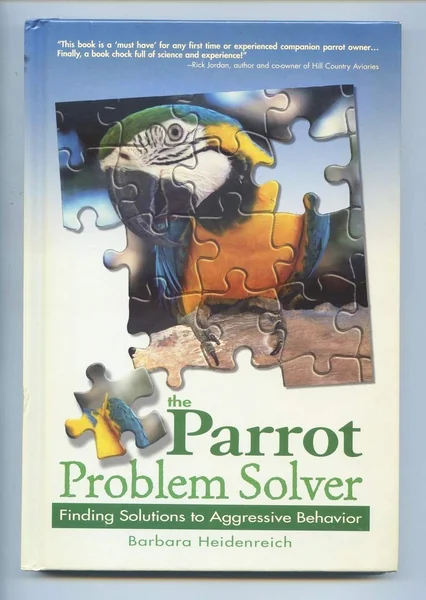
Barbara Heidenreich's The Parrot Problem Solver is a practical hardcover guide published by TFH Publications in 2005 that addresses the behavioral challenges facing pet parrot owners, with a particular emphasis on aggression, body language, and the science-backed case for positive reinforcement over negative reinforcement — written by a professional animal trainer with deep credentials in avian behavior.
LuvemBooks Verdict
Best for
Parrot owners already dealing with aggression, biting, or self-mutilation who want a science-grounded, credential-backed guide from a professional animal trainer rather than hobbyist advice.
Worth it if
Your parrot has developed specific behavioral problems — particularly aggression — and you want to understand the underlying behavioral science, not just a list of tips.
Skip if
You're looking for a comprehensive introduction to parrot ownership or species-specific husbandry, or you're already well-versed in contemporary force-free training literature and may find the 2005 framing familiar.
What readers & critics say
Reader responses compiled by Thriftbooks highlight the book as an "eye opener" that explains why positive reinforcement outperforms negative reinforcement without making owners feel like failures. Ebooks.com's publisher synopsis corroborates the book's own claim to be "one of the only books on the market to focus on aggression in pet parrots," underscoring its genuinely narrow niche.
Sources: Thriftbooks, Ebooks.comAsk LuvemBooks
Was this helpful?
- Is it worth reading?
- For parrot owners already dealing with aggression or other entrenched behavioral problems, The Parrot Problem Solver is a strong and unusually specific resource — one of the only books on the market dedicated to parrot aggression rather than general training. Heidenreich's professional standing, spanning zoological facilities and the presidency-elect of the International Association of Avian Trainers and Educators, lends the guidance real authority. The main caveat is its 2005 publication date: owners familiar with more recent force-free training literature may find some of the framing familiar or dated, even though the core behavioral principles remain sound.
- Who should read this?
- This book is squarely aimed at pet parrot owners who are already dealing with a specific behavioral problem — particularly aggression — rather than those seeking a general care guide or introductory overview of parrot ownership. It is well suited to owners who want to understand the reasoning behind behavioral techniques, not just follow a checklist, and who appreciate that the guidance comes from a professional trainer with a background in zoological settings. Those who have already encountered Heidenreich's broader training title Good Bird! will find The Parrot Problem Solver a natural deeper companion for tackling problem behaviors specifically.
- Similar books
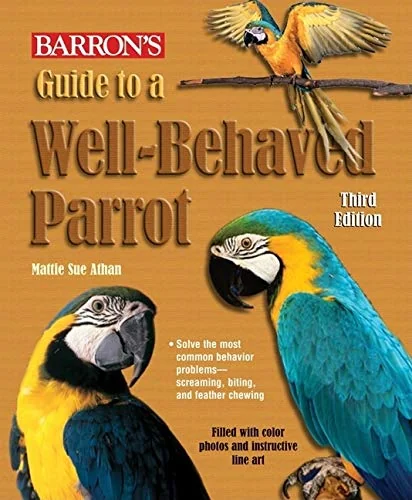
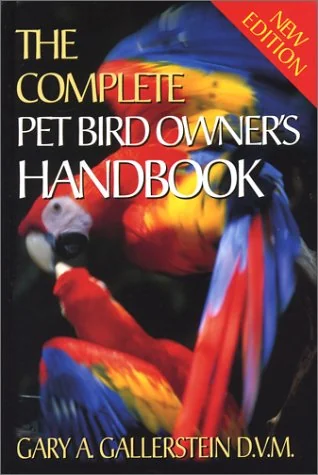
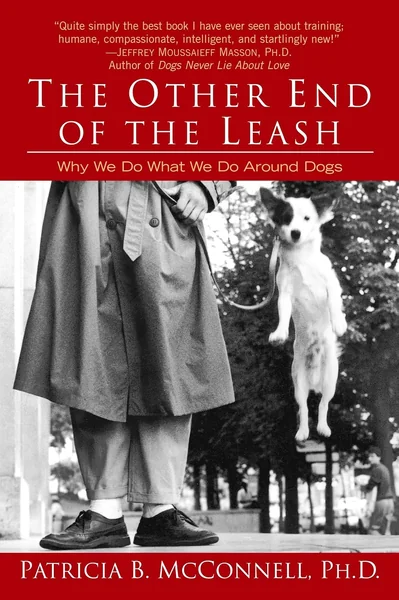
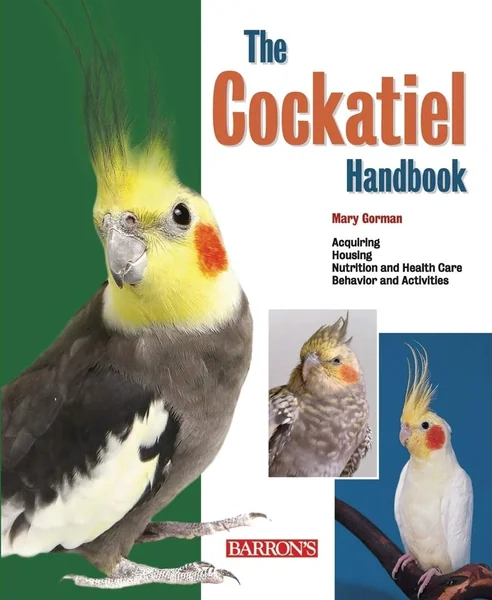
- Readers wanting a broader foundation in companion-parrot behavior alongside The Parrot Problem Solver might consider MattieSue Athan's Guide to a Well-Behaved Parrot, which approaches parrot training from a general behavioral perspective. For comprehensive species and husbandry coverage, Gary A. Gallerstein's The Complete Pet Bird Owner's Handbook serves as a thorough general reference. Owners of cockatiels specifically may find Mary Gorman's The Cockatiel Handbook a useful species-focused companion. For those drawn to Heidenreich's science-of-behavior framing, Patricia B. McConnell's The Other End of the Leash applies similar positive-reinforcement principles to dogs and offers valuable comparative context on the science of animal training.
- What does it say about positive reinforcement?
- Positive reinforcement is a central thread throughout The Parrot Problem Solver: Heidenreich makes an explicit, science-grounded case for it as the more effective tool for changing unwanted parrot behavior, specifically arguing against relying on negative reinforcement. Crucially, the book explains the behavioral reasoning behind this distinction rather than simply asserting it — giving owners a framework to understand why certain strategies fail, not just what to try instead. Reader responses compiled by Thriftbooks suggest many found this approach genuinely eye-opening, and appreciated that it did not frame struggling owners as failures.
- Does it address common parrot myths?
- Yes — sidebars throughout The Parrot Problem Solver explicitly tackle persistent myths and misconceptions about keeping parrots as pets, giving the book a dedicated myth-busting dimension alongside its prescriptive guidance. This makes it particularly useful for owners who have received contradictory or outdated advice, as it directly confronts the kinds of folk wisdom that can lead well-meaning owners astray. The combination of myth-busting sidebars and a science-backed behavioral framework is part of what distinguishes the book from more generalist companion-parrot titles.
- What qualifies Heidenreich to write this?
- Barbara Heidenreich is a professional animal trainer and founder of Animal Training and Consulting Services, an organization that delivers animal training workshops to zoos and other wildlife facilities. She has written and lectured extensively on parrot training and, at the time of publication, served as president-elect of the International Association of Avian Trainers and Educators (IAATE). That institutional depth — spanning zoological settings, companion-animal contexts, and professional advocacy — gives the book's prescriptions a grounding that distinguishes it from hobbyist advice.
Summarize this book
Follow up
Synthesized from verified book data & published reviews · How we review
Press Enter to ask. Answers come from our editorial Q&A — start typing to see related questions.
Age & Reading Level
Recommended age
Adult
Reading level
Adult
who it suits
Skip if you're looking for a comprehensive introduction to parrot ownership or species-specific husbandry guidance rather than targeted behavioral problem-solving.
Our Review
What the Book Actually Is and Covers
Heidenreich's Credentials and Their Weight
The Core Argument: Positive Over Negative Reinforcement
Significance Within the Genre
Genuine Limitations and Who It May Frustrate
Sources & Further Reading
The key facts and claims in this review are grounded in the retrieved, verified sources listed below.
- Cited in this review
- 1
- Further reading
- 2
thriftbooks.com
- 3
- 4
- 5
grueldner.firebaseapp.com
- 6
busybeaks.com
Books like The Parrot Problem Solver
Curated picks for readers who enjoyed The Parrot Problem Solver, with our reasoning for each match.
If you liked The Parrot Problem Solver