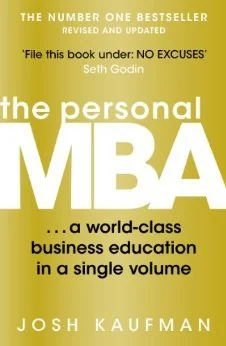
Core Business Concepts Made Accessible
Kaufman structures his approach around what he calls the "mental models" of business - fundamental concepts that successful entrepreneurs and executives use daily. The book covers five key areas: value creation, marketing, sales, value delivery, and finance. Rather than drowning readers in case studies from decades past, Kaufman focuses on timeless principles that apply across industries.
The strength of this framework lies in its practicality. Each concept connects to real business challenges, from understanding customer psychology to optimizing operational efficiency. Kaufman avoids academic jargon, making complex topics like systems thinking and decision-making frameworks accessible to readers without formal business training.
What sets this apart from traditional business education is the emphasis on interconnected thinking. Rather than treating marketing, finance, and operations as separate disciplines, Kaufman shows how these areas influence each other in successful businesses.
Learning Through Real-World Application
The book's methodology centers on active learning rather than passive consumption. Kaufman encourages readers to test concepts immediately in their own business contexts, whether that's a startup, side project, or corporate role. This hands-on approach makes the material more memorable than typical business school coursework.
Each section includes exercises designed to help readers apply new concepts to their specific situations. The book works best for those who can practice these ideas in real business scenarios, making it particularly valuable for entrepreneurs and small business owners.
However, the practical focus comes with limitations. Readers seeking deep expertise in specialized areas like corporate finance or advanced marketing analytics won't find the depth they need here. The book serves as an excellent foundation but requires supplementation for advanced applications.
Alternative to Traditional Business Education
Kaufman makes a compelling case against the traditional MBA path, particularly for entrepreneurs. He argues that most business school curricula focus too heavily on large corporation management while neglecting the scrappy, resource-constrained reality most business owners face.
The book includes a recommended reading list of 99 business books, positioning itself as a curriculum guide rather than a comprehensive resource. This approach acknowledges that business education should be ongoing rather than confined to a two-year program.
For self-motivated learners, this framework provides clear direction for continued education. The reading list spans classic texts like Peter Drucker's work alongside contemporary insights from behavioral economics and psychology.
Practical Value and Limitations
The Personal MBA excels at providing mental frameworks for business thinking. Readers gain tools for analyzing problems, making decisions, and understanding market dynamics. The book's value lies not in providing specific answers but in teaching readers how to ask better questions about their businesses.
The financial argument is compelling - even at today's book prices, self-directed learning costs a fraction of MBA tuition. For entrepreneurs bootstrapping their ventures, this cost difference matters significantly.
Where the book falls short is in networking and credentialing. Traditional MBA programs provide access to alumni networks and signal educational achievement to potential employers or investors. Kaufman acknowledges this limitation but argues that practical skills matter more than credentials in entrepreneurial contexts.
The book also assumes readers have the discipline for self-directed learning. Without the structure and accountability of formal education, some readers may struggle to maintain momentum through challenging concepts.
Who Benefits Most From This Approach
This book works best for practical learners who prefer action over theory. Entrepreneurs launching businesses, small business owners seeking to understand their operations better, and professionals transitioning into business roles will find immediate value in Kaufman's framework.
The approach particularly suits those who learn by doing rather than through lecture-based instruction. Readers who can immediately test concepts in real business situations will gain more from the material than those in purely academic settings.
However, aspiring corporate executives or those pursuing careers in large organizations may find traditional MBA education more valuable for networking and advancement opportunities.