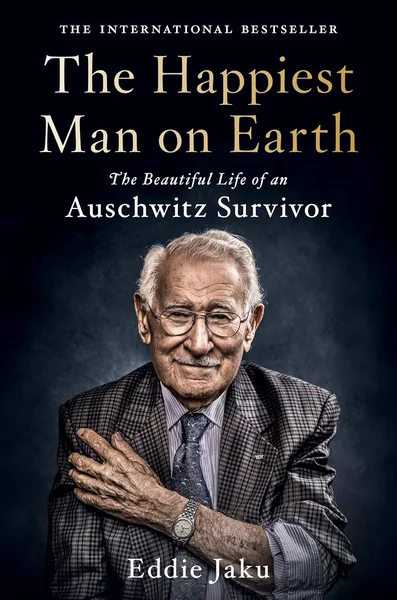
Eddie Jaku's journey from a German-Jewish teenager to Auschwitz survivor to Australia's beloved "happiest man" forms the backbone of this compelling memoir. The narrative structure moves chronologically through his early life in Leipzig, the escalating persecution, his time in Buchenwald and Auschwitz concentration camps, liberation, and eventual immigration to Australia.
What distinguishes this memoir from other Holocaust accounts is Jaku's unwavering focus on lessons learned rather than trauma endured. He doesn't shy away from describing the brutality—the starvation, beatings, and systematic dehumanization—but frames each horror as a backdrop for human resilience and the power of hope.
The book's title isn't hyperbolic. At 100 years old when this was published, Eddie genuinely considered himself the happiest man on Earth, a transformation that took decades of conscious effort and philosophical evolution.
Writing That Bridges Generations
Jaku's prose style reflects his background as a public speaker and educator rather than a professional writer. The language is direct, conversational, and occasionally repetitive—qualities that make complex emotional terrain accessible to younger readers. The writing feels authentic rather than polished, preserving Eddie's distinctive voice and perspective.
The memoir avoids the literary flourishes common in published Holocaust literature. Instead, it reads like transcribed oral history, complete with the gentle repetition and emphasis patterns of an elderly storyteller. This approach makes heavy subject matter more digestible while maintaining emotional impact.
Chapters are relatively short, allowing readers to process difficult content in manageable portions. The pacing moves steadily forward without dwelling excessively on any single traumatic event.
The People Who Shaped a Life
Central to Eddie's story are the individuals who demonstrated humanity during inhumane circumstances. His parents, who made impossible choices to protect their son, represent the profound love that sustained him through his darkest moments. Fellow prisoners who shared meager rations or offered words of encouragement show how small acts of kindness became lifelines.
The book particularly emphasizes nameless heroes—the German soldier who warned Eddie's family of impending danger, camp prisoners who risked their lives to help others, and post-war individuals who helped survivors rebuild. These figures illustrate Jaku's central thesis that goodness exists even in the worst circumstances.
Eddie himself emerges as a complex figure who transformed from a frightened teenager into a man determined to choose happiness. His evolution isn't presented as inevitable or easy—it required decades of conscious effort and philosophical work.
Choosing Joy as Revolutionary Act
The memoir's central theme revolves around the radical notion that happiness can be a conscious choice, even after experiencing profound trauma. This isn't toxic positivity or denial—Jaku acknowledges his struggles with nightmares, depression, and survivor's guilt. Instead, he argues that dwelling on hatred ultimately harms the survivor more than their oppressors.
His philosophy of gratitude emerges naturally from his experiences. After surviving on starvation rations, every meal becomes a blessing. After witnessing systematic cruelty, every act of kindness carries profound meaning. The book presents these insights without preaching, allowing readers to draw their own conclusions.
The memoir also explores themes of forgiveness—not as absolution for perpetrators, but as liberation for survivors. Eddie's decision to forgive doesn't minimize the crimes committed against him; it represents his refusal to let hatred consume his remaining years.
Not Without Its Limitations
While Eddie's message of resilience resonates powerfully, the memoir occasionally oversimplifies complex psychological and historical realities. The book's emphasis on choosing happiness, while inspiring, may not reflect the experiences of all trauma survivors. Some readers might find the consistent optimism difficult to reconcile with the horrific events described.
The writing's conversational style, while accessible, sometimes lacks the depth found in more literary Holocaust memoirs. Readers seeking detailed historical analysis or complex narrative techniques might find the approach too straightforward.
Additionally, the book's focus on Eddie's post-war success story—building a business, raising a family, becoming a respected community member—might inadvertently suggest that "successful" recovery from trauma follows a particular path.
A Message That Transcends Its Historical Context
The Happiest Man on Earth succeeds brilliantly as both historical testimony and philosophical guide. Eddie Jaku's story offers profound insights about human resilience, the power of choice, and the importance of community support. His message that happiness requires active cultivation rather than passive waiting provides valuable wisdom for readers facing their own challenges.
This memoir works particularly well for mature teenagers and young adults who can appreciate its historical significance while relating to its universal themes about overcoming adversity. The conversational writing style makes heavy subject matter accessible without trivializing the Holocaust's significance.
For educators and parents considering this book for younger readers, the content requires thoughtful preparation and discussion. While not graphic in its descriptions of violence, the book deals with mature themes of systematic persecution, loss, and trauma recovery that benefit from contextual support.