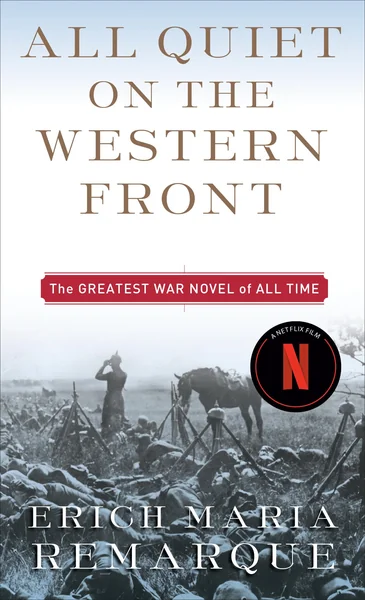
All Quiet on the Western Front by Erich Maria Remarque - Review
Our Rating
4.5
A masterful anti-war novel that unflinchingly examines WWI's psychological toll on young soldiers, essential reading despite its disturbing content.
In This Review
Paul Bäumer's Descent into Hell
Remarque's Spare and Devastating Prose
Paul, Kat, and the Brotherhood of Suffering
The Machinery of Dehumanization
Where Idealism Goes to Die
A Classic That Demands Careful Consideration
Paul Bäumer's Descent into Hell
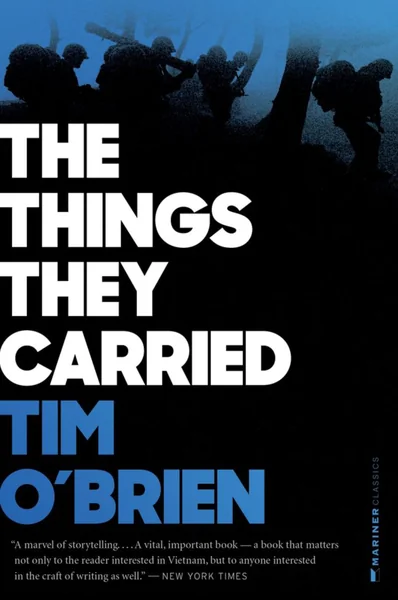
One of the few war novels that fully earns its reputation — not through status, but through the specific, accumulated weight of Paul Bäumer's disillusionment. Remarque's masterpiece strips away every romantic notion about warfare, following young Paul Bäumer from eager recruit to disillusioned veteran. When considering whether All Quiet on the Western Front is appropriate for high school students, the answer depends heavily on maturity level and educational context. This isn't simply a war story—it's a psychological dissection of how conflict destroys the human spirit. Fans of The Things They Carried will recognize the unflinching honesty, though Remarque's approach feels even more devastating in its simplicity.
The novel opens with Paul and his classmates swept up in patriotic fervor, encouraged by their teacher Kantorek to enlist. What follows chronicles their brutal education in the realities of trench warfare, where survival depends more on luck than heroism. Remarque's genius lies in showing this transformation without melodrama—the horror emerges through accumulated detail rather than sensational scenes.
Remarque's Spare and Devastating Prose
The author's writing style reflects his own experience as a WWI veteran, creating prose that feels both literary and authentic. Remarque avoids flowery language or philosophical pontificating, instead letting events speak for themselves. His sentences carry the weight of exhaustion—short bursts of action punctuated by longer passages of reflection that mirror the rhythm of trench warfare itself.
The first-person narration puts readers directly into Paul's deteriorating mindset. As the war progresses, Paul's observations become increasingly detached, almost clinical. This narrative distance serves as both a survival mechanism for the character and a powerful literary technique that prevents the novel from becoming exploitative or gratuitously violent.
Paul, Kat, and the Brotherhood of Suffering
Paul Bäumer emerges as one of literature's most compelling protagonists—not because he's heroic, but because he's heartbreakingly ordinary. His relationships with fellow soldiers, particularly the older Katczinsky, provide the novel's emotional core. Kat serves as both mentor and father figure, teaching Paul practical survival skills while representing a connection to pre-war humanity.
The dynamic between Paul and his schoolmates—Kropp, Müller, and others—shows how shared trauma creates bonds deeper than friendship. These aren't romanticized war buddies sharing jokes in foxholes. They're young men watching each other die while slowly losing pieces of themselves. Müller's obsession with a dead comrade's boots becomes a symbol of how war reduces human relationships to basic survival needs.
The Machinery of Dehumanization
Remarque explores how modern warfare transforms soldiers into cogs in a death machine. The novel's themes center on the loss of innocence and the impossibility of returning to civilian life. Paul's leave home makes this concrete — he can't speak to his father about the front, can't read the books he once loved, and sits in his childhood bedroom feeling like a ghost haunting his own past.
Remarque doesn't blame individual cruelty but examines how institutions strip away humanity. Drill instructor Himmelstoss represents this perfectly — a petty tyrant who bullies recruits not from sadism but from his own powerlessness within the military hierarchy. Even he becomes pathetic rather than truly evil when faced with actual combat.
Where Idealism Goes to Die
The novel's critique of nationalism and propaganda remains remarkably relevant. Paul's generation was sold a lie about glory and honor, discovering instead that war serves political ends while destroying those who fight it. Remarque presents this realization without preaching, allowing the contrast between expectation and reality to speak for itself.
However, the book's relentless bleakness occasionally becomes overwhelming. While this serves Remarque's anti-war purpose, some readers may find the unremitting despair emotionally exhausting. The novel offers little hope or redemption, which is both its greatest strength and potential weakness depending on reader expectations.
A Classic That Demands Careful Consideration
All Quiet on the Western Front stands among the finest anti-war literature ever written, comparable to works like Slaughterhouse-Five and Johnny Got His Gun. Its graphic violence, psychological trauma, and sustained despair make it best suited to older or advanced readers — not because those elements are gratuitous, but because they require the context and discussion that younger readers may not yet have.
The educational value is undeniable for advanced students studying WWI, literature, or the human cost of conflict. Teachers should prepare students for the novel's intensity while emphasizing its historical importance and literary craftsmanship. This isn't entertainment — it's a necessary confrontation with war's reality. Readers ready for that confrontation will find it worth every page; the Amazon link in the sidebar has the current price.
Reader Comments
11
Comments Closed
W
WarHistoryBuff
Mar 5
Remarque's unflinching portrayal of trench warfare remains unparalleled in its psychological authenticity. The way he deconstructs the heroic narrative through Paul's eyes creates a profoundly anti-war statement without resorting to didactic moralizing. This belongs alongside Graves' Goodbye to All That and Owen's poetry as essential WWI literature.
T
TeacherMom85
Mar 5
Perfect timing for this review! I'm considering this for my AP Literature class but worried about the content. Any thoughts on age appropriateness for 16-17 year olds?
H
HistoryStudent22
Mar 5
@TeacherMom85 We read this junior year and it was incredible! Yes there's violence and some heavy themes but nothing gratuitous. Really opened my eyes to what war actually does to people.
B
BookClubBeth
Mar 5
@TeacherMom85 @HistoryStudent22 I'd say definitely appropriate for that age. The psychological impact is more challenging than graphic content. Great discussion starter about war, friendship, and lost innocence.
R
ReadingAddict47
Mar 5
Just finished this last night and I'm emotionally wrecked!! The ending destroyed me but in the most beautiful way. Remarque's writing is so simple yet devastating - how does he do that??
V
vintage_books_lover
Mar 5
@ReadingAddict47 Right?? That deceptive simplicity is what makes it so powerful. Every sentence carries weight without feeling overwrought.
L
LuvemBooks
Reviewer
Mar 5
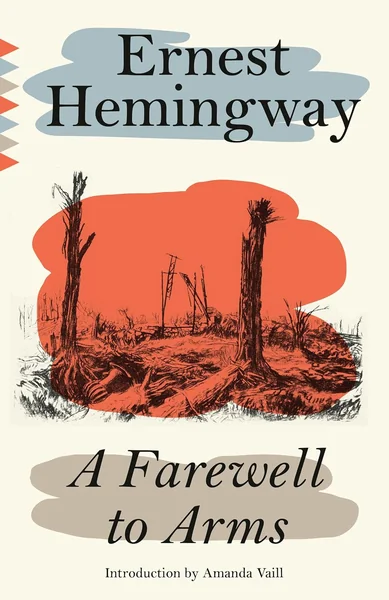
@vintage_books_lover Exactly! You've hit on what makes Remarque such a master - that deceptive simplicity is incredibly difficult to achieve. Every word feels carefully chosen yet effortless. It reminds me of Hemingway's iceberg theory, where so much meaning exists beneath the surface. The way Remarque can convey the horror of war through Paul's almost matter-of-fact observations is just brilliant. It's that restraint that makes the emotional moments hit so much harder. Have you read any of his other works? Im Westen nichts Neues really showcases his ability to find the universal in the specific.
M
mike_reads
Mar 5
been meaning to read this forever... is it really as depressing as everyone says? need something good but not soul-crushing atm lol
L
LuvemBooks
Reviewer
Mar 5
@mike_reads I totally get the hesitation! Yes, it's emotionally heavy - war novels inevitably are - but here's the thing: Remarque writes with such profound humanity that it's more cathartic than soul-crushing. The depression comes from the reality he portrays, but there's something deeply meaningful about experiencing it through his masterful prose. That said, if you're in a fragile headspace right now, maybe save it for when you're ready for something weighty. For a great but lighter classic, try The Count of Monte Cristo - epic storytelling without the emotional weight. All Quiet will be worth the wait when you're ready for it!
C
coffee_and_pages
Mar 5
@mike_reads It's heavy but not gratuitously so. The sadness comes from the humanity, not cheap emotional manipulation. Worth reading for the historical perspective alone.
C
CriticalReader99
Mar 5
While undeniably a classic, I found Remarque's approach somewhat dated compared to more recent war literature. Pat Barker's Regeneration trilogy offers a more nuanced psychological exploration of WWI trauma, and Kevin Powers' The Yellow Birds provides a contemporary perspective that feels more immediate.
B
budget_reader
Mar 5
$6.98 is a steal for this classic! Found my copy at a used bookstore for $3 but this price is still great. Anyone know if there's a good audiobook version?
L
LuvemBooks
Reviewer
Mar 5
@budget_reader Great find at $3! For audiobooks, I'd highly recommend the version narrated by Frank Muller - he brings such gravitas to Paul's voice without overdramatizing. There's also a more recent version by Richard Thomas that's quite good. Both really capture the contemplative, haunting quality of Remarque's prose. At $6.98, you're getting incredible value for what's honestly one of the most important novels of the 20th century. The audiobook format actually works beautifully with this one since it feels like Paul is telling his story directly to you.
Frequently Asked Questions
Is All Quiet on the Western Front: A Novel by Erich Maria Remarque worth reading in 2026?
Based on my 4.5/5 rating, this WWI masterpiece remains profoundly relevant as it strips away romantic notions about warfare that still persist today. Remarque's unflinching portrayal of Paul Bäumer's transformation from eager recruit to disillusioned veteran offers timeless insights into the psychological costs of war that resonate with contemporary global conflicts.
Who should read All Quiet on the Western Front: A Novel?
This book is perfect for mature readers interested in war literature, history enthusiasts, and anyone seeking to understand the human cost of conflict beyond political narratives. High school students and adults will find it particularly valuable for its honest examination of how war destroys innocence and humanity.
How does All Quiet on the Western Front compare to other World War I novels?
Unlike many war novels that focus on heroism or strategy, Remarque's work stands apart for its brutal honesty about the psychological devastation of combat. It's considered one of the definitive WWI novels alongside works like Testament of Youth, but offers a uniquely German soldier's perspective that humanizes the enemy.
What is the main takeaway from All Quiet on the Western Front: A Novel?
The central message is that war destroys the humanity of everyone it touches, regardless of nationality or cause. Remarque demonstrates how young men are transformed from hopeful individuals into broken survivors, making a powerful anti-war statement that transcends its WWI setting.
Is All Quiet on the Western Front appropriate for high school students?
The appropriateness depends on the student's maturity level, as the book contains graphic descriptions of violence, death, and psychological trauma. However, its educational value about the realities of war and its literary significance make it a worthwhile read for mature high school students with proper context and discussion.
At $6.98, is All Quiet on the Western Front: A Novel worth buying?
Absolutely - at under $7, this is exceptional value for a literary classic that has influenced generations of readers and writers. The book's enduring relevance and powerful emotional impact make it a worthwhile addition to any library, offering insights you'll return to long after reading.
What makes All Quiet on the Western Front different from typical war stories?
Rather than glorifying battle or focusing on military strategy, this novel exposes the senseless brutality and dehumanizing effects of trench warfare on ordinary soldiers. Remarque's focus on Paul Bäumer's internal journey from innocence to devastation creates an intimate, psychological portrait that strips away all romantic notions of warfare.

Reader Comments
WarHistoryBuff
Mar 5TeacherMom85
Mar 5HistoryStudent22
Mar 5BookClubBeth
Mar 5ReadingAddict47
Mar 5vintage_books_lover
Mar 5LuvemBooks
mike_reads
Mar 5LuvemBooks
coffee_and_pages
Mar 5CriticalReader99
Mar 5budget_reader
Mar 5LuvemBooks