BOOKS
Published

Read Time

3 min read

Reader rating

4.4

· 46,606 Amazon ratings
reader ratings, not a LuvemBooks score
Curated & edited by

LuvemBooks Editorial

How we create our reviews →
Share This Review

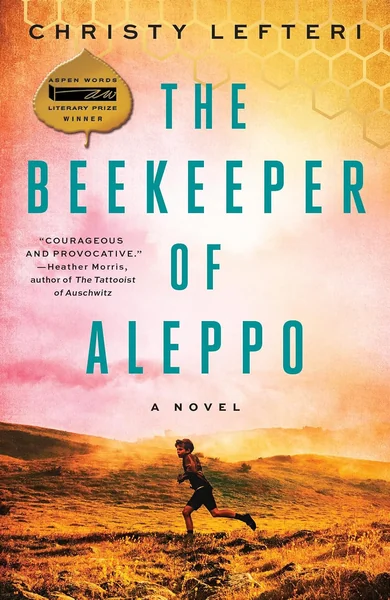
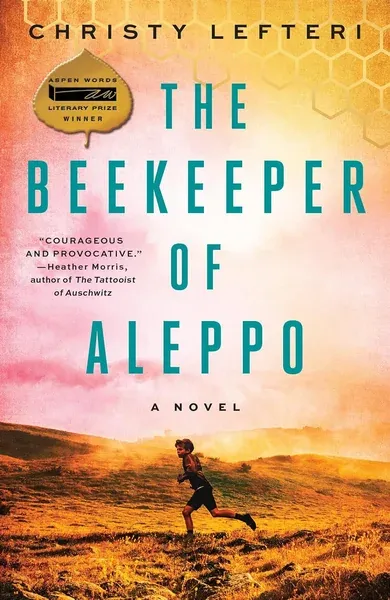
The Beekeeper of Aleppo by Christy Lefteri Review: A Harrowing, Humanizing Refugee Novel

Christy Lefteri's second novel, The Beekeeper of Aleppo, follows Syrian couple Nuri and Afra Ibrahim across a shattered Europe in 2015, anchoring one of the defining humanitarian crises of the decade in an intimate, three-timeline narrative. Winner of the 2020 Aspen Words Literary Prize and a Sunday Times bestselling paperback, it has sold over a million copies internationally — numbers that reflect both its critical standing and the breadth of its readership.

LuvemBooks Verdict

Best for

Readers of character-driven literary fiction who want the Syrian refugee crisis rendered through intimate human experience — grief, survival, and quiet tenderness — rather than political analysis.

Worth it if

The emotional architecture of a three-timeline structure — prewar warmth, harrowing journey, and English asylum-seeking present — held together by an unreliable, slowly-revealed narrator sounds like exactly what you're looking for in serious literary fiction about displacement.

Skip if

You prefer historical fiction that engages directly with geopolitical context, or you're sensitive to relentless accumulated grief — Kirkus warns the experience is "both touching and terrifying" with losses that do not let up.

Kirkus Reviews gave the novel a starred review, praising "a well-crafted structure and a troubled but engaging narrator" and noting that Lefteri subtly reveals the depth of Nuri's wounds beneath his capable exterior. BookBrowse describes it as "an exceptionally well-written novel, if heartbreaking," and a strong choice for book groups exploring the worldwide refugee crisis.

A well-crafted structure and a troubled but engaging narrator power this moving story of Syrian refugees.

Kirkus Reviews

The human stories behind news images of Syrian war refugees emerge in a novel both touching and terrifying.

Kirkus Reviews
Sources: Kirkus Reviews, BookBrowse
4.4from 46,606 Amazon ratings— reader ratings, not a LuvemBooks score

Look inside the book

Preview the actual pages, via Google Books
In This Review
  • What Works & What Doesn't
  • What the Novel Is — and What Drives It

  • The Author's Grounding in Real Experience
  • Structural Craft and Narrative Voice
  • Reception and Cultural Reach
  • Who the Novel Rewards — and Where It Asks the Most

What Works & What Doesn't

What Works
  • Three-timeline structure — moving between prewar Aleppo, the refugee journey, and the English present — sustains emotional depth and avoids flattening loss into a single register
  • Nuri's narration is grounded in Lefteri's two summers of direct volunteer experience at a refugee center in Athens, lending the story documented authenticity
  • Kirkus Reviews praised both the novel's structural craft and its narrator as 'troubled but engaging,' with Lefteri's gradual revelation of Nuri's hidden wounds creating sustained dramatic tension
  • Awarded the 2020 Aspen Words Literary Prize and a runner-up for the Dayton Literary Peace Prize; the audiobook was shortlisted for a British Book Award — an unusually broad sweep of recognition
  • With over a million copies sold internationally as of 2023, the novel has reached readers well beyond literary circles, reflecting its accessibility alongside its seriousness
What Doesn't
  • The deliberate sidelining of political context is a firm artistic choice; readers who want historical fiction to engage directly with the geopolitics of the Syrian conflict will find that dimension absent by design
  • Kirkus characterized the experience as 'both touching and terrifying' — the emotional weight is unrelenting, and readers sensitive to accumulated grief and loss should approach with that expectation clearly in mind
Christy Lefteri's second novel commands a wide and devoted readership for good reason: it transforms a crisis too often rendered in statistics into two unmistakable human faces.

What the Novel Is — and What Drives It

Back cover with review quote and decorative bracket design praising the novel's humanitarian perspective.
The Beekeeper of Aleppo centers on Nuri Ibrahim, a Syrian beekeeper from Aleppo who narrates the novel in the first person. Before the civil war, Nuri ran his beekeeping enterprise alongside his cousin and closest friend, Mustafa — a character based on Ryad Alsous, an academic formerly of Damascus University. When violence forces Nuri and his wife Afra to flee, Mustafa has already reached England; Nuri and Afra are trying to follow. Afra, once a painter, has been left blind by the trauma of war, and the couple carries the devastating loss of their young son, Sami. The chapters move fluidly across three time frames: the warmth of prewar Aleppo, the grinding present of seeking asylum status in England, and the harrowing journey between — overcrowded camps, treacherous sea crossings, and smugglers who exploit the desperate. Along the route, Nuri becomes the informal guardian of Mohammed, a lost boy roughly Sami's age, a detail that quietly amplifies the novel's grief and its capacity for unexpected tenderness.
Nuri's story rings with authenticity, from the vast, impersonal cruelties of war to the tiny kindnesses that help people survive it

The Author's Grounding in Real Experience

Lefteri is herself the daughter of Cypriot refugees who settled in London, and she spent two summers volunteering at a refugee center in Athens run by the NGO Faros. That direct engagement is the engine beneath the book's emotional credibility. Kirkus Reviews noted that "Nuri's story rings with authenticity, from the vast, impersonal cruelties of war to the tiny kindnesses that help people survive it" — a verdict rooted in the recognizable texture of the novel's detail. The character of Mustafa, drawn directly from a real person, extends that commitment: this is fiction built on witnessed and lived reality rather than imagined distance. The author's note, which Lefteri includes explicitly, makes that grounding transparent to readers.

Structural Craft and Narrative Voice

Kirkus Reviews described the book as possessing "a well-crafted structure and a troubled but engaging narrator," and the structural design is central to its impact. The three-timeline architecture — past, present, and journey — allows Lefteri to hold prewar Aleppo and its aftermath in simultaneous view, so that loss is not merely reported but felt against the specific warmth of what preceded it. Nuri is a narrator who presents himself as the capable one, the caretaker; Kirkus observed that Lefteri "subtly, slowly shows the reader how deep his wounds are as well," creating a sustained dramatic tension between what Nuri projects and what the novel reveals. Politics, notably, are kept at the margins: the novel's concern is not with the mechanics of the Syrian conflict but with what is left when a war strips everything else away.

Reception and Cultural Reach

The novel's footprint is substantial and well-documented. It won the 2020 Aspen Words Literary Prize and was runner-up for the Dayton Literary Peace Prize in the fiction category. The audiobook, narrated by Art Malik, was shortlisted for a British Book Award in 2020. Wikipedia's reception record notes that it became The Sunday Times' third bestselling fiction paperback of 2020 and was selected for the Richard & Judy Book Club. By 2023, international sales had passed one million copies. In 2023, Nesrin Alrefaai and Matthew Spangler adapted the story for the stage; UK Productions mounted the production at venues including Nottingham Playhouse, with The Guardian's reviewer finding the source material powerful even as the staging drew some criticism for stiffness.

Who the Novel Rewards — and Where It Asks the Most

Readers drawn to character-driven literary fiction about displacement, survival, and grief — works in which political events are filtered entirely through personal cost — will find this novel among the more searching examples of the form. The deliberate absence of political framing is a conscious artistic choice, but readers who prefer their historical fiction to engage more directly with geopolitical context may find the narrow focus limiting. The novel's emotional weight is also unrelenting: Nuri and Afra's losses accumulate without reprieve, and Kirkus characterized the reading experience as "both touching and terrifying." That intensity is inseparable from what the book achieves, but it is worth naming plainly for readers who approach the subject from a distance. Originally published in the UK by Zaffre (a Bonnier Books imprint) in May 2019, the novel was subsequently published in the United States by Ballantine Books, with a reprint edition issued in June 2020.

Sources & Further Reading

The key facts and claims in this review are grounded in the retrieved, verified sources listed below.

  1. Cited in this review
  2. 1
  3. 2
  4. 3
  5. Further reading
  6. 4

    Christy Lefteri, Wikipedia

  7. 5
  8. 6
  9. 7
  10. 8
  11. 9
  12. 10