
6 min read
4.5
A masterclass in investigative journalism that remains essential reading for understanding how democratic accountability actually works, despite some period-specific limitations.
LuvemBooks
Our Rating
4.5
A masterclass in investigative journalism that remains essential reading for understanding how democratic accountability actually works, despite some period-specific limitations.
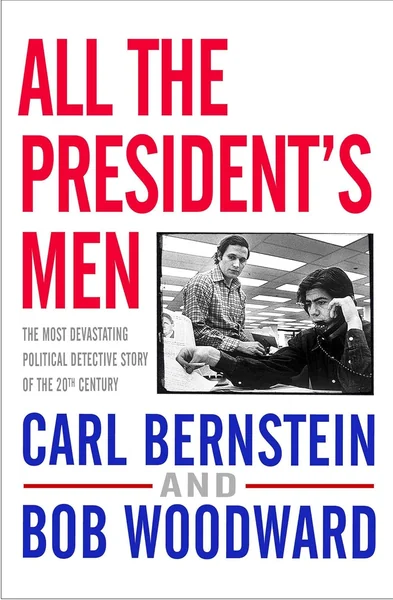
Is All the President's Men worth reading in 2026? Absolutely. This foundational work of investigative journalism remains startlingly relevant as democracy faces new challenges and information warfare intensifies. Woodward and Bernstein's meticulous documentation of their Watergate investigation offers both a masterclass in reporting and a sobering reminder of institutional fragility.
Published in 1974, this account chronicles the painstaking detective work that ultimately brought down a presidency. The book follows the two Washington Post reporters from their initial coverage of what seemed like a routine break-in through the cascade of revelations that exposed corruption at the highest levels of government. Unlike typical political exposés that rely on hindsight analysis, this narrative unfolds with the uncertainty and false starts that marked the real investigation.
Fans of Fear: Trump in the White House or The Power Broker will appreciate how Woodward and Bernstein blend rigorous fact-gathering with compelling storytelling. Where those later works benefit from historical perspective, All the President's Men captures the fog of real-time investigation.
The book's greatest strength lies in its detailed portrayal of how journalism actually works. Woodward and Bernstein don't just present their findings—they show the grinding process of verification, the dead ends, the breakthrough moments when sources finally talk. The authors meticulously document their methodology, from cultivating sources to cross-referencing documents to following money trails.
This transparency serves multiple purposes. It demonstrates the rigor required for consequential journalism, countering modern accusations of "fake news" with concrete evidence of professional standards. The book also reveals the collaborative nature of investigative work, showing how editors, librarians, and researchers contributed to the final story.
The writing itself strikes an effective balance between accessibility and precision. The authors avoid both sensationalism and dry recitation, letting the facts build dramatic tension naturally. Their prose remains crisp and clear even when navigating complex financial arrangements and bureaucratic relationships.
Beyond Woodward and Bernstein themselves, the book introduces readers to a cast of sources, officials, and obstacles that shaped the investigation. Deep Throat emerges as perhaps the most intriguing figure—the anonymous source whose careful guidance helped the reporters navigate Washington's labyrinthine power structures. The authors' handling of this relationship demonstrates both the necessity and ethical complexity of confidential sources in accountability journalism.
H. R. Haldeman and John Ehrlichman appear as formidable gatekeepers protecting the Nixon administration's inner circle. The book effectively portrays how their stonewalling tactics both hindered and inadvertently advanced the investigation. Alexander Butterfield's revelation of the White House taping system represents one of those pivotal moments where the story's trajectory shifts decisively.
Hugh Sloan and other mid-level figures illustrate the human cost of institutional corruption. These individuals, caught between loyalty and conscience, provide some of the book's most compelling psychological portraits. Their struggles highlight how widespread corruption creates moral dilemmas for ordinary people within the system.
The book's enduring relevance stems from its insights into how democratic institutions respond to internal threats. The investigation succeeded not through any single revelation but through sustained pressure from multiple directions—journalism, congressional oversight, and ultimately the justice system. This distributed accountability offers both hope and warning for contemporary readers.
Woodward and Bernstein's work also demonstrates the importance of institutional support for investigative journalism. The Washington Post's backing—financial, legal, and editorial—proved essential when powerful figures attempted to discredit or silence the investigation. This context feels particularly significant as local newsrooms face budget cuts and consolidation.
The methodical approach chronicled here contrasts sharply with today's rapid news cycles and social media speculation. The authors spent months verifying information that might now be tweeted as rumors within hours. Their patience and precision offer valuable lessons for both journalists and news consumers navigating our current information environment.
Despite its enduring insights, the book reflects the limitations of its era. The investigation operated within a media landscape dominated by a few major newspapers and television networks. Sources couldn't leak documents instantly or coordinate resistance through encrypted messaging. This more controlled information environment both helped and hindered the reporters' work in ways that feel increasingly foreign.
The writing occasionally suffers from period-specific assumptions about reader knowledge. References to political figures and institutional procedures that were familiar in 1974 sometimes require additional context for contemporary readers. The authors also focus heavily on the mechanics of their investigation while providing less analysis of broader political and social implications.
Some sections drag as the authors document every phone call and document review. While this thoroughness serves their credibility, it can test modern readers' patience. The book works better as a reference text than as a page-turner, though the inherent drama of the subject matter maintains engagement throughout most chapters.
All the President's Men stands as essential reading for anyone interested in journalism, politics, or democratic accountability. The book's detailed methodology makes it valuable for aspiring reporters, while its broader themes resonate with citizens concerned about institutional integrity. The 50-year perspective only amplifies its relevance as similar battles over truth and power play out in new contexts.
Perfect for readers who want to understand how consequential journalism actually works, this book delivers both practical insights and historical perspective. It's particularly valuable for those seeking to distinguish between speculation and verified reporting in today's noisy media landscape.
The book's greatest achievement may be demonstrating that democracy's survival depends not on perfect institutions but on individuals willing to do difficult, unglamorous work when those institutions face internal threats. That lesson feels more urgent now than when Woodward and Bernstein first documented it.