
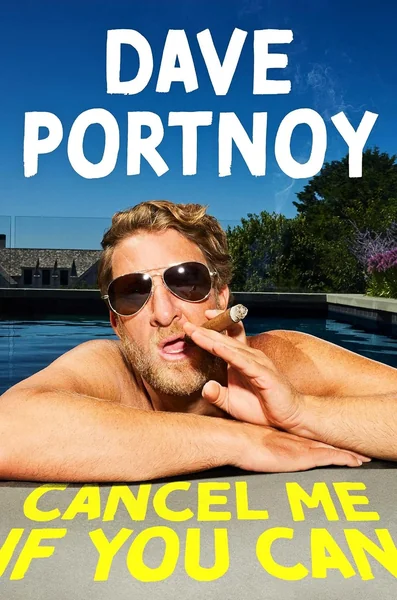
Dave Portnoy has achieved something his critics likely did not want him to have: a chart-topping memoir. Cancel Me If You Can debuted at #1 on the New York Times bestseller list and #1 on the Publishers Weekly list following its release, according to reporting from Yahoo/Parade. The book's commercial triumph has arrived alongside a notably divided critical reception — a dynamic that, for a figure who has built his brand on confrontation with mainstream media, may be precisely the point.
As NPR's Book of the Day feature noted in a July 21 interview, Portnoy — the polarizing social media personality and founder of Barstool Sports — uses the memoir to address not just his business origins but his role as a political lightning rod, touching on subjects including antisemitism and cancel culture. The NPR conversation represents an unusual platform for a figure who has often positioned legacy media as an adversary, and the interview's very existence signals how thoroughly Portnoy has forced his way into mainstream cultural conversation.
What Cancel Me If You Can Is — and What It's Really Arguing
Cancel Me If You Can is Portnoy's account of building Barstool Sports from a four-page Boston broadsheet into a multi-million-dollar media empire, published by Simon & Schuster at 320 pages. According to Simon & Schuster's own description, the book covers the hard work, luck, toxic relationships, and political firestorms behind his rise — written in what the publisher calls his "unfiltered style." The title itself functions as a thesis statement: Portnoy is framing his story as one of survival against cancellation attempts, positioning the memoir as both personal history and cultural argument.
Slate's review cut directly against that framing. Critic Scaachi Koul, whose piece was noted across multiple outlets including AOL/HuffPost coverage, opened by describing Portnoy as someone people learn about "against your will" before delivering a pointed critique of the memoir's self-justifying structure. A summary of her take, widely circulated, characterized the book as essentially "300 pages of I'm not owned" — a line that has itself become part of the book's ongoing press cycle, arguably boosting awareness even as it dismisses the work. The Express also reported on the critical divide, noting that at least one major outlet's reception was "anything but kind."
Why This Memoir Lands Differently in the Current Publishing Climate
Portnoy's #1 debut despite critical hostility is worth examining as a publishing phenomenon in its own right. Memoir has long been a genre where platform precedes prose — figures with devoted audiences routinely outperform critically celebrated debuts by unknown writers. What makes Cancel Me If You Can a notable case study is the degree to which the controversy itself functions as marketing. Fox News covered his launch event at New York's 92NY; PBS News ran a podcast on Portnoy and cancel culture; NPR gave him a Book of the Day slot. Whether antagonistic or sympathetic, the breadth of media engagement across ideologically distinct outlets has kept the book in constant circulation for weeks.
This places Portnoy in an unusual lineage for memoir readers to consider. Adversarial self-narratives — accounts where the author positions themselves as a survivor of institutional or social pressure — have a long shelf life in American publishing, from political figures to athletes to culture warriors. Readers interested in how defiance gets packaged as autobiography might find comparative value in classics of the form: Malcolm X and Alex Haley's The Autobiography of Malcolm X remains the genre's gold standard for self-construction under hostile scrutiny, while Nelson Mandela's Long Walk to Freedom demonstrates what genuine political persecution looks like rendered in memoir form. The distance between those books and Portnoy's will tell readers something about where Cancel Me If You Can actually sits. For readers coming from sports media, Michael McAvennie's Austin 3:16 offers an interesting parallel: a combative, anti-establishment media personality rendered in book form for a devoted fan base.
The active news cycle — spanning NPR, Slate, Fox News, PBS, and the bestseller charts within a matter of weeks — suggests Cancel Me If You Can has landed as a genuine cultural flashpoint rather than a vanity project. Whether the book itself justifies that attention is a separate question. Want the full verdict? Read our review of Cancel Me If You Can for a close look at what the memoir delivers between the headlines.
Frequently Asked Questions
Is Cancel Me If You Can by Dave Portnoy worth buying in 2026?
Cancel Me If You Can debuted at #1 on both the New York Times and Publishers Weekly bestseller lists, indicating strong commercial demand. Whether it's worth your time depends on your interest in Portnoy's Barstool Sports story and his arguments about cancel culture — critical reception has been sharply divided, with some reviewers dismissing it and others engaging seriously with his platform claims. Our full review breaks down what the book delivers for different types of readers.
What is the main message of Cancel Me If You Can?
According to the publisher and multiple press accounts, Cancel Me If You Can argues that Portnoy built a media empire despite repeated attempts to sideline him — framing his career as a case study in surviving cancellation. The book covers his journey from founding Barstool Sports as a small Boston broadsheet to running a multi-million-dollar media brand, touching on antisemitism, political controversy, and what he describes as toxic relationships along the way.
Who should read Cancel Me If You Can by Dave Portnoy?
The book is aimed primarily at Portnoy's existing Barstool Sports audience and readers interested in entrepreneurial memoir with a combative, unfiltered voice. It will also appeal to readers following debates around cancel culture and media power. Those looking for a traditional business biography or literary memoir may find the format and tone a poor fit, based on critical commentary from outlets including Slate.
Why is Dave Portnoy's Cancel Me If You Can so controversial?
Portnoy is a polarizing figure whose Barstool Sports brand has attracted both devoted fans and sustained criticism over years of controversy. The memoir's framing — positioning him as a target of unfair cancellation — has drawn sharp pushback from critics who argue it glosses over legitimate complaints, while supporters see it as a direct challenge to media orthodoxy. NPR, Slate, Fox News, and PBS have all covered the book, reflecting how broadly the debate has spread.
Did Cancel Me If You Can reach #1 on the New York Times bestseller list?
Yes. Cancel Me If You Can debuted at #1 on the New York Times bestseller list and simultaneously reached #1 on the Publishers Weekly bestseller list following its release in mid-2026, according to reports from Yahoo/Parade and the publisher Simon & Schuster.
Where can I find a review of Cancel Me If You Can?
LuvemBooks has a full critical review of Cancel Me If You Can available on the site. For a range of perspectives, Slate's Scaachi Koul published a notable critical take widely covered in the press, and NPR featured Portnoy in a Book of the Day interview in July 2026 that offers insight into his own framing of the memoir.
Reader Discussion
No comments yet
Be the first to share your thoughts!