
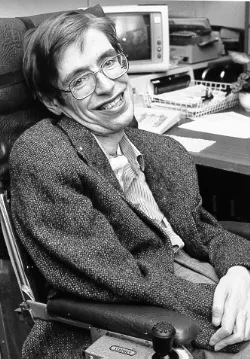
A new biography of Stephen Hawking has drawn significant attention from the scientific community, with Nature publishing a review describing it as "an elegant account of the physicist's unusual life story" that highlights the relationships that shaped one of the twentieth century's most consequential scientific minds.
The book, Graham Farmelo's Hawking: His Life and Work, was published by John Murray in 2026 and arrives as an authorized biography — meaning Farmelo had access that most observers of Hawking's life and work have never enjoyed.
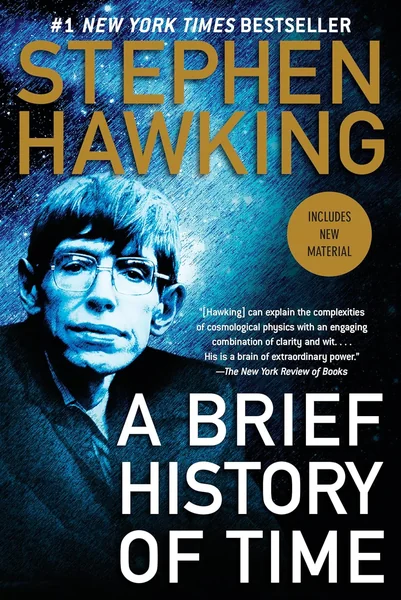
What A Brief History of Time Built — and What the Biography Examines
A Brief History of Time has sold more than 25 million copies in 40 languages since its 1988 publication, a figure that places it among the most widely read works of popular science in history.
The Telegraph notes that the book also broke a record by appearing on the Sunday Times bestseller charts for 264 weeks — a sustained commercial dominance that no subsequent work of popular physics has come close to matching.
As archive.is records from the Nature review, Hawking possessed "an exceptionally clear, uncluttered mind" — and it was that quality, combined with an outsized public profile, that allowed A Brief History of Time to spark broad public interest in cosmology far beyond the academy.
Farmelo's biography, according to Nature, documents Hawking's deep commitment to students and colleagues and the sociable character and sense of humor that were central to his scientific success.
A Complicated Legacy — and an Authorized Account That Doesn't Shy Away
One of the biography's more striking revelations concerns the 2014 film about Hawking's life. According to Nature's review, Hawking told Farmelo directly that the film was "pure fiction" when asked about its accuracy.
The biography does not offer an entirely uncritical portrait. New Scientist reports that Farmelo highlights instances during the 1970s when Hawking published papers without crediting researchers who, under standard scientific norms, should have been named as co-authors — though the biography stops short of fully examining that pattern.
World Nature News notes that the book explores Hawking's decades living with motor neurone disease, his foundational work in general relativity and quantum mechanics, and the cultural footprint he built across a career that ran from Cambridge lecture halls to global celebrity.
The biography arrives at a moment when Hawking's scientific ideas remain influential but empirically unverified. As Nature observes, "the questions he asked and the methods he used still set the agenda in physics" — which gives Farmelo's account a relevance that extends well beyond biography into the current state of theoretical physics.
That tension — between towering public reputation and questions still unresolved in the laboratory — is precisely what makes a thorough authorized biography both timely and necessary for readers trying to understand what Hawking's work actually means for science.
A Brief History of Time remains the landmark text through which most readers first encounter Hawking's ideas about black holes, the origins of the universe, and the search for a unified theory — a book whose astonishing reach is itself part of what makes Farmelo's examination of the man behind it so worth reading.
Want the full verdict? Read our review of A Brief History of Time for a complete assessment of the book's enduring scientific and cultural significance.
Hopeful
Leisurely
Ambition
Faith & meaning
Frequently Asked Questions
Is A Brief History of Time worth reading in 2026?
A Brief History of Time remains one of the most widely read works of popular science ever published, having sold more than 25 million copies in 40 languages. Its core questions about black holes, the universe's origins, and unified theory are still actively debated in physics, making it as relevant as ever for curious readers.
What is the main message of A Brief History of Time?
The book presents Hawking's accessible exploration of cosmology — including the structure, origin, and eventual fate of the universe — written for a general audience without technical equations, aiming to bring the biggest questions in physics to everyday readers.
Who should read A Brief History of Time?
The book is written for general readers with no scientific background, making it ideal for anyone curious about black holes, the Big Bang, and the nature of time. It is also essential reading for those following the new Farmelo biography, as context for Hawking's scientific legacy.
What does the new Graham Farmelo biography reveal about Stephen Hawking?
According to Nature's review, the authorized biography highlights Hawking's warm relationships with students and colleagues, his sharp sense of humor, and a previously reported claim that the 2014 film about his life was 'pure fiction.' New Scientist notes it also raises questions about his attribution practices in the 1970s.
How accurate is the 2014 film about Stephen Hawking?
According to Graham Farmelo's biography, as cited in Nature's review, Hawking himself told the biographer the film was 'pure fiction' when asked how accurate it was.
How many copies has A Brief History of Time sold?
A Brief History of Time has sold more than 25 million copies in 40 languages since its 1988 publication, according to Wikipedia's entry on the book. It also appeared on the Sunday Times bestseller charts for a record 264 weeks, per [the Telegraph](https://www.telegraph.co.uk/books/non-fiction/hawking-life-and-work-graham-farmelo-review/).


No Discussion Yet
Be the first to share your thoughts on this news article.