
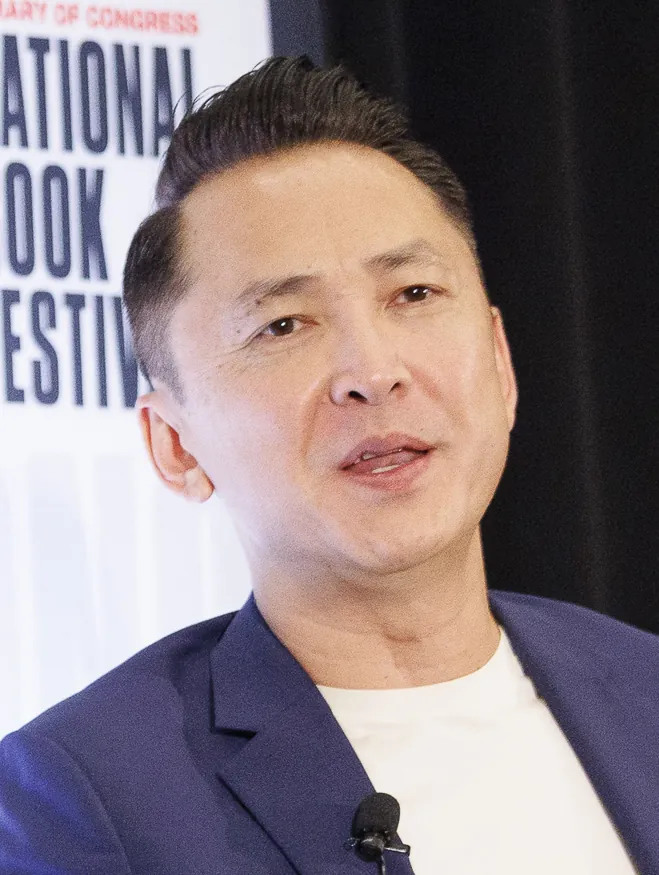
Viet Thanh Nguyen continues to command the literary landscape on multiple fronts. Duke University has named him the APSI Distinguished Keynote speaker for November 12, 2026 — a platform that arrives as Nguyen actively promotes his latest nonfiction work and keeps his broader body of writing, including the award-nominated Nothing Ever Dies: Vietnam and the Memory of War, firmly in the public eye.
The Duke appearance is a significant institutional recognition for a writer who already holds a remarkable string of honors: Nguyen's debut novel The Sympathizer won the 2016 Pulitzer Prize for Fiction, and he was awarded both a MacArthur Foundation Fellowship and a Guggenheim Fellowship in 2017, according to his Wikipedia biography.
Nothing Ever Dies: Vietnam and the Memory of War and the Accolades That Followed
Nothing Ever Dies: Vietnam and the Memory of War earned Nguyen a place among the most serious voices in American nonfiction. As Duke's event listing notes, the book was a finalist for both the National Book Award in nonfiction and the National Book Critics Circle Award in General Nonfiction — a double shortlisting that underscored the work's weight in the field of war memory and postcolonial studies.
The book enters conversations about how nations — and individuals — remember, suppress, and narrativize conflict. That thematic territory remains deeply resonant in an era of ongoing debates over historical memory and whose stories get told, giving the work a durability well beyond its publication year.
To Save and to Destroy Extends a Prolific Run
Nguyen's most recent book, To Save and to Destroy: Writing as an Other, was published by Harvard University Press in 2025, as confirmed by Duke's event page. The work grew directly from his Norton Lectures at Harvard University — itself a landmark distinction, as Nguyen became the first Asian American to headline that prestigious series, per his Wikipedia entry.
According to vietnguyen.info, the new book turns its attention toward the humanities themselves — literature, art, education, and culture as forces capable of both liberation and destruction. It is a characteristically ambitious pivot from a writer who has never confined himself to a single genre or mode.
Nguyen recently spoke about his full body of work, including Nothing Ever Dies, in an interview with the Institute of American Indian Arts Chapter House Journal. That conversation spans the intellectual arc connecting his fiction and nonfiction — a throughline centered on memory, otherness, and the politics of representation.
Few writers move across those registers with equal credibility.
For readers coming to his work through To Save and to Destroy, the Duke keynote offers a natural moment to revisit the nonfiction that preceded it. Nothing Ever Dies remains one of the most sustained engagements with war, memory, and moral reckoning in contemporary American letters — and the renewed institutional attention Nguyen is receiving makes this an ideal time to encounter it.
Nothing Ever Dies: Vietnam and the Memory of War is a work of cultural criticism examining how the Vietnam War has been remembered — and forgotten — across nations and generations. The book is available now in print and digital editions.
Frequently Asked Questions
Is Nothing Ever Dies: Vietnam and the Memory of War worth reading in 2026?
The book was a finalist for both the National Book Award and the National Book Critics Circle Award in nonfiction, and its themes of war memory and historical reckoning remain highly relevant. Readers interested in postcolonial studies, Vietnam War history, or cultural criticism will find it substantive and rewarding.
What is Nothing Ever Dies: Vietnam and the Memory of War about?
It is a work of cultural criticism exploring how the Vietnam War has been remembered — and selectively forgotten — across different nations and communities. Nguyen examines memory as a moral and political act, asking whose stories are preserved and whose are erased.
Who should read Nothing Ever Dies: Vietnam and the Memory of War?
It is best suited for readers with an interest in war history, postcolonial theory, Asian American studies, or the politics of collective memory. It is a rigorous academic work that also speaks to general readers drawn to questions of justice and historical narrative.
What is Viet Thanh Nguyen's new book in 2025?
His most recent book is To Save and to Destroy: Writing as an Other, published by Harvard University Press in 2025. It developed from his Norton Lectures at Harvard and examines literature, art, and education as forces of both liberation and destruction.
What awards did Nothing Ever Dies: Vietnam and the Memory of War win?
The book was a finalist for the National Book Award in nonfiction and the National Book Critics Circle Award in General Nonfiction, though it did not win either prize. Those nominations confirmed its standing as one of the more significant works of nonfiction in recent American literary history.
Where is Viet Thanh Nguyen speaking in 2026?
He is the APSI Distinguished Keynote speaker at Duke University on November 12, 2026. The appearance coincides with his promotion of To Save and to Destroy and continued recognition of his broader body of work.

No Discussion Yet
Be the first to share your thoughts on this news article.