
In This Article
- What the Commentary Involves
- Who and What Is Involved
- Context and Significance
- What to Watch
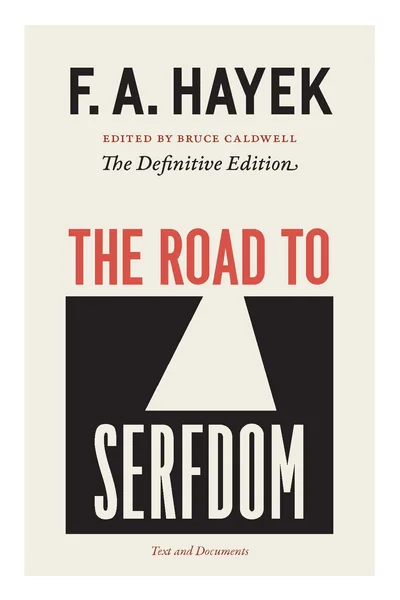
Multiple political commentators have turned to F.A. Hayek's The Road to Serfdom in early 2026, citing the 1944 work as a framework for analysing contemporary policy. A March 2026 column at Townhall explicitly invoked Hayek's argument that gradual state control expansion poses a danger analogous to the conditions he described more than eighty years ago, placing the book at the centre of live debates about the role of government in economic life.
What the Commentary Involves
The Townhall piece is part of a broader pattern in which writers across outlets from conservative commentary sites to policy research organisations are referencing Hayek's core thesis — that government control of economic decision-making leads, step by step, toward the erosion of individual freedom. The commentary draws on arguments Hayek originally directed at both fascism and socialism, contending that the two shared a common root in central planning rather than representing opposite poles, according to Wikipedia's entry on the book.
A peer-reviewed reading published in the Journal of Political Economy found that a combined analysis of The Road to Serfdom alongside Hayek's later The Constitution of Liberty produces a more coherent argument that applies to today's shifting political and economic landscape and is relevant to contemporary debates about the role of the state and the prospects of liberal democracy, lending academic weight to the renewed interest among public commentators.
Who and What Is Involved
Friedrich Hayek was an Austrian-British economist and philosopher who wrote The Road to Serfdom while a professor at the London School of Economics. The book was initially conceived as a response to a report by William Beveridge, the Liberal politician and LSE dean, according to Wikipedia.
Hayek later received the Nobel Prize in Economics.
The book was first published in Britain by Routledge in March 1944 and subsequently in the United States by the University of Chicago Press in September of that year. Its popular reach was extended significantly when editor Max Eastman arranged for Reader's Digest to publish an abridged version in April 1945, bringing Hayek's arguments to a non-academic readership.
The University of Chicago Press continues to publish the book as part of its collected works of Hayek series, which also includes titles such as The Fatal Conceit and The Pure Theory of Capital, per the press's catalogue.
Context and Significance
The Road to Serfdom has exerted lasting influence on classical liberal and conservative political thought since its publication, according to Wikipedia. The title itself was drawn from the writings of 19th-century French thinker Alexis de Tocqueville, who wrote of a "road to servitude," situating Hayek's argument within a longer intellectual tradition of liberal warnings against state overreach.
Hayek's central contention — that collectivist empowerment of government would lead not to a utopia but to outcomes comparable to those seen in Nazi Germany and Fascist Italy — was considered extreme by some when first published, as the University of Chicago Press notes. Over subsequent decades, however, it became a foundational text in American conservative and libertarian economic debate, a significance that Britannica's profile of Hayek, updated in June 2026, situates within his broader intellectual contributions including trade cycle theory and his critique of socialism.
What to Watch
The current wave of commentary marks a moment when an 80-year-old text is being tested against present-day policy questions rather than historical ones. For readers wanting to assess the book's arguments directly, LuvemBooks' full review of The Road to Serfdom is available separately.
Whether the volume of citation in 2026 commentary translates into measurable shifts in policy discourse remains a question the sources have not yet answered.
Frequently Asked Questions
Is The Road to Serfdom worth buying in 2026?
Yes, especially given its renewed relevance in current political debates. The book provides essential context for understanding contemporary discussions about government power and economic freedom, though some arguments need updating for modern mixed economies.
What is the main message of The Road to Serfdom?
Hayek argues that economic planning by government inevitably leads to political tyranny. He contends that well-intentioned government intervention creates a slippery slope toward authoritarianism, using examples from Nazi Germany and the Soviet Union to support his thesis.
Who should read The Road to Serfdom?
Anyone interested in economics, political theory, or current policy debates will benefit from Hayek's insights. It's particularly valuable for readers who want to understand libertarian economic thinking and the historical arguments against central planning.
Should I read The Road to Serfdom or watch a documentary about it?
Read the book—Hayek deliberately wrote for ordinary citizens using accessible prose rather than academic jargon. The definitive edition includes valuable supplementary documents that provide additional context you won't find in documentaries.
How does The Road to Serfdom relate to current politics?
Political commentators increasingly reference Hayek's warnings about gradual government expansion when discussing contemporary policies. His framework helps explain why certain regulations trigger concerns about authoritarianism across the political spectrum.
Is The Road to Serfdom difficult to understand?
No—Hayek intentionally avoided complex mathematical formulas and wrote in clear, persuasive prose for general readers. While the economic concepts are sophisticated, the presentation is accessible to anyone interested in political and economic ideas.


No Discussion Yet
Be the first to share your thoughts on this news article.