
Robert Greene’s forthcoming work The Law of the Sublime is scheduled for publication on 10 November 2026, with the author currently navigating a promotional podcast circuit. ListenNotes highlights his recent appearances as he discusses the project's core themes with listeners.
Behind the promotion and publication
During a recent visit to Lewis Howes' programme, Greene promoted the new title for the sixth time, reflecting on his journey eight years after a severe stroke nearly claimed his life. Lifehacks WhatFinger notes how this personal resilience now informs his public engagements.
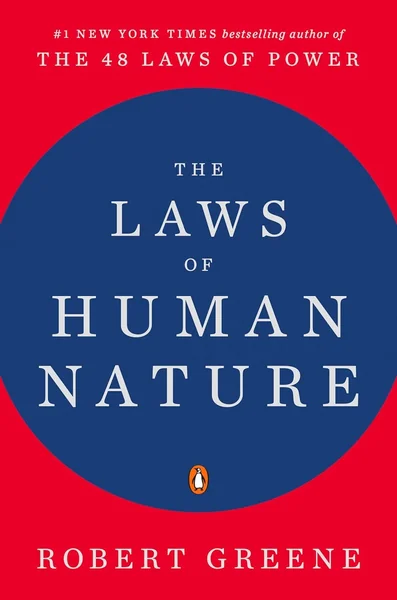
That physical challenge occurred just weeks before his previous major release, The Laws of Human Nature, arrived in 2018. Lisanne Swart's author profile confirms the timeline, underscoring the continuity between his health struggles and his enduring focus on human resilience.
Context for Greene's evolving philosophy
The upcoming title explores how readers can overcome personal boundaries by reconnecting with profound experiences in a virtual-dominated landscape. WhimsyRead outlines the November 10 publication window and the book's central inquiry into transcending personal limitations.
Greene has previously built a reputation for distilling historical strategy and psychological insight into accessible frameworks for decoding human behaviour. His earlier work The Laws of Human Nature offered readers tools for navigating complex social dynamics by examining historical figures and evolutionary psychology.
The project arrives as digital immersion continues to reshape public attention spans and emotional range. Greene's latest work attempts to map a philosophical route out of that modern digital landscape, offering readers a structured alternative to algorithmic engagement.
Greene also recently sat down with Chris Williamson on Modern Wisdom to discuss how contemporary filters flatten lived experience. The Curious Mind reports that the conversation examined how a toddler's brain processes unfiltered reality compared to adult digital consumption.
The publisher Viking will handle the UK and international distribution alongside Penguin Random House. Shakespeare and Company confirms that stock is being prepared for the November 10 release date, with pre-order incentives running until publication.
The text draws upon science, mythology, and history to illustrate how individuals can bypass contemporary constraints. Greene's methodology continues to prioritise actionable wisdom over abstract theory, maintaining his established editorial voice.
Readers seeking practical exercises alongside Greene's historical analysis should note that the text includes guided meditations for deeper reflection. Want the full verdict?
Discussion
Reader comments
Frequently Asked Questions
Is The Law of the Sublime worth buying in 2026?
The title arrives on 10 November 2026 and offers practical meditations alongside historical analysis for readers seeking to navigate modern digital constraints.
What is the main message of The Law of the Sublime?
Greene argues that reconnecting with profound, unfiltered experiences allows individuals to transcend personal limitations and resist the flattening effect of virtual environments.
Who should read The Law of the Sublime?
The book suits readers interested in psychology, historical strategy, and philosophical frameworks for understanding human behaviour and building emotional resilience.
Should I read The Law of the Sublime or watch the adaptation?
The work is a nonfiction guide featuring historical case studies and meditative exercises rather than a narrative adaptation, making it a standalone philosophical text.