
In This Article
- What Was Announced and When
- Who Is Involved and What the Book Covers
- Context: Why *Political Order and Political Decay* Still Matters
- What to Watch
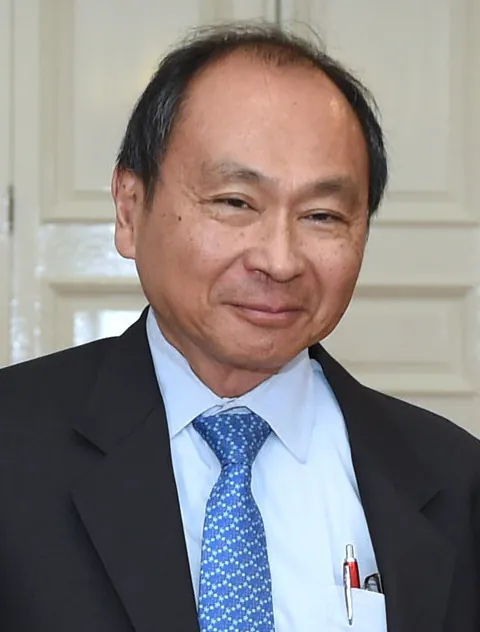
Francis Fukuyama, the Stanford political scientist best known for arguing that liberal democracy represents the endpoint of humanity's ideological evolution, will publish a personal and intellectual memoir this fall. According to William & Mary's news office and Stanford's Freeman Spogli Institute, the book — titled In the Realm of the Last Man: A Memoir — weaves Fukuyama's own life together with the last fifty years of political history, with a focus on the crisis of democracy and liberalism.
What Was Announced and When
The memoir was confirmed in announcements from both William & Mary, where Fukuyama is scheduled to speak at commencement, and Stanford's FSI faculty page, which lists the book as forthcoming in fall 2026. Fukuyama is currently the Olivier Nomellini Senior Fellow at Stanford University's Freeman Spogli Institute for International Studies and serves as editor-in-chief of the online journal American Purpose, according to William & Mary's profile.
Who Is Involved and What the Book Covers
Fukuyama first rose to international prominence with his 1989 essay "The End of History?" and the subsequent 1992 book The End of History and the Last Man, which argued — drawing on Hegel and Marx — that Western liberal democracy had emerged from the Cold War as the definitive final form of human government, according to Wikipedia's entry on that work. The memoir's title is a direct callback to that foundational text, and William & Mary's announcement describes the new book as a personal reckoning with that same arc of political history.
The announcement arrives as Fukuyama continues to speak publicly about threats to liberal democracies, as noted by William & Mary. He has also remained a frequent contributor to public intellectual debate — including book reviews and essays published by The New York Times — and his 2022 work Liberalism and Its Discontents was reviewed in that outlet as confronting America's political divisions.
Context: Why *Political Order and Political Decay* Still Matters
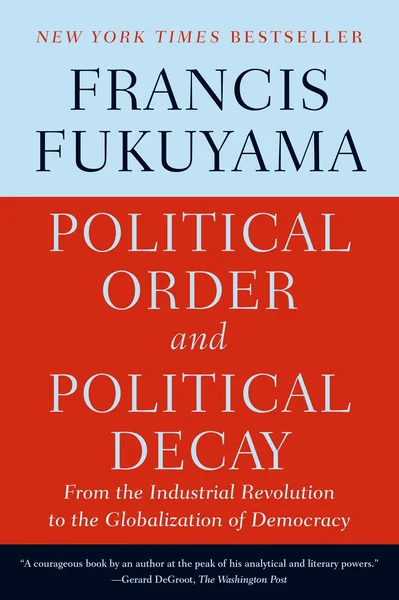
The memoir's announcement draws renewed attention to Fukuyama's 2014 volume Political Order and Political Decay: From the Industrial Revolution to the Globalisation of Democracy, the second in a two-part series. According to Wikipedia's summary of the book, the work argues that a functioning modern state requires three institutions in balance: executive capability, the rule of law, and democratic accountability.
Fukuyama warns that internal forces — not just external pressures — can produce stagnation and decay within established liberal democracies.
As Fukuyama's Stanford page describes it, the book "boldly reckons with the future of democracy in the face of a rising global middle class and entrenched political paralysis in the West." Crucially, Fukuyama distinguishes between an effective state and a large one — competence, he argues, is what matters, and it can exist in states with very different welfare profiles, according to Wikipedia.
For LuvemBooks' full assessment of Political Order and Political Decay, see our review.
What to Watch
With the memoir confirmed for fall 2026, readers and scholars of democratic theory will be watching for whether Fukuyama revisits or refines the "end of history" thesis in light of the institutional crises he has spent subsequent decades documenting. His commencement address at William & Mary — flagged by the university's news office — may offer an early indication of the memoir's central arguments.
No publisher, specific release date, or pricing details have been confirmed in the sources available at the time of publication.
Frequently Asked Questions
Is Political Order and Political Decay: From the Industrial Revolution to the Globalization of Democracy worth buying in 2026?
Yes, especially given current democratic crises worldwide. Fukuyama's analysis of institutional decay and the "vetocracy" problem has proven remarkably prescient. However, be prepared for dense academic prose and a significant time commitment.
What is the main message of Political Order and Political Decay?
Fukuyama argues that political institutions must balance strength with democratic accountability. He warns that too many veto points can prevent necessary adaptation, leading to institutional decay and democratic dysfunction.
Who should read Political Order and Political Decay?
Serious readers interested in political theory, institutional analysis, and understanding democratic governance. It's ideal for those who can handle academic complexity and want comprehensive global perspectives rather than quick insights.
Should I read Political Order and Political Decay or watch political documentaries?
If you want deep theoretical understanding and can commit to 600+ pages of scholarly analysis, read the book. For quicker insights into current political issues, documentaries might be more accessible.

No Discussion Yet
Be the first to share your thoughts on this news article.