
In This Article
- What the Research Actually Found
- Who Is Involved and What the Method Comprises
- Why the Scientific Debate Matters
- What to Watch
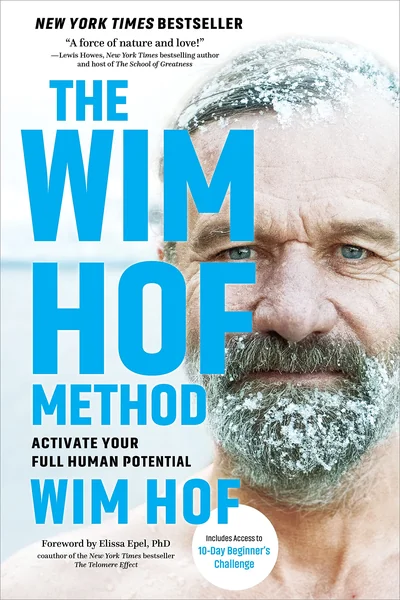
A Fox News report published in March 2026 drew fresh attention to scientific research surrounding the Wim Hof Method (WHM), the wellness system taught in Wim Hof's book The Wim Hof Method: Activate Your Full Human Potential. The coverage comes as a growing but still contested body of peer-reviewed literature attempts to test Hof's claims about breathing, cold exposure, and mental conditioning — with results that are far from uniform.
What the Research Actually Found
A randomised controlled trial published in Nature Scientific Reports assessed 42 participants over a 15-day WHM intervention, measuring cardiovascular parameters including systolic and diastolic blood pressure, pulse wave velocity, heart rate variability, and psychological measures including perceived stress and subjective vitality. The study's authors found no significant time-by-group interactions across any of those measures, concluding that daily practice of the WHM "did not exert positive effects on cardiovascular and psychological parameters." The researchers also noted it was the first study to specifically assess the method's effects on cardiovascular parameters, underscoring how limited the evidence base remains.
By contrast, a 2023 neuroimaging study by Muzik and colleagues, reported by MSN Health, found that six weeks of WHM training produced roughly a 20% increase in CB1 receptor binding across interoceptive brain regions, an effect the researchers linked to reduced sub-threshold depressive symptoms. Separately, early case study research cited by ScienceDirect found that WHM-trained participants showed lower pro-inflammatory responses and fewer flu-like symptoms following an endotoxin injection compared to a control group — a result that drew particular attention to Hof's claims around voluntary immune system influence.
A University of Queensland study, highlighted on the official Wim Hof Method website, involving over 400 participants and published in Nature, reported that consistent WHM practice was associated with reductions in stress and improvements in energy and mental clarity. LuvemBooks has not independently verified the full methodology of that study.
Who Is Involved and What the Method Comprises
Wim Hof, a Dutch athlete widely known as the "Iceman" for his documented tolerance of extreme cold, developed the WHM and has built a global following around it. As described in a systematic review published in PLOS ONE and corroborated by a PMC review, the method comprises three components: a specific breathing protocol involving 30–40 cycles of hyperventilation followed by a voluntary breath hold at low lung volume; graduated cold therapy through daily cold showers or ice baths; and a mental commitment or meditation component. Hof's book presents this system as a means of accessing dormant human physiological capabilities. For an assessment of the book itself, see LuvemBooks' full review.
Why the Scientific Debate Matters
The Nature Scientific Reports study noted explicitly that "despite its growing popularity, there is limited scientific evidence to support" the WHM's claimed benefits — a statement that frames the current research moment as one of active, unresolved inquiry rather than settled validation. The PMC systematic review similarly set out to identify and synthesise existing study results precisely because the evidence landscape is fragmented. Earlier work, including the Radboud University Medical Center research into immune system modulation, had suggested certain measurable effects, but those findings addressed a narrow set of outcomes and have not been replicated at scale across all of Hof's broader claims.
The divergence between studies — some randomised controlled trials finding null results, others finding neurological or immunological signals — reflects both the methodological difficulty of studying multi-component wellness interventions and the relatively short history of rigorous WHM research.
What to Watch
The publication of the Nature cardiovascular study and the University of Queensland findings in the same period means the research field is now generating enough volume for the kind of systematic synthesis the PLOS ONE and PMC reviews have begun to attempt. Whether future larger-sample or longer-duration trials replicate the null cardiovascular results or the positive neurological and immunological signals will determine how much of the book's central framework holds up to sustained scientific scrutiny.
Frequently Asked Questions
Is The Wim Hof Method: Activate Your Full Human Potential worth buying in 2026?
Yes, especially with new scientific validation supporting its health claims. The book provides concrete protocols backed by research from Radboud University Medical Center. However, it requires commitment to physical practices like cold exposure and specific breathing techniques.
What is the main message of The Wim Hof Method: Activate Your Full Human Potential?
The book argues that humans can voluntarily influence their immune system and stress response through three pillars: controlled breathing exercises, graduated cold exposure, and mental commitment. It emphasizes that these capabilities are trainable rather than exceptional gifts.
Who should read The Wim Hof Method: Activate Your Full Human Potential?
Best suited for readers willing to commit to gradual physical practices for stress management and resilience building. Ideal for those seeking evidence-based wellness strategies with measurable outcomes, but not recommended for those wanting purely mental or passive approaches.
Are the health claims in The Wim Hof Method: Activate Your Full Human Potential scientifically proven?
Partially yes. Studies at Radboud University Medical Center have validated some claims about immune system influence, and recent research confirms improvements in energy, mental clarity, and stress management. However, research into all aspects of the method remains ongoing.
How difficult are the techniques in The Wim Hof Method: Activate Your Full Human Potential?
The book emphasizes gradual progression starting with manageable practices like 30-second cold showers. While accessible to beginners, it requires consistent physical practice and progressive challenge, making it more demanding than typical self-help approaches.
Should I read The Wim Hof Method: Activate Your Full Human Potential or try other wellness books?
Choose this book if you want concrete protocols with scientific backing and are willing to commit to physical practices. Other wellness books may be better if you prefer philosophical inspiration or purely mental approaches to self-improvement.
Reader Discussion
No comments yet
Be the first to share your thoughts!