
In This Article
- What Schiff Is Warning About
- Who Is Involved and What the Book Offers
- Context: Debt, Housing, and the Dollar
- What to Watch
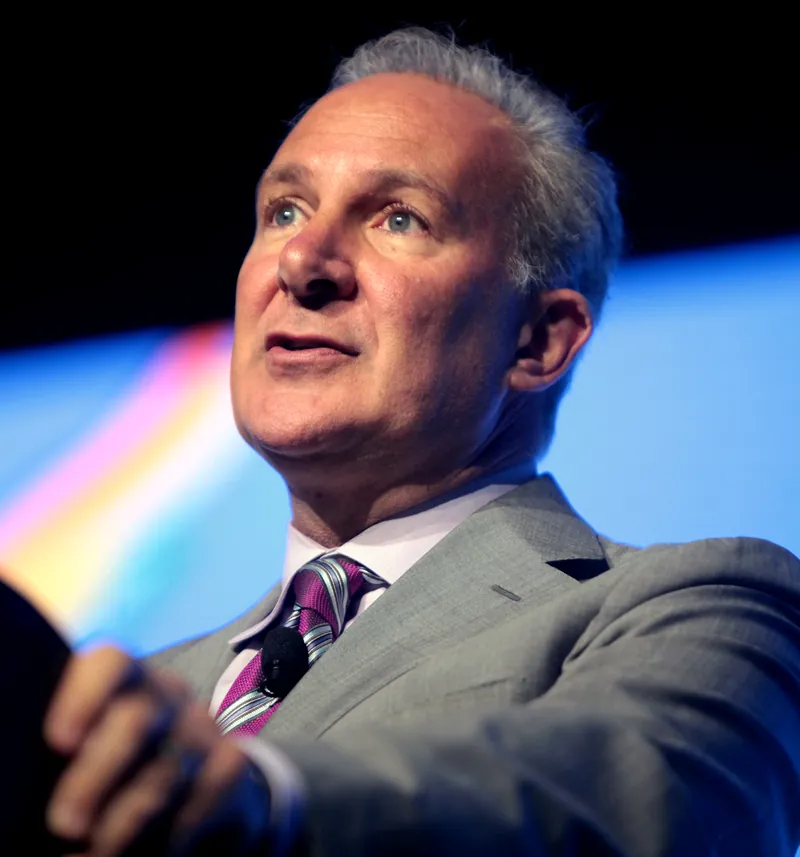
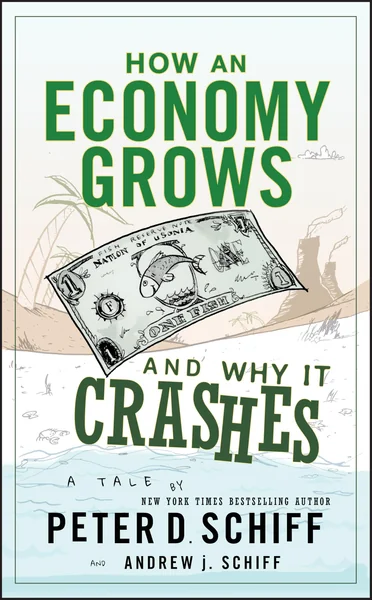
Economist and Euro Pacific Capital CEO Peter Schiff has sharpened his warnings of an imminent U.S. financial crisis, telling audiences in early 2026 that the country faces a debt and currency reckoning worse than the 2008 collapse — a claim that has drawn fresh attention to the Austrian-economics primer he co-authored with his brother Andrew J. Schiff, How an Economy Grows and Why It Crashes (2010). The renewed commentary is grounded in specific fiscal benchmarks that Schiff has cited across multiple media appearances this year.
What Schiff Is Warning About
Schiff's core argument centres on the compounding cost of U.S. federal debt. According to TheStreet, interest payments on that debt now exceed annual U.S. defence spending and are projected to hit $1 trillion in fiscal year 2026 — a threshold TheStreet describes as one Wall Street is largely ignoring. Separately, CCN reports that Schiff attributes the danger to a combination of a weakening dollar, rising debt levels, and higher consumer costs, and that he sees gold outperforming Bitcoin as a result.
On inflation specifically, Moneywise reports that Schiff has cited annualised inflation figures running between 16.8% and 19.6% — figures well above the roughly 3% projected by most mainstream economists for the same period.
Who Is Involved and What the Book Offers
Peter Schiff is the founder and CEO of Euro Pacific Capital and is widely noted for publicly predicting the 2008 financial crisis — a track record TheStreet acknowledges as lending weight to his current warnings. He co-authored How an Economy Grows and Why It Crashes with his brother Andrew J. Schiff. As Google Books describes it, the book uses illustration, humour, and accessible storytelling to explain economic growth and monetary systems — including debt cycles and capital formation — through a parable of a simple island economy. For a full assessment of the book itself, see our review.
Context: Debt, Housing, and the Dollar
Schiff's warnings extend across several economic fault lines. Yahoo Finance reports that Schiff views the ongoing rally in gold prices not merely as a trade opportunity but as a signal of what he characterises as rampant inflation. On housing, TheStreet notes that mortgage applications have been declining as housing affordability remains under severe pressure — a data point Schiff folds into his broader argument about consumer financial stress.
Meanwhile, IDN Financials reports that Schiff has also highlighted BRICS-driven de-dollarisation as an accelerant, warning that increased dollarisation abroad and record-level gold and silver prices reflect eroding confidence in U.S. currency.
What to Watch
The claims Schiff is making are contested — mainstream forecasters put inflation projections far below his annualised figures, as Moneywise notes. The key markers to track include whether U.S. interest payments formally breach the $1 trillion threshold cited by TheStreet, the trajectory of the dollar index, and the pace of central bank gold purchases that CCN and Yahoo Finance both flag as part of Schiff's evidence base. Whether his 2026 timeline proves accurate or not, the fiscal data points underpinning his argument — particularly the debt-servicing cost figures — are drawn from publicly reported federal budget projections.
Frequently Asked Questions
Is How an Economy Grows and Why It Crashes worth buying in 2026?
Yes, especially given Peter Schiff's current crisis predictions. The book provides accessible context for understanding Austrian economic theory and debt cycle concerns, though readers should supplement it with other perspectives for a balanced view.
What is the main message of How an Economy Grows and Why It Crashes?
The book argues that sustainable economic growth comes from increased production and savings, not consumption and debt. It warns against artificial economic stimulation and promotes Austrian school principles of sound money and free markets.
Who should read How an Economy Grows and Why It Crashes?
Ideal for economics beginners who want an accessible introduction to Austrian economic theory, investors concerned about debt cycles, and anyone seeking to understand Peter Schiff's economic worldview. Not suitable for those wanting comprehensive, balanced economic education.
Should I read How an Economy Grows and Why It Crashes or other economics books?
This book serves as an excellent introduction to Austrian economics, but readers should also explore Keynesian and other economic schools for a complete understanding. Consider pairing it with more balanced economics texts for broader perspective.
Does How an Economy Grows and Why It Crashes explain the 2008 financial crisis?
Yes, the book uses its island economy framework to explain how the 2008 crisis developed, focusing on unsustainable debt accumulation and artificial economic stimulation. It's particularly relevant given Schiff's predictions about similar patterns today.
Is Peter Schiff's How an Economy Grows and Why It Crashes accurate?
The book accurately presents Austrian economic principles and uses sound analogies to explain complex concepts. However, it presents one economic school's perspective as definitive truth rather than acknowledging competing theories, limiting its academic objectivity.
Reader Discussion
No comments yet
Be the first to share your thoughts!