
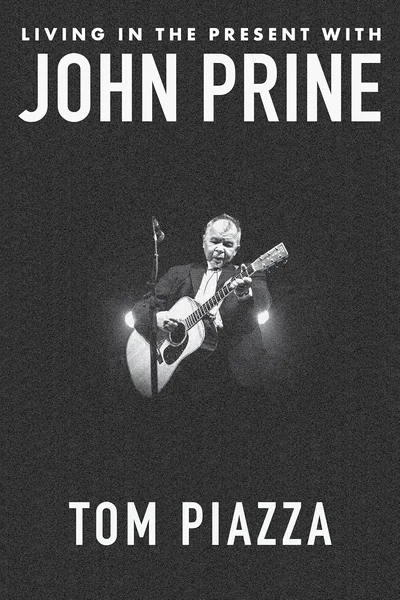
Six years after John Prine's death from COVID-19 complications, his legacy is being kept alive not just through streaming numbers and anniversary tributes, but through the kind of sustained cultural stewardship that only family, close friends, and devoted writers can provide. According to a recent piece by Audiophix, two events in the Washington, DC area have underscored why Prine remains among the most irreplaceable figures in American music — and both carry a direct connection to Tom Piazza's national bestseller, Living in the Present with John Prine.
The Audiophix report covers a tribute concert featuring Prine's son Tommy Prine, and a screening of the concert film John Prine: How Lucky Can One Man Get at the AFI Silver Theater, hosted by Prine's widow, Fiona Whelan Prine. That second event carries particular resonance for readers of Piazza's book: Fiona Whelan Prine wrote the foreword to Living in the Present with John Prine, creating a direct and personal thread between these live gatherings and the literary portrait Piazza has offered the world. Her involvement in both the book and these public events signals something more than ceremonial tribute — it reflects an active, deliberate effort to shape how Prine's life and artistry are understood and remembered.
How Living in the Present with John Prine Became Part of the Cultural Moment
Published by W. W. Norton & Company in September 2025, Living in the Present with John Prine grew from a friendship and a magazine profile that Piazza began during Prine's lifetime, only to be reshaped by grief after Prine's death. As noted by nola.com, Piazza was deeply conscious of tone — he did not want the book to read as a eulogy delivered from a distance, but rather as a portrait of someone who was "a powerful, powerful presence and spirit for everybody who knew him and for everybody who liked his music." That intent — to capture presence rather than simply mourn absence — is what distinguishes the book from standard musical biography.
Reviewers have recognized the book's hybrid form. California Review of Books noted that Prine himself, as the title suggests, lived fully and attentively in the present, and that Piazza's approach honors that quality. Kirkus Reviews has called it "a heartfelt blend of first-person journalism, oral history, travelogue, and elegy" — a description that gets at why the book functions as more than a fan document. W. W. Norton lists it as a national bestseller and it has appeared on Billboard's list of essential music gift books, suggesting it has found an audience well beyond existing devotees.
Why the Fiona Prine Connection Matters Beyond Sentiment
In book publishing, a foreword by a subject's family member can sometimes feel like a formality — a gatekeeping gesture that confers legitimacy without adding insight. What makes Fiona Whelan Prine's involvement notable here is that it extends beyond the printed page. Her role hosting the AFI Silver Theater screening, as reported by Audiophix, positions these live events and the book as part of a coordinated legacy project rather than parallel, disconnected endeavors. The concert film, the tribute performance by Tommy Prine, and Piazza's literary portrait are all operating in the same cultural space — reinforcing one another and keeping the conversation about Prine's artistry substantive rather than nostalgic.
This kind of multi-format legacy work is increasingly how estates and families of major artists manage the long aftermath of a death — particularly one as abrupt and widely mourned as Prine's. Rolling Stone reported that Piazza and Prine had been working toward a book project in the late 2010s before COVID intervened, which gives the finished volume an added weight: it is as close to an authorized, intimate account as readers are likely to get. For those interested in how American popular music intersects with personal narrative and friendship, the book occupies a distinct and valuable position — different in kind from, say, the sweeping political autobiographies in our catalog like The Autobiography of Malcolm X by Malcolm X and Alex Haley or Long Walk to Freedom: The Autobiography of Nelson Mandela by Nelson Mandela, but sharing their investment in the truth of a life as lived rather than merely summarized.
Living in the Present with John Prine is a compact but serious work of literary nonfiction built around one writer's close access to a beloved artist — and the DC events of recent weeks suggest that access continues to matter to the people closest to Prine's memory. Want the full verdict? Read our review of Living in the Present with John Prine for a complete assessment of what Piazza achieves and who will find it most rewarding.
Frequently Asked Questions
Is Living in the Present with John Prine worth buying in 2026?
The book has earned national bestseller status and appeared on Billboard's list of essential music gift books, suggesting broad appeal beyond existing Prine fans. Kirkus Reviews describes it as 'a heartfelt blend of first-person journalism, oral history, travelogue, and elegy,' which gives a strong sense of what readers are getting. For our full assessment, see our review.
What is Living in the Present with John Prine about?
Tom Piazza's book is a literary portrait of singer-songwriter John Prine, drawing on a friendship and a magazine profile Piazza began during Prine's lifetime. The book blends first-person journalism, oral history, and elegy, and was reshaped after Prine's death from COVID-19 complications in 2020. Fiona Whelan Prine, John's widow, wrote the foreword.
Who should read Living in the Present with John Prine?
The book will resonate most strongly with fans of John Prine and of American roots music broadly, but its hybrid literary form — part travelogue, part oral history, part elegy — gives it appeal for readers interested in music journalism and personal narrative more generally. Those who valued the friendship at the book's core, rather than just the biographical facts, will find the most to appreciate.
Did Fiona Whelan Prine contribute to Living in the Present with John Prine?
Yes. Fiona Whelan Prine, John Prine's widow, wrote the foreword to the book. She has also been publicly active in promoting Prine's legacy, including hosting a screening of the concert film John Prine: How Lucky Can One Man Get at the AFI Silver Theater in the Washington, DC area in 2026.
What events have recently celebrated John Prine's legacy?
According to Audiophix, two events in the Washington, DC area in mid-2026 highlighted Prine's enduring significance: a tribute concert featuring his son Tommy Prine, and an AFI Silver Theater screening of the concert film John Prine: How Lucky Can One Man Get, hosted by Fiona Whelan Prine. Both events connect thematically to Piazza's book.
Who is Tom Piazza and what is his connection to John Prine?
Tom Piazza is a veteran music journalist and author who developed a friendship with John Prine after profiling him for Oxford American magazine in 2016. The two had begun working toward a book together before Prine's death from COVID-19 complications in 2020, after which Piazza revised and completed the project. The resulting book, Living in the Present with John Prine, was published by W. W. Norton & Company in September 2025.
Reader Discussion
No comments yet
Be the first to share your thoughts!