
In This Article
- What the Book Did — and How It Was Received
- Who Was David McCullough?
- Why the Anniversary Carries Weight
- What to Watch in 2026
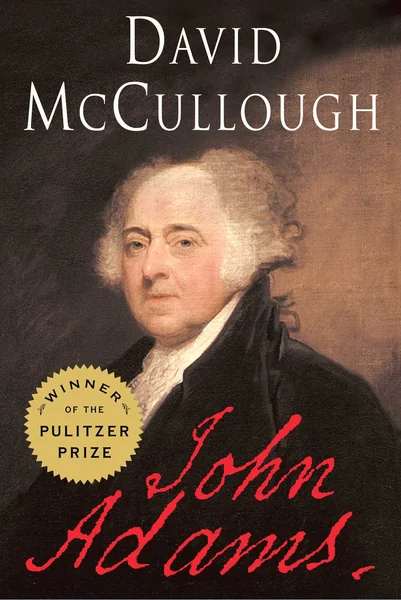
David McCullough's John Adams, first published on May 1, 2001, by Simon & Schuster, turns 25 in 2026 — a milestone for one of the most consequential works of American popular history in recent decades. The biography, which won McCullough his second Pulitzer Prize, is described by its publisher as a "brilliantly told" account of America's founding father and second president, and served as the basis for a subsequent HBO miniseries adaptation.
What the Book Did — and How It Was Received
When John Adams appeared in 2001, it arrived at a moment when Adams occupied a secondary place in the popular memory of the founding era. Kirkus Reviews described Adams at the time as "a great, troubled, and, it seems, overlooked president" who finally received his due from McCullough, and called the biography a "superb, swiftly moving narrative" with "not a wasted word" despite its length. Kirkus also noted that McCullough drew liberally from letters and diaries to portray Adams as a man who "never shied from what he perceived to be a divinely inspired historical necessity," while characterizing his relationship with Thomas Jefferson — political nemesis and lifelong friend — as one of "the wonderful symmetries of history," given that both men died on the same day, the 50th anniversary of the Declaration of Independence.
Publishers Weekly called McCullough "a preeminent master of narrative history" and the book "a benchmark for all Adams biographers," crediting his "keen eye for telling detail and a master storyteller's instinct for human interest." Simon & Schuster subsequently released an illustrated edition of the title, with the publisher noting at the time that the original edition had reached 2.6 million copies in print.
For a full critical assessment of the book, see our review.
Who Was David McCullough?
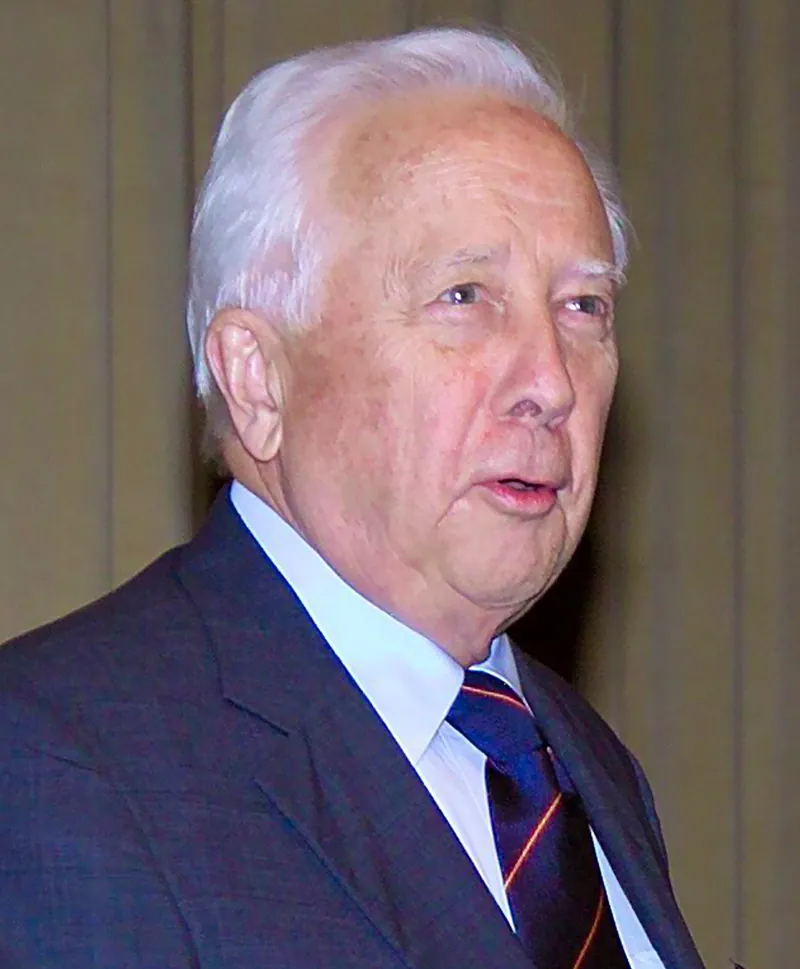
McCullough, who died on August 7, 2022, was, according to Wikipedia, a two-time winner of both the Pulitzer Prize and the National Book Award, and received the Presidential Medal of Freedom — the United States' highest civilian honor — in 2006. Born in Pittsburgh in 1933, he studied English literature at Yale University before becoming one of America's most widely read historians. His body of work encompassed subjects ranging from the Brooklyn Bridge and the Panama Canal to Harry S. Truman, Theodore Roosevelt, and the Wright brothers. Both his Pulitzer Prize-winning books — Truman (1992) and John Adams (2001) — were adapted by HBO, as Wikipedia notes, into a television film and a miniseries respectively.
Why the Anniversary Carries Weight
The 25th anniversary of John Adams arrives as the United States approaches the 250th anniversary of the Declaration of Independence. A reader commentary published in February 2026 on books.robertbreen.com described the biography as "timely reading to remember the causes of revolution and the original intentions of the U.S. Constitution" ahead of that semiquincentennial. The book's treatment of Adams's complicated legacy — including his navigation of the Alien and Sedition Acts controversy, and his relationship with Abigail Adams documented through their correspondence — helped establish, as Kirkus Reviews observed, that Adams was a figure of "fierce integrity" whose political story resists easy categorization.
What to Watch in 2026
With McCullough having died in 2022, the 25th anniversary of John Adams is also an occasion to assess his broader legacy in American historical writing. Publishers Weekly's author page for McCullough continues to document the depth of his catalog, and Simon & Schuster remains the book's publisher. Whether the anniversary prompts any formal commemorative editions or events has not been announced in available sources. The approach of the U.S. 250th anniversary in 2026, however, places the founding era — and the figures McCullough spent his career illuminating — at the center of national historical conversation.
Frequently Asked Questions
Is John Adams by David McCullough worth buying in 2026?
Absolutely. The biography remains the definitive popular account of America's second president, offering timely insights into democratic leadership and political courage. McCullough's narrative skill makes complex history accessible and engaging.
What is the main message of John Adams by David McCullough?
The book reveals Adams as a principled leader who chose institutional integrity over popularity, showing how moral courage and commitment to democratic norms can guide effective leadership even in polarized times.
Who should read John Adams by David McCullough?
Anyone interested in American history, political leadership, or biographical storytelling will find value here. It's particularly relevant for readers seeking examples of principled leadership in challenging political climates.
Should I read John Adams by David McCullough or watch the HBO series?
Both have merit, but the book provides much deeper insight into Adams' character and historical context. The HBO series, while excellent, necessarily condenses McCullough's rich detail and analysis into dramatic highlights.
Reader Discussion
No comments yet
Be the first to share your thoughts!