8 min read
4.5
· 400 Amazon ratingsShare This Review

Our review
Toffee by Sarah Crossan Review: A Verse Novel of Identity and Unlikely Refuge
Toffee is a young adult verse novel by Sarah Crossan, Irish children's laureate and Carnegie Medal-winning author, in which a teenager fleeing domestic abuse forges an unexpected bond with an elderly woman living with dementia — a story built on borrowed identities, grief, and the slow, painful discovery of self.
 Tap to enlarge
LuvemBooks Verdict
Best for
Older teen readers (and adults) drawn to poetic, emotionally resonant storytelling who want to explore themes of domestic abuse, dementia, and the search for identity through a spare, award-winning verse novel.
Worth it if
You're open to verse fiction and want a compact yet deeply layered story about survival, chosen connection, and self-discovery — particularly if you've appreciated Crossan's earlier Carnegie Medal-winning work.
Skip if
You're looking for a conventional prose narrative or aren't in the headspace for heavy subject matter encompassing domestic violence and cognitive decline, as the compressed verse format and weighty themes demand sustained emotional attention.
What readers & critics say
The Guardian praises each verse piece as individually satisfying, "strung together to create a spectrum of pain and consolation," with sparse language that "reveals the artistry in every phrase," while Kirkus Reviews (via BookBrowse) awarded the novel a starred review, calling it "an emotional verse novel that addresses domestic violence, teen homelessness, and intergenerational friendship."
“Each piece is as satisfying as a smoothed piece of seaglass, strung together to create a spectrum of pain and consolation — the sparse words reveal the artistry in every phrase.”
— The Guardian“Crossan conveys the teen's story in raw verse — an emotional verse novel that addresses domestic violence, teen homelessness, and intergenerational friendship.”
— Kirkus ReviewsAsk LuvemBooks
Was this helpful?
- Is it worth reading?
- For readers open to the verse novel form and willing to engage with serious subject matter, Toffee represents Crossan at her most assured — a writer whose Carnegie Medal win for One and Costa shortlisting for Moonrise confirm a sustained mastery of this form rather than a novelty experiment. The Guardian's praise for language that 'reveals the artistry in every phrase' speaks to how the compressed verse is inseparable from the novel's themes of silence, evasion, and identity. The key caveat is that those expecting chapter-based prose fiction will need to adjust their reading pace and approach entirely, as the form demands a different kind of attention.
- Similar books
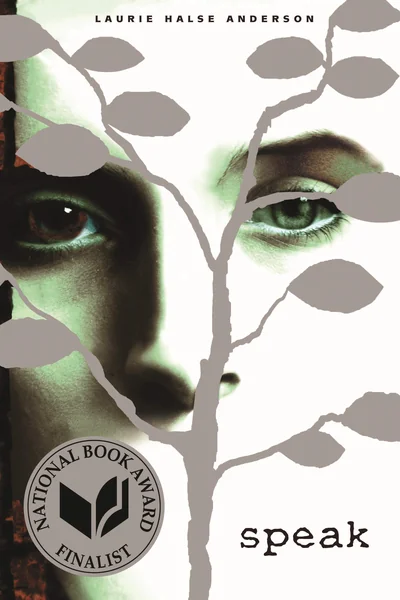
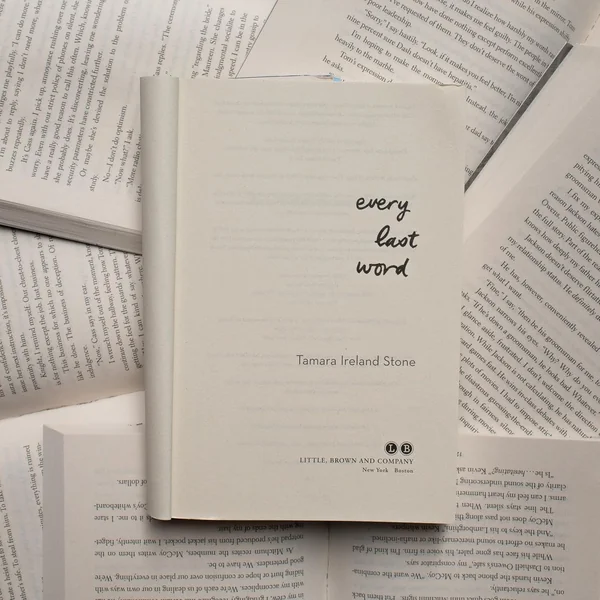
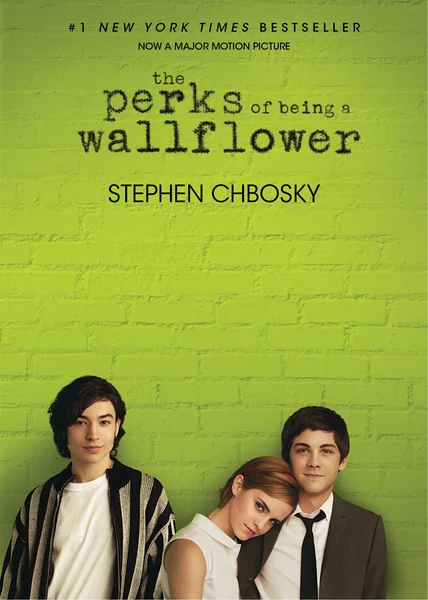
- Readers drawn to Toffee's unflinching treatment of trauma and identity in a YA framework will find strong companions in Laurie Halse Anderson's Speak, which addresses sexual assault and teenage silence with similarly spare, powerful prose, and Kathleen Glasgow's Girl in Pieces, another raw YA exploration of self-harm and recovery. Tamara Ireland Stone's Every Last Word uses a comparable focus on a teen girl's interior life and mental health, while Stephen Chbosky's The Perks of Being a Wallflower shares Toffee's preoccupation with chosen family, trauma, and adolescent self-discovery.
- Who should read this?
- Toffee is best suited to older teenage readers and adults who are drawn to compressed, poetic storytelling and who are prepared for subject matter encompassing domestic abuse, cognitive decline, and identity crisis. It is particularly well-matched to readers who have responded to other YA novels dealing with trauma and chosen family, and to those already familiar with the verse novel form — though Crossan has designed the short, self-contained pieces to be accessible even to readers new to poetry-as-prose. Bloomsbury publishes it with a recommended reading age of 13 and up, though the thematic weight skews it toward the older end of that range.
- What age is it for?
- Best for ages 13 and up, in line with Bloomsbury's own recommended reading age. The verse format and short, self-contained pieces are accessible to confident younger teen readers, but the subject matter — domestic abuse, cognitive decline in an elderly character, and a teenager navigating identity crisis — is most meaningfully engaged with by older teens and adults. Parents and educators should note these themes when recommending the book to readers at the younger end of the YA range.
- About Sarah Crossan
- Sarah Crossan is a Young Adult author known for Toffee, a novel that explores friendship and coming-of-age themes. Her writing in the YA genre focuses on character-driven narratives that resonate with teen readers.
- Is this a good book club pick?
- Toffee offers strong book club material: the central premise — a teenager assuming a false identity to survive, then questioning that fiction — raises rich questions about selfhood, deception, and what constitutes genuine connection. The treatment of dementia and domestic abuse alongside the concept of chosen family gives groups substantial real-world themes to discuss, while the verse structure itself invites conversation about how form and content interact. Crossan's background as a Carnegie Medal-winning author also provides useful context for exploring what the verse novel form can achieve that prose cannot.
- How does this compare to Crossan's other work?
- Toffee sits firmly within the body of work Crossan has built across multiple acclaimed verse novels. Her debut The Weight of Water earned wide acclaim in 2011; One, a story of conjoined twins, won the Carnegie Medal in 2016; and Moonrise, following a boy saying farewell to a brother on death row, was shortlisted for the 2017 Costa Children's Prize. Toffee continues recurring preoccupations — belonging, identity, grief, and trauma — making it a confident extension of her signature voice rather than a departure, and one that existing fans will find immediately recognisable.
Summarize this book
Follow up
Synthesized from verified book data & published reviews · How we review
Press Enter to ask. Answers come from our editorial Q&A — start typing to see related questions.
Age & Reading Level
Recommended age
Ages 12–18
Reading level
Young adult
3 content notes · who it suits
Content to know about
Best for: Ages 13+ — subject matter covering domestic abuse, dementia, and an adolescent identity crisis suits older teen readers and above
Skip if you're looking for conventional prose fiction or a lighter YA read without heavy thematic content
Our Review
What the Book Is and What Happens
Crossan's Place in the Verse Novel Tradition
The Craft of the Verse Structure
Themes and Their Scope
Who This Book Is For
Sources & Further Reading
The key facts and claims in this review are grounded in the retrieved, verified sources listed below.
- Cited in this review
- 1
bookbrowse.com
- 2
publishersweekly.com
- 3
- Further reading
- 4
Sarah Crossan, Wikipedia
- 5
- 6
amazon.com
Books like Toffee
Curated picks for readers who enjoyed Toffee, with our reasoning for each match.
If you liked Toffee