8 min read
Share This Review
Our review
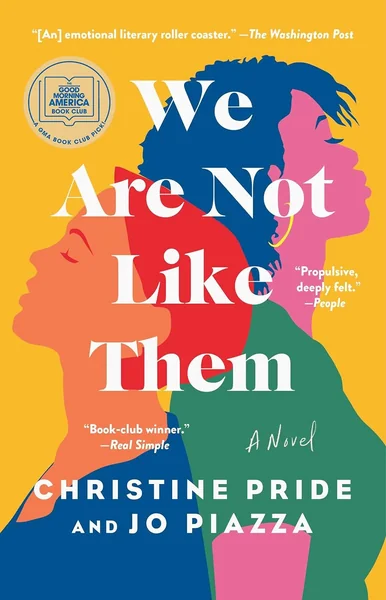
We Are Not Like Them
We Are Not Like Them by Christine Pride and Jo Piazza Review: Friendship Fractured by a Police Shooting
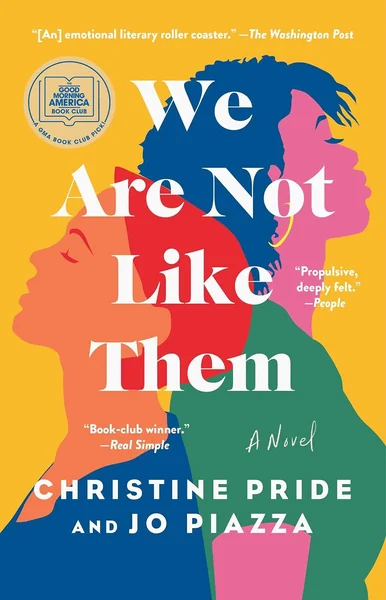
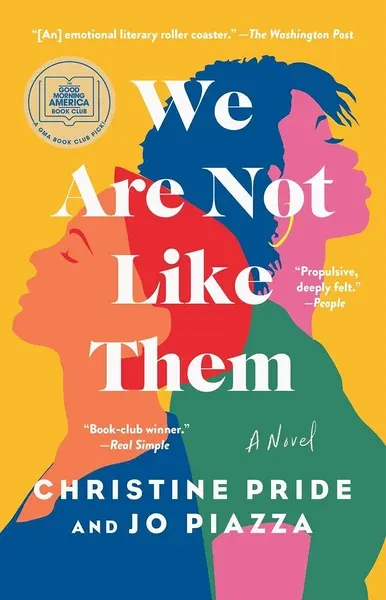
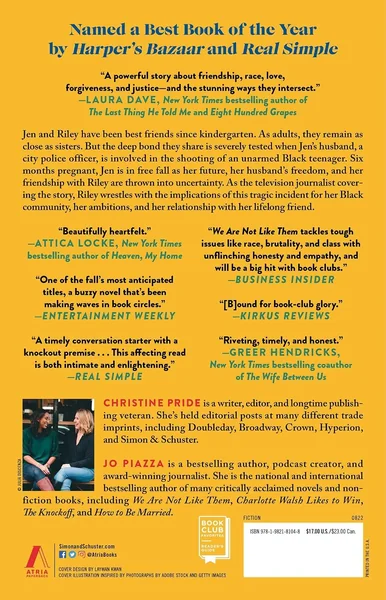
Christine Pride and Jo Piazza's debut novel follows lifelong best friends Riley, a Black broadcast journalist, and Jen, a white woman whose husband is involved in the police shooting of a Black teen in Philadelphia. Alternating between their voices, it is earnest, accessible book-club fiction built for hard conversations.
LuvemBooks Verdict
Best for
Book clubs and readers of issue-driven contemporary fiction who want a fast, dual-narrator story about how a police shooting fractures a lifelong cross-racial friendship — and a novel designed to be argued about afterward.
Worth it if
Worth it if you want propulsive, emotionally direct book-club fiction that runs a headline tragedy through two women's alternating perspectives — and you can accept that the shooting is the catalyst, not the subject.
Skip if
Skip it if you want a legal procedural, a story centered on the victim's family, or a subtler, less message-forward treatment — much of the page time goes to the white friend's moral reckoning.
What readers & critics say
Critics read the novel against real events: The Washington Post said its prologue of an unarmed Black teen shot by a white officer was "all too familiar," invoking Tamir Rice, Michael Brown, and Philando Castile, while The New York Times noted the book is deliberately "not about Justin or his family" but about the overdue reckoning between two friends. Kirkus Reviews predicted it was "bound for book-club glory," and Broad Street Review called it gripping while questioning some believability gaps, such as why the friends had never discussed race before.
“The heartbreak of the prologue was all too familiar: an unarmed Black teen, shot dead by a White police officer.”
— The Washington Post“With its timely premise, clear-cut messages, and appealing female characters, this novel is bound for book-club glory.”
— Kirkus Reviews“The novel isn't about Justin or his family; his tragedy becomes the catalyst for an overdue reckoning between two lifelong friends.”
— The New York TimesAsk LuvemBooks
Was this helpful?
- Is it worth reading?
- For the right reader, yes. Pride and Piazza's alternating-narration design gives both sides of the racial divide a full interior voice, the pacing is compulsive — early readers described finishing it in a single sitting — and the discussion-ready stakes made it a natural book-club success. The trade-offs are real, though: Justin and his family recede after the prologue, a substantial share of the page time belongs to Jen's moral education, and the register is earnest and message-forward, offering little ambiguity for readers who prefer subtler fiction.
- Similar books
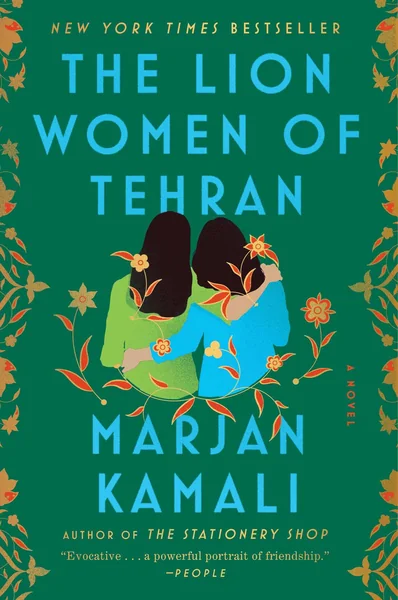
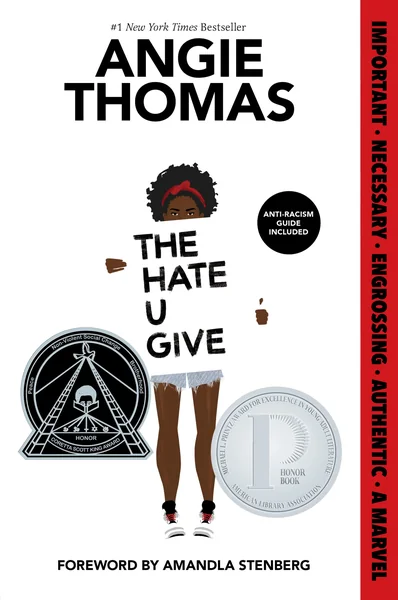
- Readers who respond to We Are Not Like Them's mix of headline subject matter and intimate relationships should try Angie Thomas's The Hate U Give, the defining novel of a Black teen witnessing a police shooting, and Tayari Jones's An American Marriage, which tests a relationship against systemic injustice. Jodi Picoult's Small Great Things tackles race and moral reckoning in similarly discussion-driven book-club territory, while Marjan Kamali's The Lion Women of Tehran offers another story of a female friendship strained by the politics around it. For more from Jo Piazza herself, The Sicilian Inheritance shows her range beyond issue-driven fiction.
- Who should read this?
- This is issue-driven contemporary fiction engineered for conversation — the natural pick for book clubs ready to talk about race and friendship, and for readers who like novels that grab a current of real public life and run it through personal relationships. It will suit fans of socially engaged book-club fiction who want momentum and dual perspectives. It will frustrate readers seeking a legal procedural, a story centered on the shooting victim's family, or a subtler, less declarative treatment of its themes.
- Is it based on real events?
- Not literally — Justin Dwyer and the central shooting are fictional — but the novel deliberately builds on events readers already carry with them. The Washington Post's review noted that the prologue immediately brought to mind Tamir Rice, Michael Brown, and Philando Castile, describing the opening as all too familiar: an unarmed Black teen shot dead by a white police officer. That strategy of laying fiction directly on top of real public trauma is the book's defining move.
- What are the main criticisms?
- Three criticisms surface consistently. First, Justin's tragedy functions as a catalyst — after the brief, brutal prologue, he and his family recede from the foreground, so readers expecting the victim or the legal case to carry the narrative will be surprised. Second, a substantial share of the page time belongs to Jen's reckoning, meaning a story set in motion by a Black boy's death spends much of its energy on a white woman's moral education. Third, the register is earnest and message-forward throughout, which readers who prefer oblique or ambiguity-friendly fiction may find more persuasive in a discussion group than on the page.
- How does it compare to The Sicilian Inheritance?
- The two books show very different sides of Piazza's work. We Are Not Like Them, co-written with veteran editor Christine Pride, is issue-driven contemporary fiction — a dual-narrated story about race and friendship built directly on the police-shooting headlines. The Sicilian Inheritance is Piazza solo, leaning into family saga and ancestral mystery on Sicily rather than ripped-from-the-news social drama. Readers who valued this novel's momentum and emotional directness will recognize Piazza's storytelling instincts in both, but the register and subject matter are distinct.
Summarize this book
Follow up
Synthesized from verified book data & published reviews · How we review
What would you like to know about We Are Not Like Them?
Answers come from our editorial notes on this book. If we haven't covered something, we'll say so.
Readers often ask
Our Review
We review the evidence: published critics, reader verdicts and BookTube reviews, gathered and weighed with AI assistance and edited by LuvemBooks, rather than one reader's first-hand take.
The Premise: One Shooting, Two Best Friends, One Fault Line
Why It Struck a Nerve
What It Does Well
Where Readers May Push Back
Who This Book Is For
Sources & Further Reading
The key facts and claims in this review are grounded in the retrieved, verified sources listed below.
- Cited in this review
- 1
- Further reading
- 2
- 3
- 4
kirkusreviews.com
- 5
- 6
ivereadthis.com
- 7
broadstreetreview.com
- 8
gilmoreguidetobooks.com
- 9
ampersandbooks.org
- 10
- 11
- 12
Age & Reading Level
Our age band
Adult
Our age band groups books for browsing; it isn't an age a review gave.
3 content notes · who it suits
Content to know about
Best for: Adults — the narrative is built around a police killing, racial trauma, and sustained grief, suited to mature readers
Skip if you want a legal procedural or a story centered on the shooting victim and his family — the case is the backdrop, not the plot
Reader reviews
Be one of the first readers to answer.
Read it? Was it right for you?
Books like We Are Not Like Them
Curated picks for readers who enjoyed We Are Not Like Them, with our reasoning for each match.

If you liked We Are Not Like Them