
At a glance
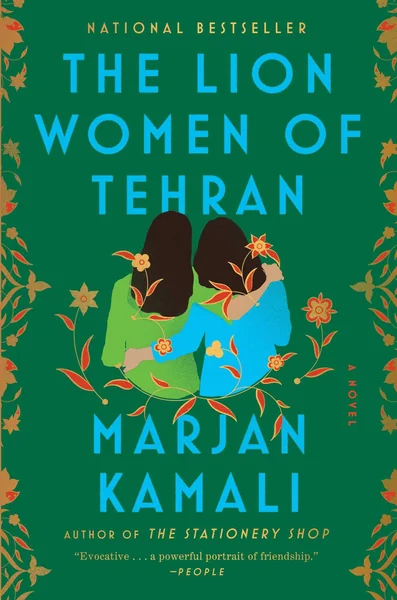
The Lion Women of Tehran
LuvemBooks Verdict
Best for: Readers who love sweeping, historically grounded friendship sagas — particularly those drawn to modern Iranian history and women's resistance narratives — who responded to Kamali's earlier The Stationery Shop and are ready to invest in a seven-decade story.
Worth it? Skip it? Read the full verdict →Ask LuvemBooks
Was this helpful?
- Is it worth reading?
- For readers drawn to epic friendship narratives anchored in real historical stakes, The Lion Women of Tehran delivers on its ambitions. The novel earned a starred Kirkus review, a Book of the Month Club Main Selection, and praise from People, Ms. Magazine, and BookPage — a breadth of critical recognition that reflects both its emotional resonance and its cultural scope. The main caveat is structural: the sweeping seven-decade time frame occasionally competes with the intimacy of the personal story, and Homa — the more politically dramatic of the two women — is always filtered through Ellie's consciousness rather than given her own narrative voice. BookPage's verdict is nonetheless pointed: "Prepare to lose yourself."
- Similar books
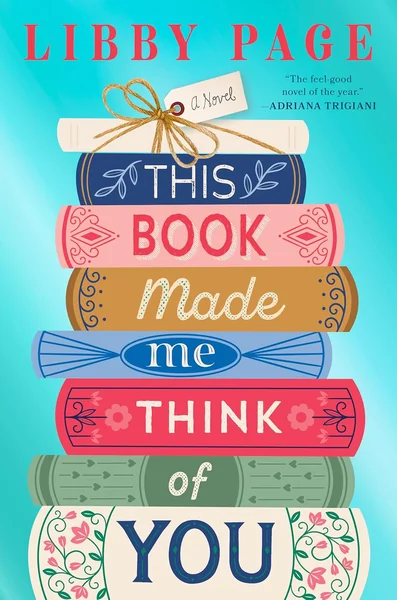
- Readers drawn to The Lion Women of Tehran often gravitate toward books that pair intimate women's stories with turbulent political landscapes. Khaled Hosseini's A Thousand Splendid Suns covers similar ground — a decades-long bond between two women set against the upheaval of twentieth-century Afghanistan. Marjane Satrapi's graphic memoir Persepolis offers a personal lens on the 1979 Iranian Revolution and its aftermath. Yasmina Khadra's The Swallows of Kabul likewise traces the human cost of fundamentalist regime change on women's lives. For a quieter but emotionally resonant story of friendship and longing across generations, Libby Page's This Book Made Me Think of You offers a warmly reviewed companion read. Kamali's own earlier novels — The Stationery Shop and Together Tea — are natural starting points for readers new to her work.
- Who should read this?
- The Lion Women of Tehran is written for adult readers who love epic historical fiction centered on women's lives and long-arc friendships. It will resonate most strongly with those who responded to Kamali's earlier novel The Stationery Shop, or who are drawn to stories — like A Thousand Splendid Suns — that root personal relationships in documented political upheaval. Readers with an interest in Iranian history, the 1979 Revolution, or the Woman, Life, Freedom movement will find the novel's documentary urgency especially compelling. Those seeking equal narrative access to both central characters should note that the entire story is told from Ellie's perspective, with Homa always at one remove.
- About Marjan Kamali
- Marjan Kamali is an Iranian-American novelist and author.
- What are the main themes?
- At its core, The Lion Women of Tehran is about friendship, class, and the cost of political courage — explored through the contrasting trajectories of Ellie and Homa across seven decades of Iranian history. Kamali maps the friction between Ellie's socially ambitious worldview and Homa's commitment to human rights and women's liberation with precision, and Kirkus Reviews highlights themes of jealousy even within close friendships. The novel also examines how rights erode incrementally — Homa's observation that losses 'start small' before rights are 'stripped in droves' functions as both character insight and historical argument. The Woman, Life, Freedom movement of 2022 and the death of Mahsa Amini anchor these themes in urgent contemporary reality.
- Is it a good book club pick?
- The Lion Women of Tehran was a Book of the Month Club Main Selection, which the club praised as 'a compelling historical read that is at its heart about friendship' — a strong institutional signal of its discussion potential. The novel raises layered questions about political complicity, class loyalty, the limits of good intentions, and how women navigate resistance under authoritarian regimes. Kirkus Reviews' highlighting of jealousy as a theme even within close friendships, and Homa's incremental-loss theory of political erosion, give book clubs rich material beyond the emotional friendship arc. Multiple reviewers — People, Ms. Magazine, BookPage, Kirkus — offer divergent framings that could anchor a structured discussion.
- How does it compare to The Stationery Shop?
- The review positions The Lion Women of Tehran as Kamali's most ambitious work to date — a step up in scope from The Stationery Shop. Both novels are anchored in twentieth-century Iranian history and centre on an emotional relationship tested by political upheaval, and readers who responded to The Stationery Shop are described as the natural audience for this book. The Lion Women of Tehran is broader in its time frame (1950 to 2022 versus the Stationery Shop's more focused period), more explicitly feminist in its argument, and more directly engaged with contemporary events, including the 2022 Mahsa Amini protests.
Summarize this book
Follow up
Synthesized from verified book data & published reviews · How we review
Press Enter to ask. Answers come from our editorial Q&A — start typing to see related questions.
Age & Reading Level
Recommended age
Adult
Reading level
Adult
3 content notes · who it suits
Content to know about
Skip if you want an intimate dual-perspective character study rather than a sweeping historical saga
Editorial Review
Marjan Kamali's The Lion Women of Tehran is a New York Times bestseller that traces the decades-long friendship of Ellie and Homa against the turbulent backdrop of twentieth-century Iran, from the early 1950s through 2022. Published by Gallery Books on July 2, 2024, the novel earned a starred notice from Kirkus Reviews as "a touching portrait of courage and friendship," and People called it "an evocative read and a powerful portrait of friendship, feminism, and political activism."…
Read the Full ReviewBooks like The Lion Women of Tehran
Curated picks for readers who enjoyed The Lion Women of Tehran, with our reasoning for each match.
If you liked The Lion Women of Tehran
Why It’s Trending
Book Clubs Are Obsessing Over The Lion Women of Tehran Right Now
The Lion Women of Tehran is having a real moment with book clubs — TikTok is full of themed food ideas and discussion posts, libraries across the country are picking it for their monthly reads, and readers are actively recommending it to each other online.