9 min read
4.1
· 4,659 Amazon ratingsShare This Review
Our review
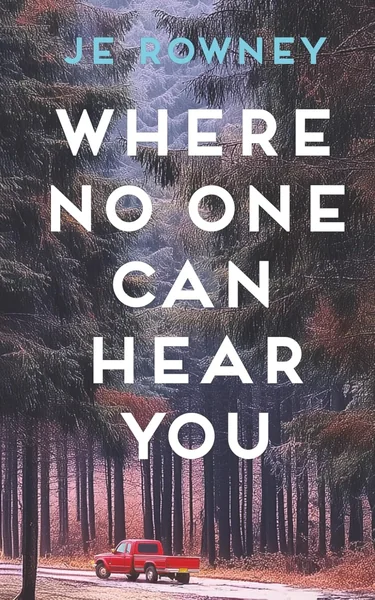
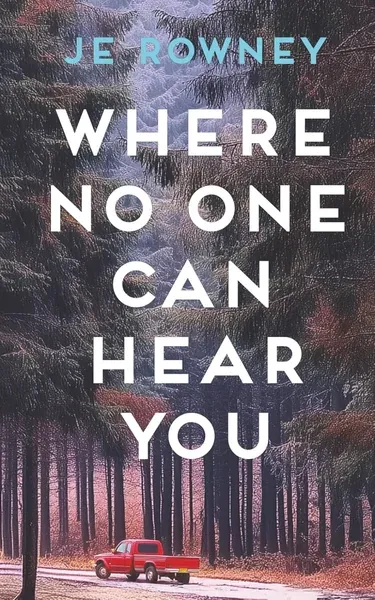
Where No One Can Hear You by J.E. Rowney
Where No One Can Hear You by J.E. Rowney Review: A Raw, Harrowing Tale of Survivorship
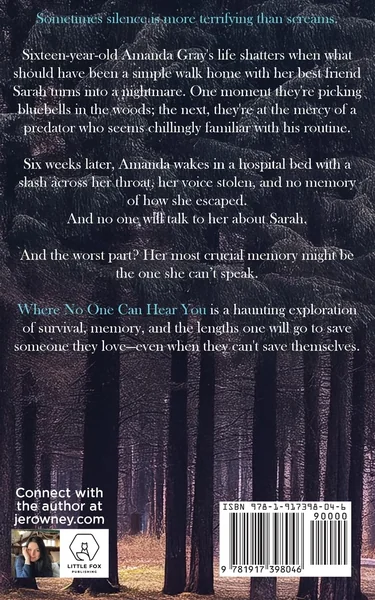
Where No One Can Hear You (The Survivor Stories) by J.E. Rowney follows sixteen-year-old Amanda Gray, whose walk home with her best friend Sarah becomes a violent encounter with a predator — and tracks Amanda's desperate, trauma-laden struggle to reclaim her memories and find Sarah. Published by Little Fox Publishing in March 2025, this special edition paperback includes book club discussion questions and arrives as the first book in The Survivor Stories series.
LuvemBooks Verdict
Best for
Readers drawn to survivor-centred trauma narratives — particularly those who valued books like Room or Speak — who want to follow a young protagonist's psychological and emotional recovery rather than a plot-driven thriller.
Worth it if
Worth reading if you are drawn to character-driven stories about trauma, survival guilt, and fractured memory, and can appreciate a slow-burn emotional arc over genre-thriller momentum.
Skip if
Skip it if you are seeking a conventional psychological thriller with rising plot tension, mystery twists, or a satisfying genre resolution — several readers report the book reads far closer to a survivor's drama than its marketing implies.
What readers & critics say
The Storygraph community responses range from "emotionally charged" and "raw and real" in its exploration of trauma's aftermath, to notes that the book reads more like a survivor's memoir than a thriller, with some readers feeling misled by genre expectations (app.thestorygraph.com). On Amazon UK, readers highlight the novel's unusual focus on the survivor rather than the perpetrator, with one describing Amanda's battle to reclaim her voice and memories as "heartrending" (amazon.co.uk). Dark Horror Tales praised the prologue as excellent in immediately placing readers inside Amanda's desperate situation (darkhorrortales.blogspot.com), while Audible listeners noted the narrator's strong performance and the book's focus on women's resilience (audible.com).
Sources: The Storygraph, The Storygraph, Amazon UK, Dark Horror Tales, AudibleAsk LuvemBooks
Was this helpful?
- Is it worth reading?
- For readers whose appetite runs toward character-driven trauma narratives, Where No One Can Hear You offers genuine emotional depth, with Amanda's survivor's guilt, fractured memory, and desperate drive to find Sarah drawing consistent praise for authenticity and intensity. The opening hundred pages in particular are described by multiple readers as tense, vivid, and emotionally immediate. The key caveat is for readers expecting genre thriller conventions — several reviewers felt misled by marketing that implied relentless plot momentum and a twist that does not materialise, with one Storygraph reader describing the post-opening pages as 'a slog.'
- Similar books
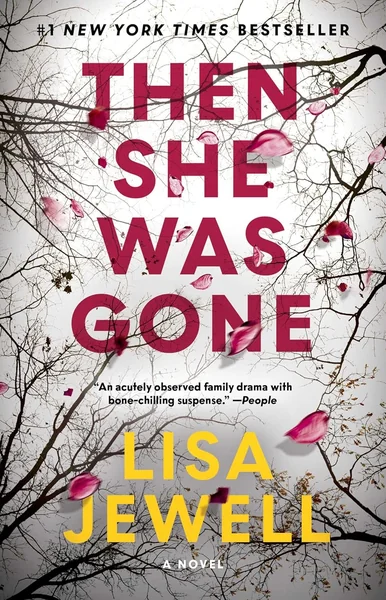
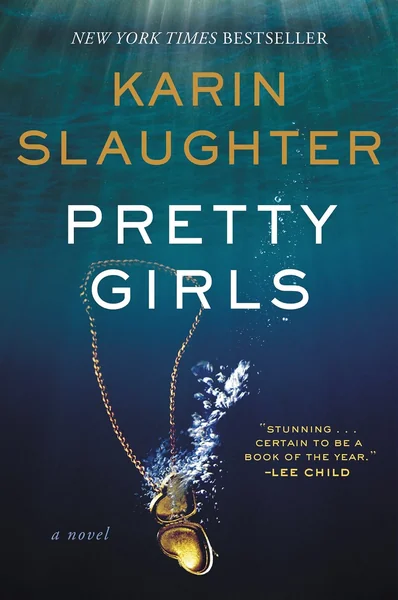
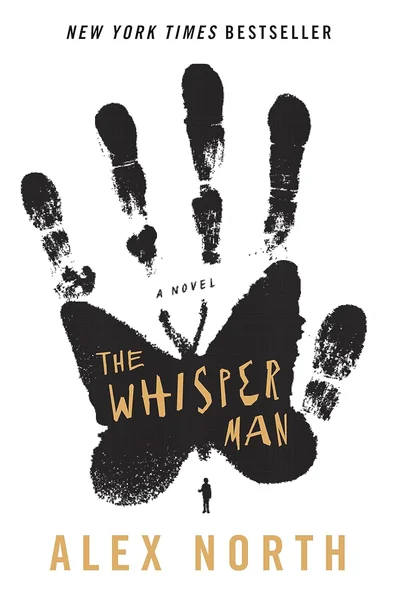
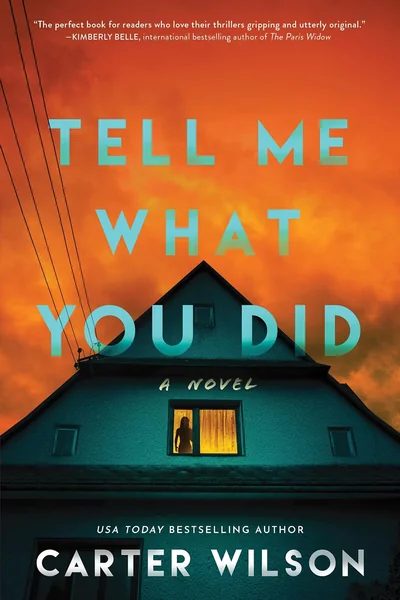
- Readers drawn to Where No One Can Hear You may also find Then She Was Gone by Lisa Jewell and Pretty Girls by Karin Slaughter compelling — both centre on the devastating aftermath of a young woman's disappearance told through the perspectives of those left behind. For atmospheric, psychologically layered crime fiction, The Whisper Man by Alex North and Never Lie by Freida McFadden offer that same sense of dread and interiority. Tell Me What You Did by Carter Wilson is another strong match for readers who want dark, character-driven narratives built around secrets and trauma rather than pure procedural momentum.
- Who should read this?
- Where No One Can Hear You is best suited to readers who gravitate toward character-driven trauma fiction — those who found survivor-centred narratives like Room or Speak valuable will find themselves on familiar ground. Readers who want to sit with difficult emotional material and process it, rather than race through plot mechanics, are the book's natural audience, and the special edition's book club discussion questions make it particularly well-suited to group reading. Readers expecting relentless thriller momentum or a plot-twist resolution are likely to feel misled.
- What age is it for?
- Best for mature readers aged 16 and up. The book depicts a violent attack on a sixteen-year-old and traces her psychological and emotional recovery in unflinching detail — the opening hundred pages are described as depicting traumatic events 'with heart-pounding detail,' and the book carries trigger warnings at the outset. Younger teen readers should approach with parental guidance.
- About J.E. Rowney
- J.E. Rowney is a female author known for her psychological and survival thrillers, which explore the hidden secrets of ordinary lives. Her works, including Gaslight, have earned her a following for gripping, page-turning storytelling. She can be found at jerowney.com and on social media as @jerowneywriter and @jerowney on TikTok.
- Is this a good book club pick?
- Where No One Can Hear You is a strong book club choice for groups interested in trauma fiction and survivor narratives — the special edition paperback includes discussion questions designed for exactly that purpose. Its themes of survivor's guilt, fractured memory, Amanda's obsession with finding Sarah, and the exploration of healing through therapy give groups rich, substantive ground to cover. Groups should be prepared for emotionally heavy material and may want to share trigger warning information with members in advance.
- Is it really a thriller?
- This is a meaningful calibration point for prospective readers. Where No One Can Hear You is marketed as a psychological thriller, but multiple readers report the experience reads closer to survivor drama or literary trauma fiction. One Storygraph reviewer wrote that 'it wasn't a thriller and neither was it a mystery — I expected something gripping but it was a drama instead,' and an Audible listener similarly noted feeling misled by descriptions that implied a twist that does not materialise. The publisher's own tagline — 'sometimes silence is more terrifying than screams' — signals that the horror here is largely internal rather than plot-driven.
Summarize this book
Follow up
Synthesized from verified book data & published reviews · How we review
Press Enter to ask. Answers come from our editorial Q&A — start typing to see related questions.
Our Review
What the Book Is and What It Contains
The Emotional Core: Survivor's Guilt and Memory
Strengths: Atmosphere and Character
Where Expectations May Diverge
Who This Book Is For
Sources & Further Reading
The key facts and claims in this review are grounded in the retrieved, verified sources listed below.
- Cited in this review
- 1
- 2
waterstones.com
- Further reading
- 3
- 4
app.thestorygraph.com
- 5
- 6
Age & Reading Level
Recommended age
Ages 12–18
Reading level
Young adult
Tropes
From how readers and romance sites describe it, not our own reading.
4 content notes · who it suits
Content to know about
Best for: Mature teens and adults / 16+ — the book depicts a violent attack on a sixteen-year-old and its psychological aftermath in unflinching, emotionally intense detail; trigger warnings are included at the outset.
Skip if you want relentless thriller momentum, genre twists, or a mystery resolution — this is a survivor drama, not a plot-driven thriller.
Reader reviews
Be one of the first readers to answer.
Read it? Was it right for you?
Books like Where No One Can Hear You
Curated picks for readers who enjoyed Where No One Can Hear You, with our reasoning for each match.
If you liked Where No One Can Hear You