
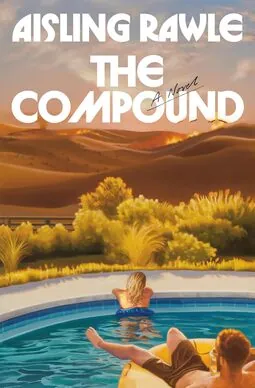
8 min read
3.7
· 12,129 Amazon ratingsShare This Review
The Compound by Aisling Rawle Review: Addictive Debut Skewering Reality TV
Aisling Rawle's debut novel The Compound is a GMA Book Club Pick published by Random House (June 24, 2025) that drops protagonist Lily into a high-stakes reality show on a remote desert compound, using the ruthless logic of competition television to dissect desire, desperation, capitalism, and the collapsing world beyond the cameras. Named a Best Book of the Year by critical coverage, critical coverage, Oprah Daily, Good Housekeeping, The Globe and Mail, and Chicago Public Library, it arrives as one of the most decorated debut novels of its season — a propulsive literary thriller with genuine cultural teeth.
LuvemBooks Verdict
Best for
Readers who want their compulsive, binge-worthy fiction to carry genuine literary and social weight — particularly those drawn to reality-television culture, gender and power dynamics, and book-club discussion of surveillance, complicity, and self-exposure.
Worth it if
You're after a page-turner that doubles as serious literary fiction, and you're comfortable sitting inside moral ambiguity and psychological pressure rather than expecting a tidy resolution.
Skip if
You're seeking a conventional thriller with clean genre mechanics and a satisfying ending — Rawle is far more interested in the texture of complicity than in tying things up neatly, and extended immersion in a surveillance-saturated, performance-driven world may exhaust rather than propel you.
What readers & critics say
Critical reception has been striking in both its enthusiasm and its breadth: bookmarks.reviews praised the novel as "smart and provocative… so damn addictive," noting that "the premise itself is the novel's first achievement" and calling it "a fantastically and uncomfortably fun drama," while bookbrowse.com highlighted Rawle's ability to fuse "an addicting page-turner of a narrative with a potent social commentary," describing the novel as "an unforgettable literary achievement." The book was named a Best Book of the Year by NPR, The New Yorker, Oprah Daily, Good Housekeeping, The Globe and Mail, and Chicago Public Library, and selected as a GMA Book Club Pick.
Sources: bookmarks.reviews, bookbrowse.com, abcnews.comAge & Reading Level
Recommended age
Adult
Reading level
Adult
3 content notes · who it suits
Content to know about
Skip if you want a conventional thriller with a clean, satisfying resolution and clear moral stakes.
In This Review
- What Works & What Doesn't
- What the Novel Is and What It Puts at Stake
- Significance: A Debut That Arrived at Exactly the Right Moment
- Craft and Critical Reception: Where the Novel Earns Its Praise
- Genuine Limitations: What This Novel Is Not
- Who *The Compound* Is For — and Why It Lingers
What Works & What Doesn't
What Works
- Named a Best Book of the Year by critical coverage, critical coverage, Oprah Daily, Good Housekeeping, The Globe and Mail, and Chicago Public Library — exceptional breadth of recognition for a debut
- Oprah Daily and critical coverage both praised it for combining compulsive readability with genuine literary and social substance
- Booklist awarded it a starred review, singling out its nuanced characters and sharp examination of contemporary society
- Engages meaningfully with gender dynamics, capitalism, media, and power — rich material for readers and book clubs alike
- A GMA Book Club Pick, signalling crossover appeal across both popular and literary audiences
What Doesn't
- The novel's sustained immersion in a surveillance-driven, performance-saturated world may exhaust readers who find that register more draining than gripping
- Rawle prioritises moral ambiguity and psychological texture over clean resolution, which may frustrate readers seeking conventional thriller closure
What the Novel Is and What It Puts at Stake

Significance: A Debut That Arrived at Exactly the Right Moment
Craft and Critical Reception: Where the Novel Earns Its Praise
Genuine Limitations: What This Novel Is Not
Who *The Compound* Is For — and Why It Lingers
Frequently Asked Questions
Sources & Further Reading
The key facts and claims in this review are grounded in the retrieved, verified sources listed below.
- Cited in this review
- 1
- 2
- Further reading
- 3
Aisling Rawle, Wikipedia
- 4
- 5
ashleyhajimirsadeghi.com
- 6
bookmarks.reviews
- 7
bookbrowse.com
- 8
- 9
- 10
booksthatslay.com
- 11
- 12
Related Reviews
Reviews of books we picked for readers who enjoyed The Compound.
Reader Comments
No comments yet
Be the first to share your thoughts!