An unorthodox, visually rich collection of short essays that strips away traditional autobiography to focus entirely on the meticulous craft and relentless mindset of a basketball legend. It functions as a technical masterclass rather than a conventional biography, offering dedicated students of the game a granular look at professional obsession.
Fans of basketball who want to study the meticulous craft and relentless mindset of a legend will find this technical masterclass offers a granular look at professional obsession.
Worth it if
Worth reading if you want to understand the mechanics of his game through detailed strategic breakdowns and vivid match-up analyses.
Skip if
Skip it if you are looking for a traditional, emotionally resonant autobiography with a continuous narrative arc and deep personal backstory.
Where reviewers agree and split
Readers rate it 4.8 on Amazon. The reviews we read that discuss it in depth split on some points:
Mixed
Kirkus Reviews · Press review: praises photos but notes haphazard structure for general readers
Positive
Hopkinsrp · Book blog: Admires Bryant's dedication and relentless work ethic
Positive · 4 of 5 stars
The Lowedown · Book blog: easy, entertaining read offering an interesting look into Bryant's mindset
Mixed
Rabid Reader's Reviews · Book blog: engaging but shallow; better suited for dedicated basketball fans
Overall verdicts are our summary of each review we read, from its headline, rating and conclusion.
What readers & critics say
Kirkus Reviews notes the book’s haphazard structure may alienate general readers, while Publishers Weekly praises its convincing chronicle of Bryant’s relentless work ethic. Book blogs like The Lowedown and Hopkinsrp highlight the text as an accessible, entertaining look into his mindset, whereas Rabid Reader’s Reviews finds the format shallow.
“structure is somewhat haphazard and may lose general readers”
The Mamba Mentality: How I Play bypasses traditional chronological memoir to function as a technical and psychological masterclass. It dissects Kobe Bryant’s relentless work ethic, pre-game rituals, and specific matchup analyses. It delivers exceptional value for dedicated basketball fans and aspiring athletes, though those seeking a continuous narrative arc will find the structure emotionally distant.
Is it worth reading?
It delivers exceptional value for readers interested in the mechanics of greatness and vivid match-up analyses. However, readers expecting a standard memoir may find its structure unconventional.
Similar books
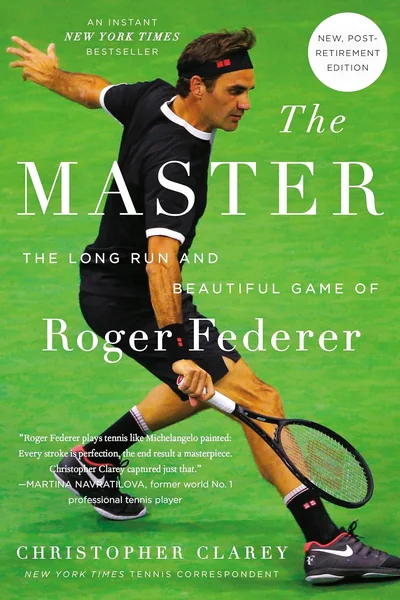
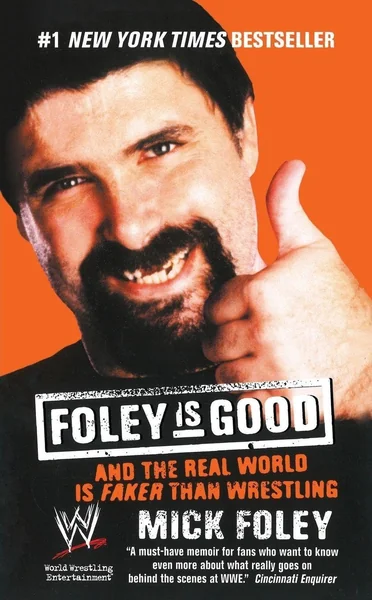
Readers who enjoy Kobe’s technical approach to competition will appreciate Open: An Autobiography for its unfiltered mental breakdowns, The Master for its focus on a champion’s rigorous routine, and Sho-Time for its deep dive into a modern athlete’s dual-sport discipline. Foley is Good offers a contrasting, highly personal look at wrestling’s backstage reality, while Winning Ugly explores the mental warfare of tennis.
Who should read this?
The book is written for adults, specifically dedicated basketball fans and students of the game seeking a granular look at the sport. It appeals to readers who value technical mastery over personal drama or sentimental reflection.
How long does it take to read?
At an average reading pace, the book takes roughly four to five hours to complete. Its short, vignette-based structure makes it easy to read in brief sessions rather than requiring a continuous marathon.
What are the main themes?
The text centers on relentless preparation, the psychology of competition, and the meticulous craft required to dominate at the professional level. Kobe dissects his training routines, film study habits, and specific strategic approaches to guarding or exploiting legendary opponents.
Is this a good gift?
Its visually stunning presentation and thematic focus on dedication make it an ideal gift for Lakers fans. The high-quality photography by Andrew Bernstein and the instructional layout elevate it above standard sports memoirs.
Summarize this book
Is it worth reading?
Who should read this?
How long does it take to read?
What are the main themes?
Is this a good gift?
Summarize this book
Kobe Bryant’s The Mamba Mentality: How I Play functions as a masterclass. It provides guidance for dedicated fans.
Follow up
Is this a standard autobiography?
Does it cover his later life or passing?
Synthesized from verified book data & published reviews · How we review
Ask LuvemBooks
What would you like to know about The Mamba Mentality: How I Play?
Answers come from our editorial notes on this book. If we haven't covered something, we'll say so.
Readers often ask
Our Review
We review the evidence: reader verdicts, gathered and weighed with AI assistance and edited by LuvemBooks, rather than one reader's first-hand take.
What the Book Actually Is and How It Works
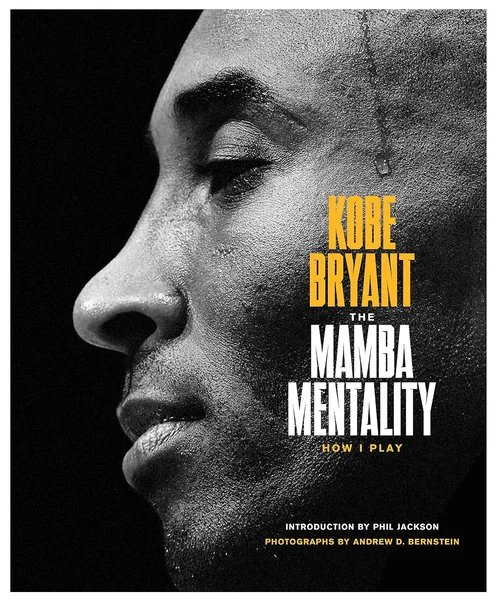
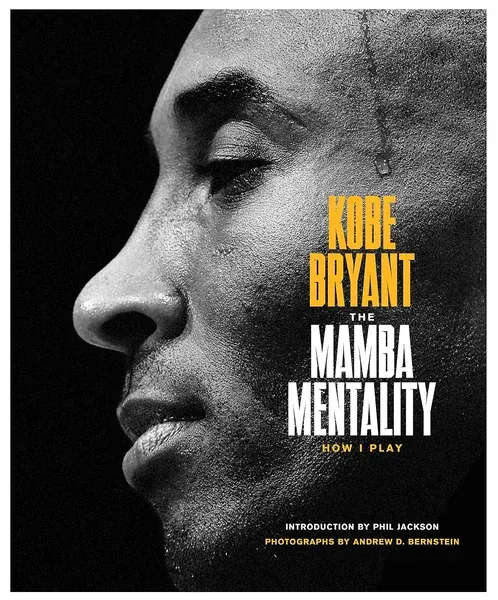
The Mamba Mentality: How I Play is an autobiographical book by NBA player Kobe Bryant that provides personal insights into his life and basketball career. The book was published by Macmillan Publishers on October 28, 2018, with photography and an afterword by sports photographer Andrew D. Bernstein.
The text is broken up into several sections in which Bryant describes the progression of his mentality and training throughout his career. Each section is heavily accompanied by visuals.
The foreword was written by Bryant's former Los Angeles Lakers teammate Pau Gasol. He begins by telling the story of his 2008 trade from the Memphis Grizzlies to the Lakers.
Gasol speaks to Bryant's many qualities including his attention to detail and persistence. The introduction, written by Bryant's former Lakers coach Phil Jackson, is titled Be Prepared for an Adventure in High-Level Basketball.
Jackson describes how the mixture of Bernstein's visuals and Bryant's insights can make the reader a better player.
Bryant begins by detailing how he physically and mentally prepares for playing basketball. He speaks of midnight workouts sometimes going from 11 pm to 7 am.
His physical therapy routine consists of ice baths, contrast therapy, stretching, and taping.
Bryant then begins to highlight the important staff members and players in his life who contributed to his process as an athlete. He first cites Judy Seto and Gary Vitti, both tenure trainers with the Los Angeles Lakers organization.
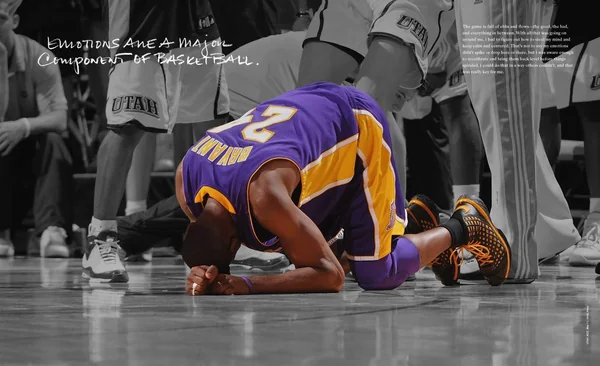
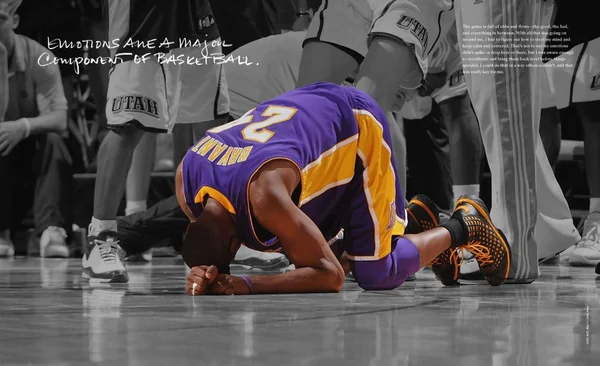
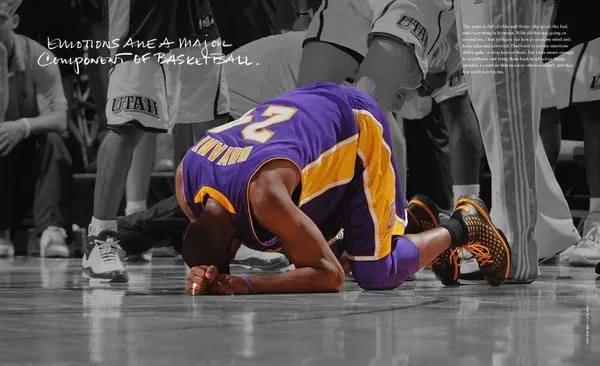
Interior page showing a basketball player in purple and gold uniform on court, demonstrating technique and physical commitment to the game.
Scope, Significance, and Visual Execution
Few sports books attempt to bypass the traditional chronological biography in favor of a purely technical and psychological breakdown. This volume does exactly that, positioning itself as a teaching tool rather than a standard memoir.
The publisher pitches it to young players, hardcore fans, and devoted students of the game. The book is split into three parts, with the first featuring letters from Bryant’s teammate Pau Gasol and long-time coach Phil Jackson.
The second part, titled Process, details Bryant’s pre and post-game rituals, different events throughout his career, and his thoughts on designing his signature shoe. Bryant goes on to say that he is completely unbalanced while guarding Michael Jordan, which gives him the opportunity to do whatever he wants out of this post position.
The visual component is equally deliberate. Kirkus Reviews emphasized the book's uniqueness with "Bernstein's photography...it's wonderful" and "sets this book apart from the competition".
Bernstein highlights momentous moments from Bryant's career and claims that Bryant was amongst the few NBA players who were consistently dynamic and exciting to photograph, game after game, year after year. The combination of Bryant’s narrative and Bernstein’s photos make The Mamba Mentality an unprecedented look behind the curtain at the career of one of the world's most celebrated and fascinating athletes.
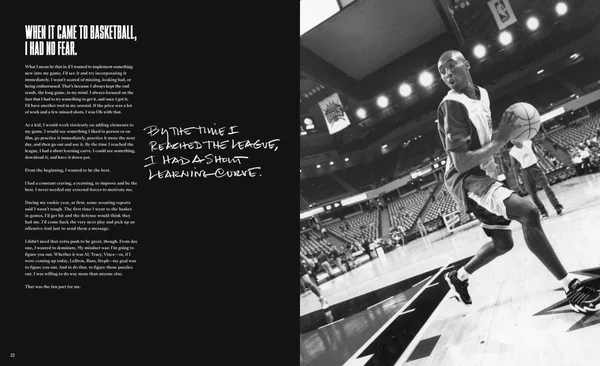
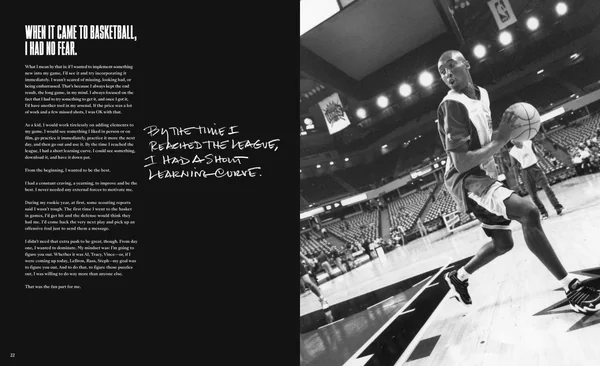
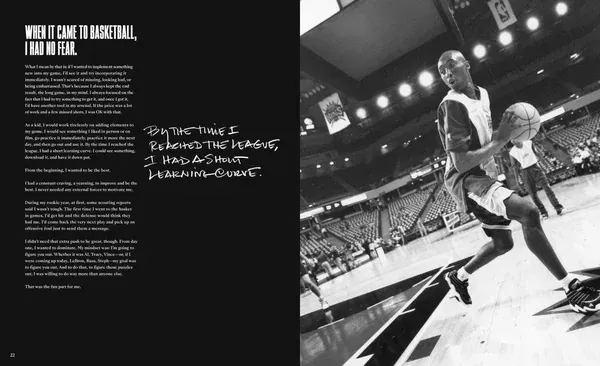
Interior spread featuring a basketball player in action during a game, with handwritten text overlay discussing competitive mindset and league performance.
Strengths: Granular Craft and Unflinching Analysis
One of the book's defining features is its refusal to offer sentimental reflection in place of technical instruction. The book blogger behind The Lowedown found it to be pretty easy to read and very entertaining.
There were lots of photos from long-time Laker photographer Andrew Bernstein. It was interesting to hear Kobe share his thoughts on the game, as if the reader were listening to an audiobook.
Kobe fans will likely love this book. The analysis of specific matchups provides a level of granularity rarely seen in athlete memoirs.
The book blogger behind HopkinsRP noted that Bryant elaborated on playing NBA Hall of Famer Allen Iverson and how difficult it was to guard the legend.
He proceeds to tell the reader how Iverson’s coach, Larry Brown’s offense worked down to the second. That just goes to show how much film Kobe actually watched.
The book delivers capsule assessments of many of his teammates, opponents, and coaches over the years.
Lamar Odom was the cool-ass uncle who took care of everybody and always came through in the clutch. The future NBA Hall of Famer explores his process and craft with a no-nonsense attitude that reflects his commitment to the game.
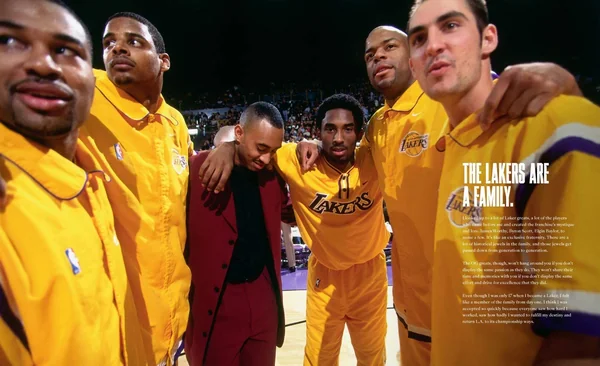
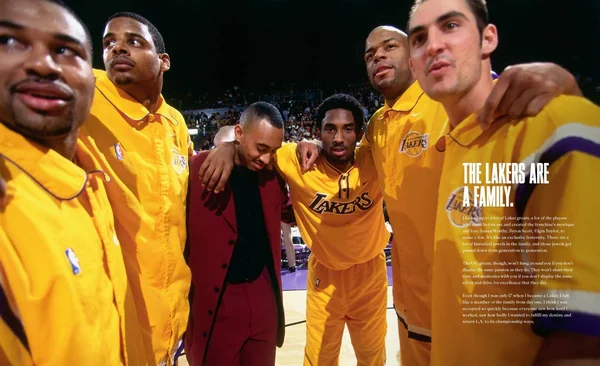
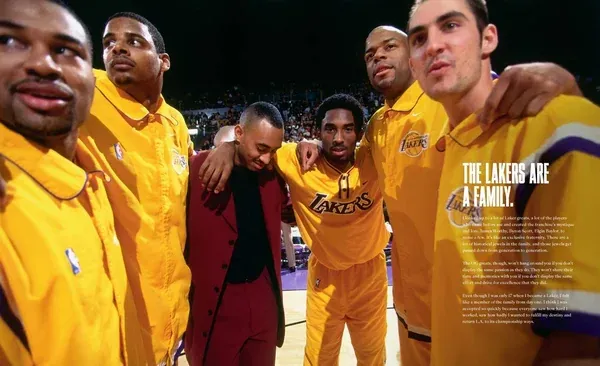
Interior spread showing basketball players in team uniforms gathered together, with text block discussing team dynamics and collective mindset.
Genuine Limitations Worth Noting
A book structured entirely around short vignettes and technical breakdowns inevitably sacrifices narrative cohesion. The book blogger behind The Lowedown noted that the book was not what they expected.
They thought it would be the typical auto-biography of one of the greatest sports stars of the last 25 years. They were expecting detailed stories of what happened before the draft and what it was like to be a 17 year old in the NBA.
This book really isn’t about any of that. Instead, it’s a first person account of Kobe and his approach to the game.
Most pages are short vignettes on a thought Kobe expounds on.
It might be a name of a player he faced followed by Kobe’s thoughts on that player or how he would defend him or exploit him on offense. The lack of a traditional narrative arc means dedicated readers seeking the full story of his rise will find gaps.
There’s little that dedicated Kobe fans don’t already know, but the book is a visually beautiful presentation that would make an ideal gift for the Lakers fan in the house. The repetitive nature of the vignette structure may feel exhaustive to some, though others find the short snippets easy and entertaining.
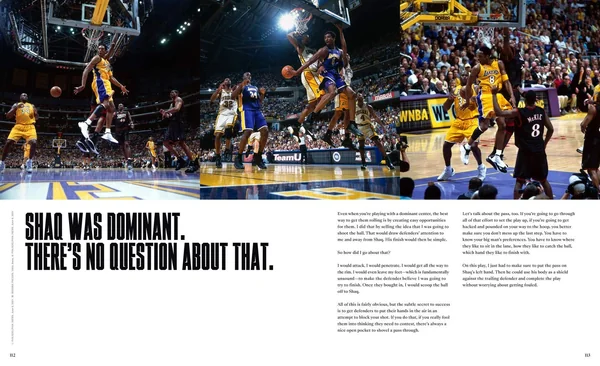
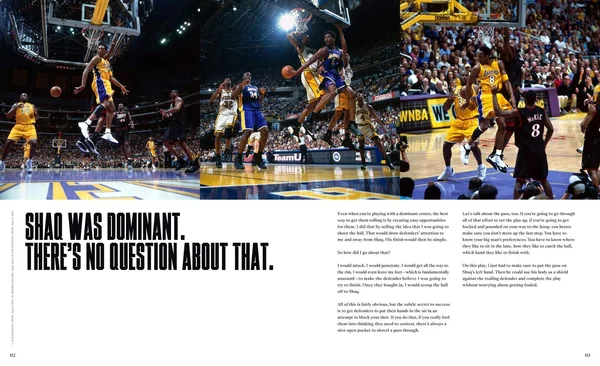
Interior spread featuring a basketball game photograph with accompanying essay text about player dominance and technique.
Is It Worth Reading?
Weighing these reviews, the book functions less as a life story and more as a masterclass in professional obsession. It appeals to readers who want to understand the mechanics of greatness rather than the drama of the man behind it.
The tension lies in its dual purpose: it serves as both an intimate look at a legendary competitor and a dry, instructional manual for aspiring athletes. Readers who enjoy technical breakdowns of sports strategy will find value in the detailed matchup analyses.
Those seeking a traditional, emotionally resonant memoir may find the structure emotionally distant. The book spent 27 weeks on The New York Times Best Seller list, peaking at number 1 in the Sports and Fitness Category.
According to Wikipedia, USA Today's books editor, Jocelyn McClurg, described The Mamba Mentality as the next best thing to a courtside seat watching Bryant drive to the basket during his glory days with the L.A. Lakers. It remains a definitive, if highly specialized, record of a player who defined his legacy through relentless preparation.
Sources & Further Reading
The key facts and claims in this review are grounded in the retrieved, verified sources listed below.
Kobe Bryant and photographer Andrew D. Bernstein sit down on SportsCenter to discuss the creation and philosophy behind their book, The Mamba Mentality: How I Play.
Bryant explains that still photography allows a player to dissect subtle details such as foot placement and defensive positions that happen too quickly to catch on game tape.
The meaning behind 'How I Play'
Bryant chose the present tense for the book title because the mental discipline, obsessive focus, and preparation principles he used in basketball carry directly into his post-retirement endeavors.
From our readers
Reader reviews
No LuvemBooks readers have answered yet.
Read it? Was it right for you?
Books like The Mamba Mentality: How I Play
Curated picks for readers who enjoyed The Mamba Mentality: How I Play, with our reasoning for each match.
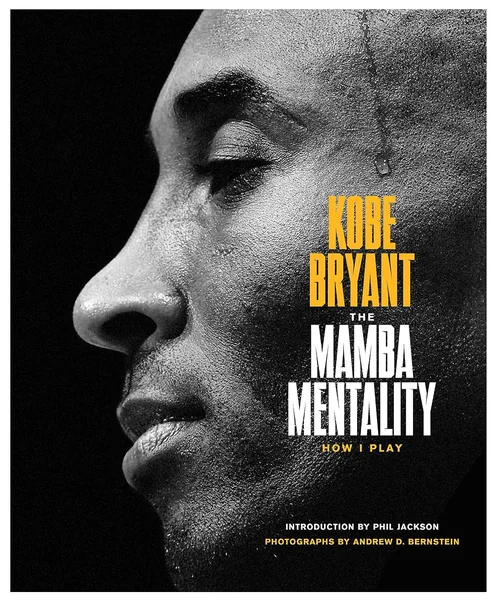

 Tap to enlarge