Skip to content
Reviewed

Updated

Read Time

7 min read

Our age bandAdult
Reader rating
4.6 · 525 Amazon ratings, as of Oct 2026
reader ratings, not a LuvemBooks score
Curated & edited by

LuvemBooks Editorial

How we create our reviews →
Share This Review
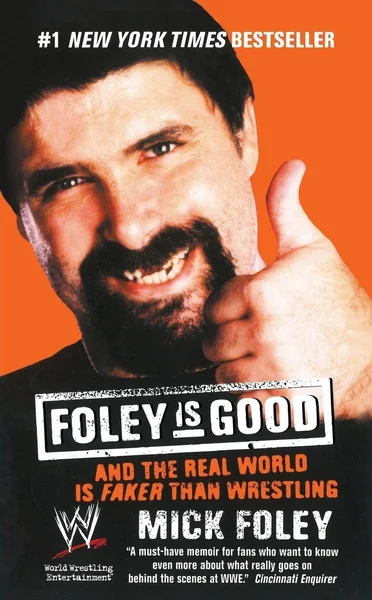
Front cover

Our review

Foley is Good

Foley is Good: And the Real World is Faker Than Wrestling by Mick Foley Review: The Sequel Memoir

Foley is Good: And the Real World is Faker Than Wrestling is Mick Foley's sequel memoir, covering January 1999 to his April 2000 retirement at WrestleMania 2000, written without a ghostwriter. It topped the New York Times nonfiction list in May 2001, and suits readers of his first book.

Our age band: Adultwrestling violence and its real-world consequences · media and public debate over violent entertainment

LuvemBooks Verdict

Best for

Readers who finished Have a Nice Day! and want the continuation of Foley's story, including the "I Quit" match and his own detailed defence of the WWF against its critics.

Worth it if

Worth reading if you enjoy Foley's chatty, first-person voice and don't mind a long stretch of the book being advocacy, with statistics and rebuttals of the Parents Television Council, rather than pure locker-room anecdote.

Skip if

Skip it if you want a standalone introduction to Foley or an underdog struggle story, since a good portion is argument for the WWF and the celebratory tone suggests less hardship.

Thriftbooks' excerpt describes his comments about the PTC and WWF as "the most well-articulated and thoroughly researched defense of professional wrestling I have ever seen" and recommends the book to readers already impressed by Have a Nice Day. A review excerpt on AbeBooks likewise says fans "will not be disappointed by the jokes, the jibes at fellow WWF arm-twisters, and the genial charm."

Sources: thriftbooks.com, abebooks.com
4.6from 525 Amazon ratings, as of Oct 2026— reader ratings, not a LuvemBooks score

Ask LuvemBooks

Was this helpful?

Mick Foley's second memoir follows his career from January 1999, mixing ring stories with a long defence of the WWF. It is best suited to readers who finished Have a Nice Day!; the caveat is that a good stretch is advocacy and rebuttal rather than locker-room anecdote.
Is it worth reading?
For readers who enjoyed Foley's chatty first-person voice in his first book, yes. The book keeps the no-ghostwriter approach and mixes in-ring events with life outside wrestling. The trade-off is that the tone is more celebratory and a sizable portion is Foley arguing the WWF's case with statistics, which means less underdog drama than its predecessor. The 616-page mass-market edition is also a long commitment.
Similar books
The natural companion is Foley's own Have a Nice Day!, which this book continues, and his later Countdown to Lockdown. For another view of wrestling's business side, try Eric Bischoff's Controversy Creates Cash; for the Attitude Era from a fan angle, Michael McAvennie's Austin 3:16. Outside wrestling, Andre Agassi's Open offers a similarly candid athlete memoir.
Who should read this?
Fans who want the story to continue are the core audience, along with readers interested in the WWF's late-1990s controversies and his rebuttals to critics. It also suits those curious about the "I Quit" match. Readers wanting just an introduction to Foley, or a hardship-driven narrative, are better served elsewhere.
What age is it for?
This is an adult-oriented memoir from a wrestler who wrote it for a general adult readership, and it engages with controversies over wrestling violence and "backyard wrestling." Teen wrestling fans may be interested, but the length and the argumentative sections suit older readers better.
About Mick Foley
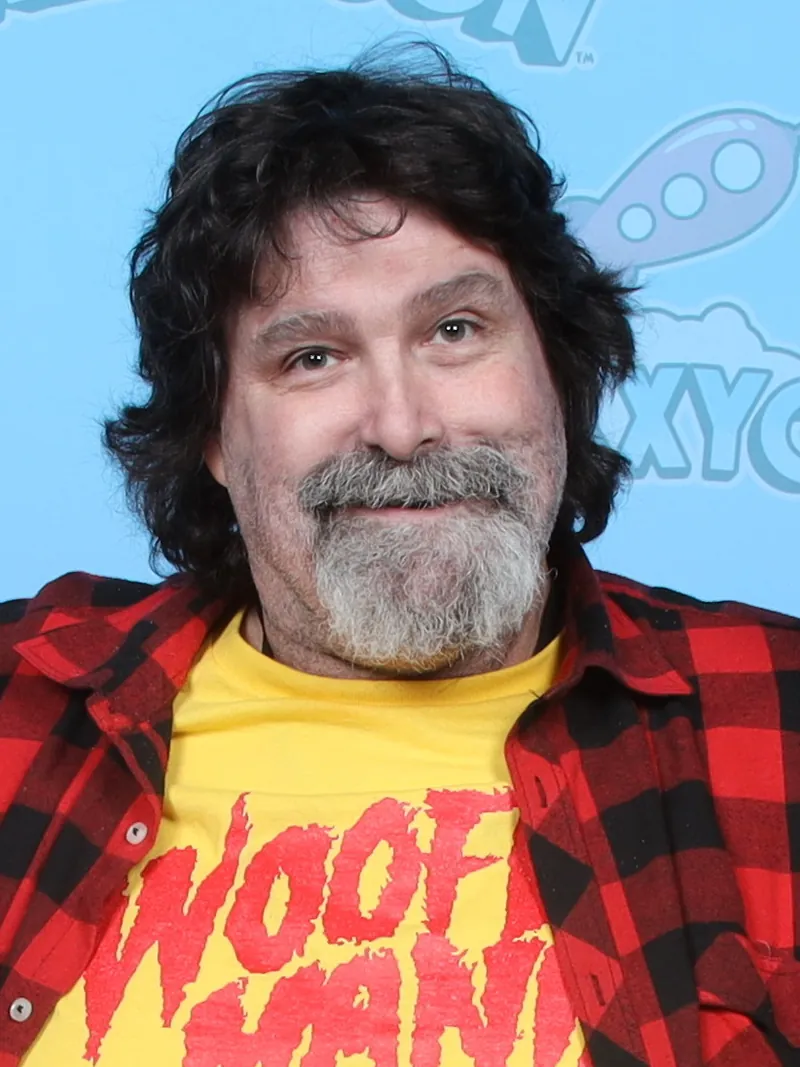
Michael Francis Foley is an American comedian, author, and retired professional wrestler.
How much of the book is about defending the WWF?
A large share. Foley rebuts accusations that the WWF is violent using statistical data and evidence he compiled himself, criticizes the Parents Television Council, and defends himself against being misquoted by 20/20. If you came for behind-the-scenes stories, expect Foley making a case instead.
How does it compare to Have a Nice Day!?
It continues that story but is described as more celebratory, since Foley is writing about a period when he had already achieved success. That suggests the celebratory tone differs from earlier work, though that is an inference from the book's described contents. The voice and no-ghostwriter approach carry over.
Summarize this book

Summarize this book

Foley Is Good picks up directly where Foley left off and begins in January 1999. It covers the "I Quit" match with The Rock at the Royal Rumble, dealings with Vince McMahon and Stone Cold Steve Austin, and Foley's life outside the ring, including his obsessions with theme parks and Christmas. It also includes his own research into the Parents Television Council.

Follow up

Does it cover the whole of his career?
What is in the epilogue?

Synthesized from verified book data & published reviews · How we review

Ask LuvemBooks

What would you like to know about Foley is Good?

Answers come from our editorial notes on this book. If we haven't covered something, we'll say so.

Readers often ask

Our Review

We review the evidence: published reviews and reader verdicts, gathered and weighed with AI assistance and edited by LuvemBooks, rather than one reader's first-hand take.

Mick Foley's second memoir picks up where Have a Nice Day! Left off and reads, by its publisher's account and Wikipedia's, as a victory-lap sequel; whether that appeals depends on how much you want more of the same voice.

What the book covers

Foley Is Good: And the Real World Is Faker Than Wrestling is the second autobiography of wrestler Mick Foley, who wrote it, as he did his first, without a ghostwriter. Wikipedia says it details his career from January 1999, and that it was released on May 8, 2001.
The publisher's blurb frames it as picking up right where Have a Nice Day! Left off, giving readers a look at the behind-the-scenes action in the World Wrestling Federation.
The ring work alternates with Foley's life away from it, per Wikipedia's description.
The cast, per a thriftbooks.com summary, includes Foley under his several personas, The Rock, Vince McMahon and Stone Cold Steve Austin. Wikipedia also says Foley recounts the events around his "I Quit" match with The Rock at the Royal Rumble in January 1999, which also appears in the documentary Beyond the Mat.

Defending the business

A large share of the book is argument rather than anecdote. Wikipedia says it heavily defends the World Wrestling Federation against accusations of being violent, and that Foley pointedly refutes detractors using statistical data and other evidence he compiled himself.
He criticizes the Parents Television Council, and his own research project on that group's views of the WWE is included in the book. Wikipedia adds that he defends himself against being misquoted by the news program 20/20.
Barnes & Noble's description says the book engages directly with cultural controversies around the WWF, including debates over "backyard wrestling."
That makes it part memoir, part advocacy piece. Readers who came for locker-room stories should know a good stretch is Foley making a case.

Tone and what the publisher promises

Wikipedia describes the tone as more celebratory than the first book, since Foley is writing about the period when he had already achieved success. The same entry says he describes his obsessions, such as theme parks and Christmas, and writes about the experience of writing his first book without a ghostwriter.
The publisher's blurb promises "total honesty and riotous humor," and a thriftbooks.com excerpt repeats that the book carries "the same total honesty and riotous humor displayed in his last book." Both are marketing copy, not independent judgement.
The only independent reaction in the excerpts we hold is a headline, not a review: Vinnie Bartilucci's piece for SLAM! Wrestling is titled "Another great book from Mick Foley."
We hold none of its text, so it supports little beyond a favourable reception from that outlet.

Reception and sales

The commercial record is clear. Per Wikipedia, the book was the number one nonfiction title on The New York Times bestseller list in May 2001, and after three press runs about 230,000 copies were in print.
To promote it, Foley appeared on The Howard Stern Show and did a ten-city signing tour, according to the same entry. Wikipedia's sources also list a profile of Foley, "A Wrestler Who Prefers the Pen to the Pin," by Dinitia Smith, though we do not hold its text.

Who it is for

The book covers a stretch of his in-ring career. Because it picks up directly from the first memoir, it is built for readers who already know that book and want the sequel.
A caution on scope: the celebratory framing and the long defence of the WWF suggest less of the underdog struggle that drives a first memoir, though that is an inference from the book's described contents, not a critic's verdict. The edition listed here is a mass-market paperback reprint from HarperEntertainment dated June 4, 2002, running 616 pages.
Bottom line: read it if you have read Have a Nice Day! And want the follow-up and Foley's case for the WWF; skip it if you are after a standalone introduction or a lot of struggle.

Sources & Further Reading

The key facts and claims in this review are grounded in the retrieved, verified sources listed below.

  1. Cited in this review
  2. 1
  3. Further reading
  4. 2

    Mick Foley, LuvemBooks

  5. 3
  6. 4
  7. 5

Age & Reading Level

Our age band

Adult

Our age band groups books for browsing; it isn't an age a review gave.

Content to know about

wrestling violence and its real-world consequences
media and public debate over violent entertainment

Skip if you want a standalone introduction to Foley or an underdog struggle story rather than a celebratory sequel with long stretches of advocacy.

Mick Foley on Foley is Good

Mick Foley joins Michael Landsberg on TSN's Off the Record to discuss his memoir 'Foley Is Good' and his wrestling career.

Uploaded by AWA stuff, 2021 · Watch on YouTube ·

More from this interview on Mick Foley's page →

Documenting the end of an athletic career

Foley wanted his second book to offer a rare, candid perspective on how an athlete emotionally and physically processes reaching the end of their professional career.

From our readers

Reader reviews

Be one of the first readers to answer.

Read it? Was it right for you?

Books like Foley is Good

Curated picks for readers who enjoyed Foley is Good, with our reasoning for each match.

Discussion

Reader comments