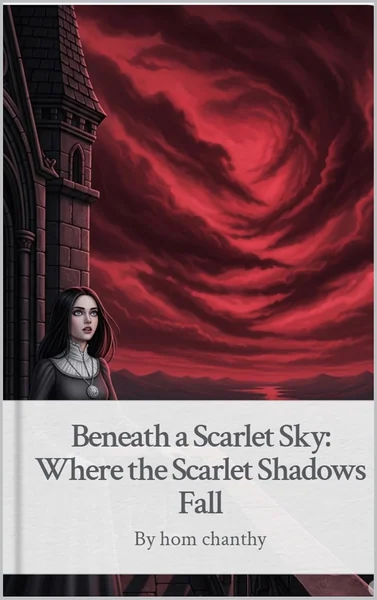
Beneath a Scarlet Sky: Where the Scarlet Shadows Fall (Short Stories Book
by Hom Chanthy
The ninth entry in Hom Chanthy's short story series, collecting dark and atmospheric fiction set beneath imagery of scarlet skies and shifting shadows.
Read our full reviewAt a glance
LuvemBooks Verdict
Best for: Families and educators already following Hom Chanthy's Beneath a Scarlet Sky series who want to continue a thematically consistent, morally serious short fiction journey with young readers aged roughly 8–14.
Worth it? Skip it? Read the full verdict →Ask LuvemBooks
Was this helpful?
- Is it worth reading?
- For families and educators already invested in Hom Chanthy's series, Book 9 is a natural continuation of the themes they know — courage, sacrifice, and hope in the face of hardship. The short story format and lightweight Kindle file size (3.3 MB) make it practical for digital-first classrooms and households. However, readers arriving cold without prior volumes, or those who rely on enhanced digital reading tools like Word Wise or Enhanced Typesetting, may want to weigh the limitations before committing.
- Similar books
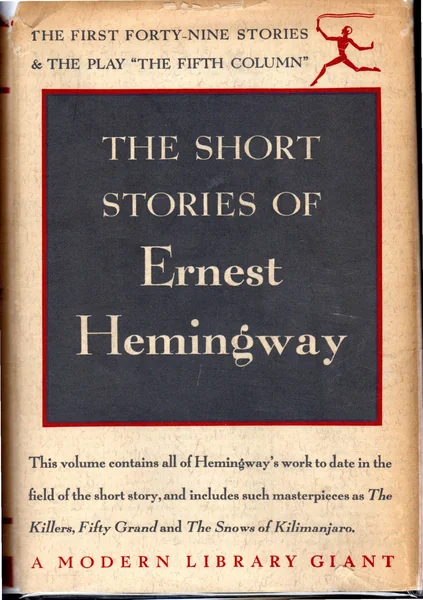
- Readers drawn to short fiction collections with emotional and moral depth may also appreciate the craft on display in Ernest Hemingway's The Short Stories of Ernest Hemingway and Raymond Carver's What We Talk About When We Talk About Love — both landmarks of the form, albeit aimed at adult readers rather than the 5-to-17 range Chanthy targets. For younger readers specifically, Jon Scieszka's Guys Write for Guys Read and Wendy Mass's Every Soul a Star offer age-appropriate short-form and thematically rich reading experiences that sit closer to Chanthy's intended audience.
- Who should read this?
- Book 9 is best suited to families and educators who have already followed Hom Chanthy's series from earlier volumes and are looking for a natural continuation. Middle-grade readers — roughly the midpoint of the 5-to-17 window — who are drawn to stories of resilience and moral courage in difficult circumstances are the most natural fit. Digital-first households and classrooms with e-reader access will find the Kindle format practical, though those who rely on enhanced reading tools should note the absence of Word Wise and Enhanced Typesetting.
- What age is it for?
- The series is officially pitched to a reading age of 5 to 17 years, but LuvemBooks notes this range is unusually broad and offers caregivers little granular guidance. Middle-grade readers — roughly ages 8 to 12 — are likely the most natural fit for this volume, given its thematic complexity around conflict and moral courage. The absence of Word Wise in the Kindle edition is a particular limitation for readers at the younger end of that range who are still building foundational literacy.
- What's the reading level?
- The series targets a reading age of 5 to 17 — a span broad enough to cover early readers through late teens. LuvemBooks identifies middle-grade readers as the most practical target within that window for this volume. The Kindle edition's lack of Enhanced Typesetting and Word Wise means that readers at the younger or more developing end of that range won't benefit from in-app reading supports that could otherwise scaffold comprehension.
- Where does this fit in the series?
- Where the Scarlet Shadows Fall is the ninth book in Hom Chanthy's Beneath a Scarlet Sky short story series, which runs to at least 20 installments. The overarching Beneath a Scarlet Sky branding unifies all volumes under a shared thematic identity — courage, sacrifice, and hope in the face of conflict — making sequential reading the most rewarding approach. Readers new to the series are encouraged to begin with earlier volumes rather than starting at Book 9.
Summarize this book
Follow up
Synthesized from verified book data & published reviews · How we review
Press Enter to ask. Answers come from our editorial Q&A — start typing to see related questions.
Age & Reading Level
Recommended age
Ages 8–12
Reading level
Middle grade
2 content notes · who it suits
Content to know about
Best for: Ages 8+ — abstract themes of moral courage, conflict, and sacrifice suit confident middle-grade readers; the broad 5-to-17 stated range offers limited guidance, and the absence of in-app reading supports (Word Wise, Enhanced Typesetting) makes the Kindle edition less suitable for early readers at the lower end of that range.
Skip if you are looking for a light, standalone short story collection with no connection to an ongoing series.
Editorial Review
Beneath a Scarlet Sky: Where the Scarlet Shadows Fall is Book 9 in Hom Chanthy's ongoing short story series, a Kindle collection designed for readers aged 5 to 17 that explores themes of courage, sacrifice, and hope set against backdrops of conflict and hardship. The series, which spans at least 20 entries, positions itself as a bridge between children's and young adult reading, making it a broad-tent offering rather than a tightly age-targeted one.…
Read the Full ReviewBooks like Beneath a Scarlet Sky
Curated picks for readers who enjoyed Beneath a Scarlet Sky, with our reasoning for each match.