
7 min read
Share This Review
The Way of the Superior Man by David Deida Review: A Spiritual Guide for Men That Endures
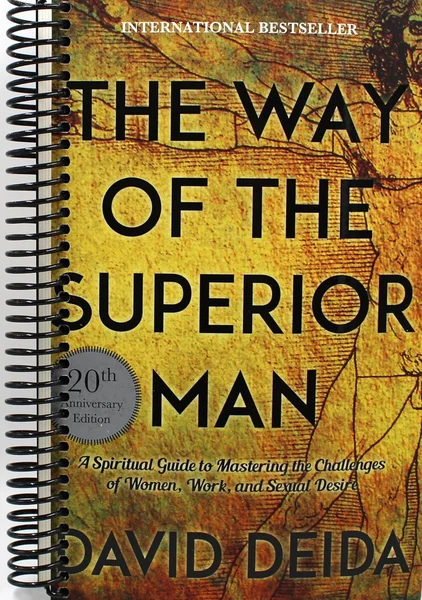
David Deida's The Way of the Superior Man is a long-selling spiritual guidebook for men that addresses career, intimate relationships, sexuality, and purpose through the lens of masculine spirituality; having sold over a million copies, its 20th Anniversary Edition — published by Sounds True / St. Martin's Essentials and featuring a new introduction by Deida — brings its central challenge to a new generation of readers, though its framework of polarity between masculine and feminine energies remains a point of genuine debate.
LuvemBooks Verdict
Best for
Men drawn to a spiritually rooted, integrative framework — one that connects purpose and vocation with intimate relationships and sexual dynamics — who are open to exploring masculine and feminine as complementary energetic poles rather than seeking guidance grounded in empirical psychology or gender research.
Worth it if
Worth reading if you're a man in a season of growth or transition who wants a single, wide-ranging reference that addresses career, family, intimacy, and spiritual practice through a unified philosophical lens — and who can engage with the material critically, taking what resonates and questioning what doesn't.
Skip if
Skip it if you identify outside the heterosexual masculine/feminine polarity model the book is built around, or if you're looking for guidance grounded in contemporary psychological research or gender theory rather than spiritual philosophy.
What readers & critics say
Promotional materials and endorsements retrieved via Macmillan and Bookshop.org highlight the book's rare integration of sexuality, spirituality, and purpose, with Tony Robbins calling it a guide to "a successful and spiritually complete way of life." Reader commentary retrieved from books.apple.com acknowledges the book as "an eye-opener" for those in growth or transition, while noting its masculine/feminine framework "may not resonate with everyone" and is best approached as guidance rather than gospel.
Sources: us.macmillan.com, bookshop.org, books.apple.com, duckiesbooknook.wordpress.comAge & Reading Level
Recommended age
Adult
Reading level
Adult
2 content notes · who it suits
Content to know about
Best for: Adults — the book's sustained focus on male sexuality, intimate relationships, and spiritual philosophy is oriented toward adult readers.
Skip if you want a self-help framework grounded in empirical psychology, contemporary gender research, or inclusive of non-heterosexual and non-binary experiences.
In This Review
- What Works & What Doesn't
- What the Book Actually Is and Argues
- Scope, Reach, and the 20th Anniversary Edition
- Endorsements and Recognised Strengths
- The Framework and Its Limitations
- Who This Book Is For
What Works & What Doesn't
What Works
- Over a million copies sold, attesting to sustained, broad readership across two decades
- Addresses an unusually wide range of men's concerns — career, family, intimacy, and spirituality — within a single integrated framework
- The 20th Anniversary Edition includes a new introduction by David Deida, updating the book's framing for contemporary readers
- Endorsed by prominent figures including Tony Robbins and Marianne Williamson, who point to its rare integration of sexuality and spirituality
- Published by Sounds True / St. Martin's Essentials, bringing established distribution to a long-proven title
What Doesn't
- The masculine/feminine polarity framework is built primarily around heterosexual dynamics, limiting its direct applicability for readers outside that model
- The spiritual-philosophical register means the book does not engage with empirical psychology or contemporary gender research, which some readers will find a significant gap
What the Book Actually Is and Argues
Scope, Reach, and the 20th Anniversary Edition
Endorsements and Recognised Strengths
The Framework and Its Limitations
Who This Book Is For
Frequently Asked Questions
Sources & Further Reading
The key facts and claims in this review are grounded in the retrieved, verified sources listed below.
- Cited in this review
- 1
books.apple.com
- 2
us.macmillan.com
- 3
- Further reading
- 4
David Deida, Wikipedia
- 5
newbookrecommendation.com
- 6
Related Reviews
Reviews of books we picked for readers who enjoyed The Way of the Superior Man.


Reader Comments
No comments yet
Be the first to share your thoughts!