7 min read
Share This Review
The ONE Thing by Gary Keller & Jay Papasan Review: A Focused Productivity Classic Worth Revisiting
The ONE Thing by Gary Keller and Jay Papasan is a best-selling productivity book that argues extraordinary results come from identifying and acting on a single most-important task — using the Pareto principle and a central "Focusing Question" to cut through the myths of multitasking, perfect balance, and equal-priority thinking. Structured in three parts, it dismantles common productivity assumptions before offering a simple, repeatable framework for readers across work, personal, family, and spiritual domains.
LuvemBooks Verdict
Best for
Readers who feel overextended or overwhelmed by competing priorities and want a clear, repeatable framework for identifying the single most-important action — whether in their professional, personal, or family life.
Worth it if
You're new to productivity literature or have found complex systems unsustainable and want a focused, well-argued case for radical prioritisation built around one portable, practical tool.
Skip if
You're already fluent in Pareto-principle thinking and are looking for a comprehensive system covering habits, workflow design, or team dynamics — the book's scope is intentionally and unapologetically narrow.
What readers & critics say
According to Wikipedia, The ONE Thing appeared on the bestseller lists of The New York Times, The Wall Street Journal, USA Today, and Amazon.com, confirming its broad commercial reach. Reader feedback surfaced on Amazon UK highlights the book's clarity and singles out the chapter-ending 'Big Ideas' summaries as a particularly valued feature, with one reader noting that Section 3 helped them cut through fog on a real project.
Sources: Wikipedia, Amazon UKAsk LuvemBooks
Was this helpful?
- Is it worth reading?
- For readers who feel overextended, overwhelmed by competing priorities, or stuck despite high effort, The ONE Thing delivers a focused, well-organized argument that has resonated with a large and varied readership. Its three-part structure builds conviction logically before asking for behavioral change, and the chapter-ending 'Big Ideas' summaries make the material immediately actionable. The main caveat is scope: the book intentionally covers a narrow band of ideas, and those seeking a comprehensive productivity system — covering habits, workflow tools, or team dynamics — will find it purposefully limited.
- Similar books
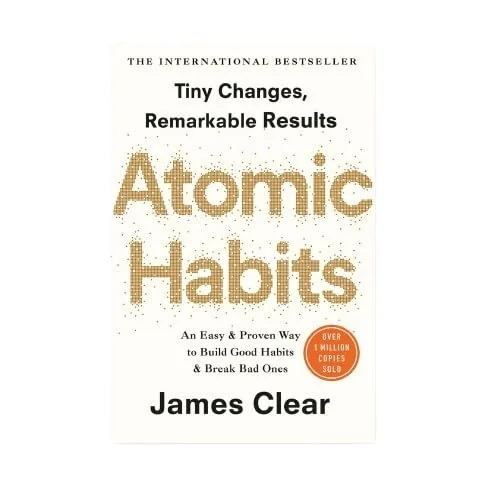
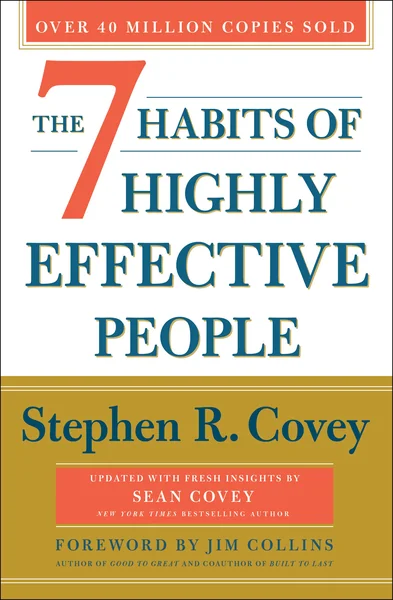
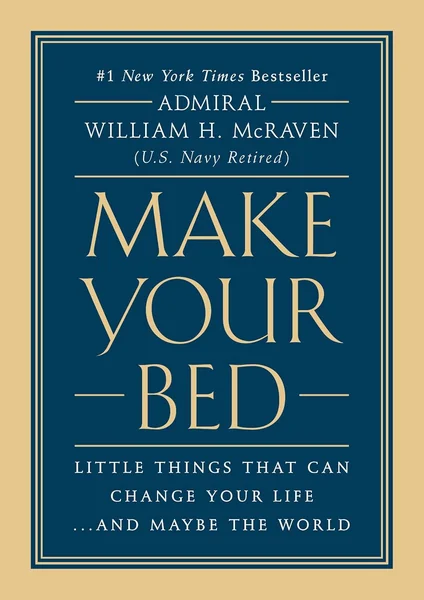
- Readers drawn to The ONE Thing's focus-first philosophy will find strong companionship in James Clear's Atomic Habits, which addresses behavior change at the system level with similar accessibility and practicality. Stephen R. Covey's The 7 Habits of Highly Effective People covers overlapping ground on prioritization and principle-centered living, though with broader scope. For shorter, punch-for-punch motivational reads, Admiral William H. McRaven's Make Your Bed and Napoleon Hill's Think and Grow Rich both share the book's conviction that simple disciplines drive outsized results. Those interested in stripping complexity from daily life may also appreciate A Simpler Life by The School of Life.
- Who should read this?
- The ONE Thing speaks most directly to readers who feel overextended, overwhelmed by competing priorities, or stuck despite high effort — whether in a professional, personal, family, or spiritual context. Its accessibility makes it equally suitable for readers new to productivity literature and those returning to the genre after finding more complex systems unsustainable. Readers already deeply familiar with Pareto-principle thinking may find some of the theoretical ground well-trodden, though the Focusing Question framework offers a practical articulation that distinguishes the book from broader minimalist productivity philosophy.
- What are the main themes?
- The book's dominant theme is radical focus as the engine of extraordinary achievement — the argument that chasing a single most-important task consistently outperforms busyness, multitasking, and the pursuit of perfect balance. Closely related is the dismantling of widely accepted productivity 'lies': that everything matters equally, that multitasking is effective, that willpower is always available, and that thinking big is dangerous. A secondary theme is the danger of diluted attention — the idea that conventional productivity advice, including to-do lists and balance-seeking, actively slows results by spreading effort too thin.
- Is this a good book club pick?
- The ONE Thing works well for book clubs or workplace reading groups focused on productivity and personal development. Its three-part structure and chapter-ending 'Big Ideas' summaries give groups clear discussion anchors, and its application across work, personal, family, and spiritual domains means members with very different contexts can find shared relevance. The book's intentionally narrow thesis also makes it easy to debate: the argument that radical single-task focus outperforms conventional multitasking and balance-seeking is provocative enough to generate genuine disagreement.
- What are the practical takeaways?
- The book's most concrete practical output is the Focusing Question — a repeatable prompt designed to help readers identify their single most-leveraged action at any given moment, applicable across work, personal, family, and spiritual contexts. Beyond that, Part Three applies the framework to goal-setting, time-blocking, and accountability. The chapter-ending 'Big Ideas' summaries distill each section into immediately actionable points, which reviewers have consistently singled out as among the book's most useful features.
Summarize this book
Follow up
Synthesized from verified book data & published reviews · How we review
Press Enter to ask. Answers come from our editorial Q&A — start typing to see related questions.
Age & Reading Level
Recommended age
Adult
Reading level
Adult
who it suits
Skip if you want a comprehensive productivity system covering habits, workflow tools, or team dynamics in depth.
Our Review
What the Book Actually Argues
![[KEY SUMMARY] The ONE Thing: The Surprisingly Simple Truth Behind Extraordinary Results (Top Rated 30-min Series) by Chris Woods front cover](https://cdn.luvembooks.com/media/original_images/KEY_SUMMARY_The_ONE_Thing_The_Surprisingly_Simple_Truth_Behind_Extraordin.webp)
Place in the Genre and Its Reach
Genuine Strengths
Limitations and Whom It May Frustrate
Who This Book Is Designed For
Sources & Further Reading
The key facts and claims in this review are grounded in the retrieved, verified sources listed below.
- Cited in this review
- 1
- 2
- 3
- Further reading
- 4
projectlifemastery.com
- 5
crediblemind.com
- 6
Books like
Curated picks for readers who enjoyed , with our reasoning for each match.
If you liked this book