BOOKS
Published

Read Time

8 min read

Reader rating

4.7

· 34,289 Amazon ratings
reader ratings, not a LuvemBooks score
Curated & edited by

LuvemBooks Editorial

How we create our reviews →
Share This Review

Good Vibes, Good Life by Vex King Review: A Beginner-Friendly Self-Love Phenomenon

Vex King's Good Vibes, Good Life (Hay House UK) is a self-love guide covering mindfulness, positive habits, and manifestation, built on the author's own story of overcoming adversity. With over four million copies sold, it shines as an entry point — though seasoned self-help readers may find its concepts familiar.

LuvemBooks Verdict

Best for

Readers new to self-development — especially those arriving from Vex King's social media audience — who want a gentle, clearly structured first introduction to self-love, mindfulness, belief-reframing, and manifestation.

Worth it if

Worth picking up if this is your first sustained encounter with self-love and positive-thinking frameworks and you'd value an encouraging, testimonial-driven voice over academic rigor.

Skip if

Skip it if you're already well-read in self-help and want new concepts, research-backed argument, or clinical depth — per one detailed reader critique, it leans toward achievement and top-level familiar material.

Storizen called it "a powerful guide to transforming your mindset," praising King's infectious energy, while Eat My News judged it one of the best books in its genre and especially relatable for younger readers. Charelle Griffith offered the sharpest dissent, finding it focused more on achieving greatness than self-love and light on new concepts, though crediting King's memorable, shareable writing style; BookWritten echoed the positive consensus, calling it ideal for beginners.

Sources: Storizen, Charelle Griffith, Eat My News, BookWritten
4.7from 34,289 Amazon ratings— reader ratings, not a LuvemBooks score
Buy on Amazon

Age & Reading Level

Recommended age

Adult

Reading level

Adult

Skip if you want research-cited, clinically grounded self-help rather than guidance built on personal experience and intuitive wisdom.

In This Review
  • What Works & What Doesn't
  • What the Book Actually Contains
  • The Scale of Its Reception
  • What It Does Well
  • Where Readers Push Back
  • Who It Is For

What Works & What Doesn't

What Works
  • Over four million copies sold worldwide; a Sunday Times Top 100 bestseller of the past 50 years in the UK
  • Clear, accessible structure moving from 'What is self-love?' Through habits, mindset, and purpose
  • Covers concrete practices: self-care, mindfulness, meditation, belief-reframing, and manifestation techniques
  • King's personal adversity story gives the guidance a grounded, testimonial quality
  • Widely recommended as a welcoming first book for readers new to self-development
What Doesn't
  • One detailed reader review criticizes it for offering mostly top-level information and few new concepts for genre veterans
  • Tilts toward 'achieving greatness' and manifestation more than pure self-love, per the same critique
  • Grounded in personal experience and intuition rather than research or clinical frameworks
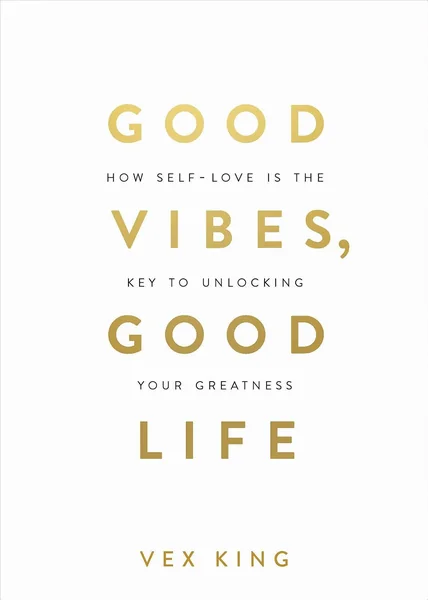
A bestselling entry-level self-love manual whose reach is extraordinary and whose depth, per some readers, is deliberately introductory. Scope note: this review draws on the published record — publisher materials, retailer listings, and reader commentary — not hands-on application of the book's exercises.
Good Vibes, Good Life: How Self-Love Is the Key to Unlocking Your Greatness: MILLIONS OF COPIES SOLD WORLDWIDE by Vex King front cover

What the Book Actually Contains

Good Vibes, Good Life: How Self-Love Is the Key to Unlocking Your Greatness is a self-help guide by Vex King, published by Hay House UK in December 2018. Its structure is plainly laid out in its table of contents: an opening section asking "What is self-love?", followed by parts titled "A matter of vibes," "Positive lifestyle habits," and further sections extending that framework. The publisher's synopsis describes a book that combines practical wisdom, gentle guidance, and King's own personal experience to help readers change their outlook, build healthier habits, and create a more meaningful life. The specific territory it covers includes practicing self-care and overcoming toxic energy, cultivating mindfulness and meditation habits, changing beliefs to invite opportunities, manifesting goals through tried-and-tested techniques, overcoming fear, and finding one's higher purpose. King's backstory anchors the framing: he overcame adversity to become a source of hope for thousands of young people, and the book positions his personal journey as the foundation of its teaching.
didn't add many new concepts rather than providing top-level information with some personal stories.

The Scale of Its Reception

Few self-help titles of the past decade carry comparable commercial credentials. The book has sold over four million copies worldwide, and it appears on The Sunday Times' list of the top 100 bestselling books of the past 50 years in the UK. King is described as the author of #1 Sunday Times bestsellers, with Good Vibes, Good Life followed by a companion title, Healing Is the New High. The book's origin in King's large Instagram following is part of its identity — retailer listings openly describe him as an "Instagram guru" — and that origin explains both its format instincts (short, shareable aphorisms sit alongside longer passages) and its audience: millions of readers who encountered his voice on social media first. This is documented, large-scale popularity, not a niche claim.

What It Does Well

The book's core strength, per its publisher description and reader responses, is accessibility. It consolidates the central ideas of the self-love and positive-thinking space — self-care as a prerequisite for ambition, habit-building through mindfulness, reframing limiting beliefs — into a single, gentle volume organized in clearly labeled parts. One detailed reader review at charellegriffith.com, while critical of its depth, still credited King with "a nice writing style" and noted that he "knows how to write quotes that are rememberable and shareable" — a real craft observation about a book built partly on aphorism. The same review recommends it outright as a starting point: for readers who haven't yet read widely in self-love, personal development, or law-of-attraction material, it serves as a welcoming entry. King's personal adversity narrative gives the advice a testimonial grounding rather than a purely abstract one, and the techniques it lists — meditation, mindfulness, manifestation practices — are presented as habit frameworks rather than one-off insights.

Where Readers Push Back

The most substantive critique in the available record comes from that same reader review, and it is specific rather than vague: the book "focused less on self-love and more on achieving greatness," and "didn't add many new concepts rather than providing top-level information with some personal stories." That is one blogger's verdict rather than a consensus, but it is a coherent and frequently echoed shape of criticism for the genre — a reader already versed in self-improvement literature may find the material familiar. There is also an inherent tension worth naming: the subtitle promises that self-love unlocks "greatness," which pulls the book toward achievement-oriented territory (manifesting goals, inviting opportunities) that sits uneasily beside unconditional self-acceptance. Readers seeking clinical depth, therapeutic rigor, or research-cited argument will not find those modes advertised here; the book's stated method is personal experience and intuitive wisdom, and it should be judged against that intent.

Who It Is For

Good Vibes, Good Life is pitched at newcomers to self-development — readers encountering mindfulness, belief-reframing, and manifestation for the first time, or those arriving from King's social media presence who want his philosophy in sustained form. Its four-million-copy readership and Sunday Times longevity indicate it lands squarely for that audience. Seasoned self-help readers, by contrast, should calibrate expectations toward a refresher in an approachable voice rather than new conceptual ground. As with any how-to title, its practical value depends on application this review has not performed; what the record supports is what the book contains, how it is structured, and how its enormous readership and at least some of its critics have received it.

Sources & Further Reading

The key facts and claims in this review are grounded in the retrieved, verified sources listed below.

  1. Cited in this review
  2. 1
  3. Further reading
  4. 2
  5. 3
  6. 4
  7. 5
  8. 6
  9. 7
  10. 8