Skip to content
Reviewed

Read Time

7 min read

Our age bandAdult
Reader rating
4.7 · 15,174 Amazon ratings, as of Nov 2026
reader ratings, not a LuvemBooks score
Curated & edited by

LuvemBooks Editorial

How we create our reviews →
Share This Review
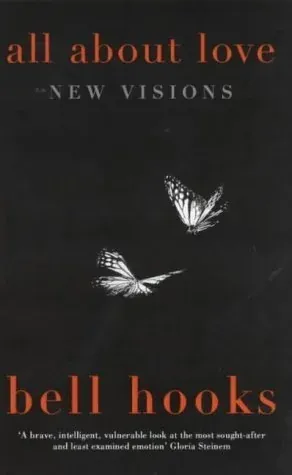
All About Love : New Visions by bell hooks front cover

Review

All About Love: New Visions

All About Love: New Visions by bell hooks Review: A Blueprint for a Loving Life

Bell hooks’s 1999 non-fiction work redefines love as a conscious choice and political act. Thirteen chapters dissect how systemic oppression distorts affection, offering readers a rigorous framework to cultivate a just and loving life.

Our age band: Adult

LuvemBooks Verdict

Best for

Best for readers seeking a rigorous, intersectional framework to reframe love as a deliberate political and personal practice rather than a fleeting emotion.

Worth it if

Worth reading if you want to explore how systemic power, capitalism, and patriarchy shape our capacity for connection and self-love.

Skip if

Skip it if you prefer a lighthearted, mechanics-focused guide to modern dating over dense theoretical critiques of love.

Where reviewers agree and split

Readers rate it 4.7 on Amazon. The reviews we read that discuss it in depth split on some points:

  • Mixed

    Kirkus Reviews · Press review: praises effort but notes reliance on platitudes

  • Positive

    e3w.dwrl.utexas.edu · Book blog: praises the book as relevant and significant

  • Positive

    kara.reviews · Book blog: highly praises the book as a revelation

  • Mixed

    Please Read It To Me · Book blog: finds it worthwhile despite unexpected self-help tone

    Overall verdicts are our summary of each review we read, from its headline, rating and conclusion.

    Critics and readers alike praise hooks for bridging academic theory to redefine love as an active choice. While kara.reviews highlights the 'deceptively simple' prose and e3w.dwrl.utexas.edu notes its significance in filling a literature gap, Kirkus Reviews offers a mixed take, calling it 'weighty with platitudes' despite its valiant effort.

    “weighty with platitudes, yet refreshed with some thoughtful analyses”

    — Kirkus Reviews
    Sources: e3w.dwrl.utexas.edu, Kirkus Reviews, kara.reviews
    4.7from 15,174 Amazon ratings, as of Nov 2026— reader ratings, not a LuvemBooks score

    Ask LuvemBooks

    Was this helpful?

    All About Love: New Visions redefines love as a deliberate, political act, offering a rigorous intersectional framework to dismantle systemic oppression. While the text successfully bridges complex ideas, its dense theoretical approach may overwhelm readers seeking a casual guide.
    Is it worth reading?
    It is highly recommended for readers seeking a framework to reframe love as a personal practice. However, those looking for a lighthearted, mechanics-focused approach or quick fixes will likely find the critiques and prescriptive elements alienating.
    Similar books
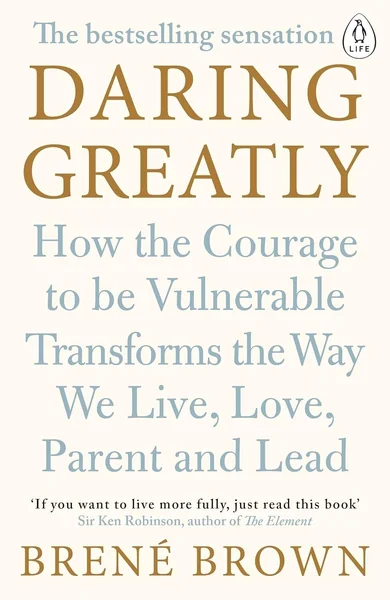
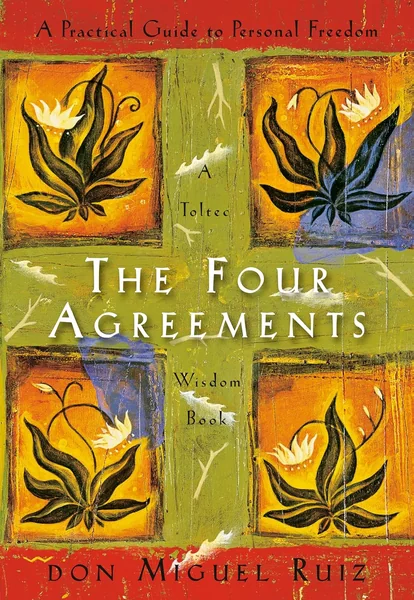
    Readers who appreciate hooks’s intersectional approach often explore Brené Brown’s Daring Greatly for its focus on vulnerability, or Don Miguel Ruiz’s The Four Agreements for its practical framework on intentional living. While hooks’s own The Will to Change explores similar themes of masculinity and love, it is not currently available in our catalog.
    Who should read this?
    This book is best suited for activists, scholars, and readers interested in emotional well-being. It specifically appeals to those willing to confront the political dimensions of affection and analyze how patriarchal structures and capitalism shape personal relationships.
    What are the main themes?
    The text centers on love as a deliberate practice and political act, dissecting how societal structures distort affection. Key themes include personal healing, patriarchal critiques, and the necessity of abandoning superficial gestures for active complicity.
    Why is love considered a political act?
    Hooks argues that love is inherently political because it requires dismantling the patriarchal, capitalist, and racist structures that dictate relationships and suppress vulnerability. By choosing to extend oneself for the nurturing of another’s spiritual growth, readers actively resist societal conditioning that prioritizes domination and greed over genuine connection.
    How does the book address race and identity?
    The treatise explicitly traces how capitalism, racism, and heterosexism distort human connection, urging readers to examine their complicity in white supremacy and sexism. While reviewers note that the framework occasionally lacks direct naming of specific racial and ethnic experiences, the text remains a foundational reference for understanding love through an intersectional lens.
    Summarize this book

    Summarize this book

    Bell hooks’s 1999 treatise frames love as an active verb and conscious choice, dissecting how capitalism, racism, and patriarchy distort human connection. Organized into thirteen chapters, the text provides a blueprint for cultivating self-love and justice while urging readers to abandon performative allyship and examine their own complicity in oppressive systems.

    Follow up

    How is the book structured?
    Does it offer practical advice?
    What theoretical influences does it draw upon?

    Synthesized from verified book data & published reviews · How we review

    Ask LuvemBooks

    What would you like to know about All About Love: New Visions?

    Answers come from our editorial notes on this book. If we haven't covered something, we'll say so.

    Readers often ask

    Editorial Review

    We review the evidence: reader verdicts, gathered and weighed with AI assistance and edited by LuvemBooks, rather than one reader's first-hand take.
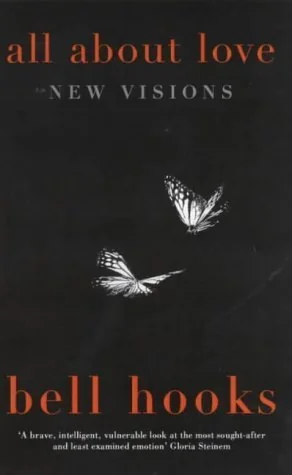
    Bell hooks’s 1999 treatise redefines love as a deliberate practice rather than a passive emotion, offering a rigorous framework for readers seeking to dismantle systemic oppression through a politic of love.
    All About Love : New Visions by bell hooks front cover
    All About Love : New Visions by bell hooks front cover

    What All About Love: New Visions Actually Argues

    Hooks organizes the text into thirteen chapters that dissect the concept of love across personal, political, and cultural landscapes. She establishes love as an active verb and a conscious choice rather than a fleeting feeling.
    The author draws on M. Scott Peck’s definition of love as "the will to extend one's self for the purpose of nurturing one's own, or another's spiritual growth." Hooks challenges the societal cynicism that masks fear of heartbreak and critiques how patriarchal structures dictate gendered expectations around emotional labor.
    She argues that women are often socialized to manipulate and hide their true selves, while men are conditioned to suppress vulnerability to maintain power. The book traces the genealogy of love to expose how capitalism, racism, and heterosexism distort human connection.
    Hooks urges readers to abandon the false selves they create to mask insecurities. She insists that knowing love requires absolute honesty with oneself and others.

    The Book’s Significance and Place in Social Criticism

    The jacket copy describes the work as a "blueprint for finding myriad types of love," framing it as a foundational text for intersectional social justice. Critics note that hooks successfully bridges the gap between academic theory and accessible self-help.
    Alejandra Valencia Medina of the University of Texas at San Antonio’s digital writing lab writes that the book fills a "long-existing gap in the literature on love, especially through the perspective of a woman." The text remains a vital reference point for understanding how personal relationships are inextricably linked to public policy and systemic power dynamics.
    Its examination of labor and self-worth continues to resonate with readers analyzing the intersection of economic exploitation and emotional well-being. Hooks details how greed destroys intimacy.
    She challenges the cultural addiction to personal satisfaction over genuine connection.

    Strengths in Prose and Intersectional Analysis

    Readers appreciate hooks’s deliberate use of clear, concise sentence structures that make complex sociological concepts digestible. A reviewer at kara.reviews notes that her simple syntax creates prose that feels "deceptively simple until you actually start parsing it for meaning."
    The author tackles taboo subjects with directness, moving seamlessly from critiques of white supremacy to the importance of platonic friendship. She explicitly addresses the gulf between performative allyship and active complicity, urging readers to examine their own behaviors in fighting sexism and racism.
    The book also offers practical tools, such as the advocacy of daily affirmations to cultivate a loving mindset toward oneself and others. Hooks emphasizes that surrendering power and domination is essential.
    She argues this is necessary for creating a world where everyone can live freely and fully.

    Limitations and Who Might Find It Challenging

    The text’s rigorous theoretical approach may feel dense to readers seeking a purely casual or light-hearted guide to relationships. A reviewer at e3w.dwrl.utexas.edu points out that the book’s analysis occasionally lacks direct naming of specific racial and ethnic experiences within the broader framework of loving practices.
    Some readers may find the deeply religious undertones and the heavy emphasis on self-help exercises to be more prescriptive than they prefer. Additionally, the book’s focus on systemic critique means it offers little on the mechanics of navigating modern dating or specific interpersonal conflict resolution.
    The book also dedicates chapters to values and destiny, arguing that living by a love ethic requires constant vigilance against societal conditioning. Hooks highlights how dehumanizing jobs undermine self-love.
    This theme resonates deeply with contemporary labor critiques and economic exploitation.

    Is All About Love: New Visions Worth Reading?

    The book stands as a demanding but essential manual for readers willing to confront the political dimensions of affection. It points toward activists and scholars who view personal healing as inseparable from societal change, while it may alienate those looking for a quick fix or a strictly romantic focus.
    The work shares philosophical ground with bell hooks’s own earlier texts on intersectionality and broader social justice movements. Readers seeking a purely romantic guide may find the scope too broad, but those interested in the mechanics of power will find the analysis invaluable.
    Hooks concludes by framing love as a redemptive force. She argues it returns humanity to the promise of everlasting life through open-hearted vulnerability.

    Sources & Further Reading

    The key facts and claims in this review are grounded in the retrieved, verified sources listed below.

    1. 1
    2. 2
    3. 3
    4. 4
    5. 5
    6. 6
    7. 7
    8. 8

      kirkusreviews.com

    Age & Reading Level

    Our age band

    Adult

    Our age band groups books for browsing; it isn't an age a review gave.

    From our readers

    Reader reviews

    No LuvemBooks readers have answered yet.

    Read it? Was it right for you?

    Books like All About Love: New Visions

    Curated picks for readers who enjoyed All About Love: New Visions, with our reasoning for each match.

    Discussion

    Reader comments