8 min read
4.7
· 1,230 Amazon ratingsShare This Review
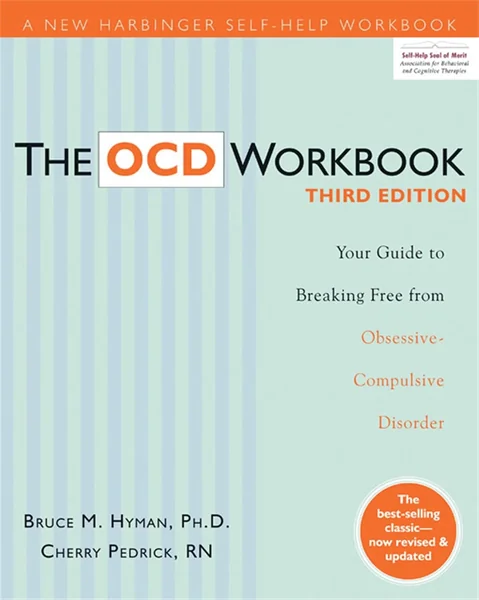
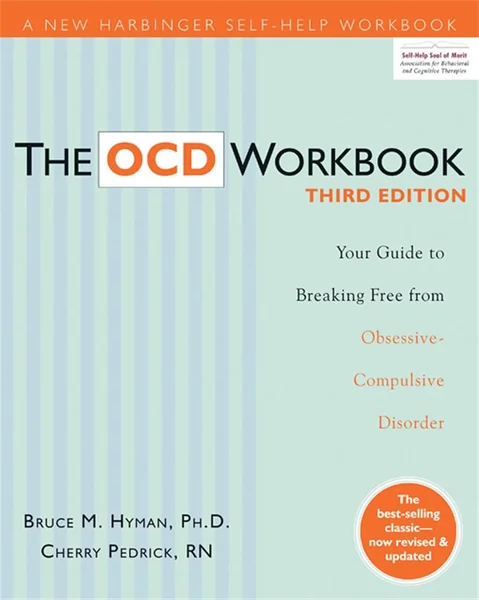
The OCD Workbook by Bruce M. Hyman & Cherlene Pedrick Review: A Clinically Grounded Self-Help Classic
Now in its third edition, The OCD Workbook: Your Guide to Breaking Free from Obsessive-Compulsive Disorder by Bruce M. Hyman, PhD, LCSW, and Cherlene Pedrick, RN, is a structured, evidence-based self-help workbook published by New Harbinger Publications, designed to guide people living with OCD through cognitive behavioral strategies — particularly exposure and response prevention — to reclaim their daily lives. This review covers the workbook's content and published reception; hands-on clinical outcomes depend on individual use and are not assessed here.
LuvemBooks Verdict
Best for
Motivated adults living with OCD — or on the OCD spectrum, including BDD and trichotillomania — who want a structured, clinically grounded workbook to use either independently or alongside a therapist.
Worth it if
You are ready to engage actively with exposure and response prevention (ERP) exercises and want one of the most thorough, evidence-based self-help resources available for OCD and related conditions.
Skip if
You are looking for a brief, accessible introduction to OCD rather than a detailed, 352-page workbook that demands sustained motivation and willingness to confront feared situations head-on.
What readers & critics say
The International OCD Foundation lists the workbook as a recommended resource for OCD sufferers, reflecting its standing among specialist organisations (iocdf.org). The publisher's own page at newharbinger.com carries an endorsement from Fred Penzel, PhD, calling it "one of the best self-help books on OCD" and noting that "there are few that are of the same caliber, in terms of completeness and usefulness" — a judgement echoed on barnesandnoble.com, where the same endorsement is surfaced for prospective readers.
Sources: New Harbinger Publications, Barnes & Noble, International OCD FoundationAsk LuvemBooks
Was this helpful?
- Is it worth reading?
- For motivated adult readers — whether self-directing or working alongside a therapist — The OCD Workbook stands out in the self-help field for both its clinical rigor and its breadth of coverage. Fred Penzel, PhD, executive director of Western Suffolk Psychological Services, offered a pointed endorsement, calling it one of few OCD self-help titles of the same caliber in terms of 'completeness and usefulness.' Its ERP framework aligns with established clinical practice, making it a meaningful supplement between therapy sessions or a structured starting point for those beginning to address OCD. The key caveat is that its 352-page scope and demand for sustained engagement make it a poor fit for readers seeking a quick or introductory overview.
- Similar books
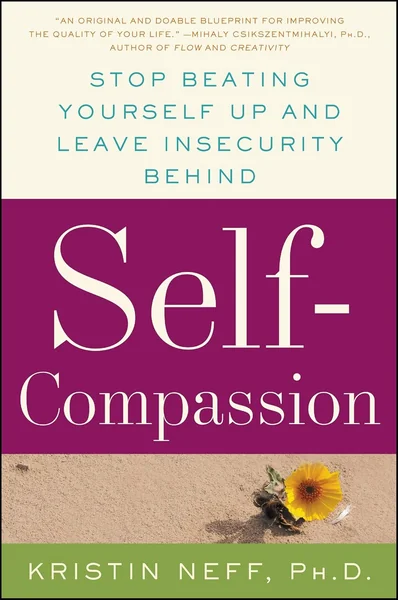
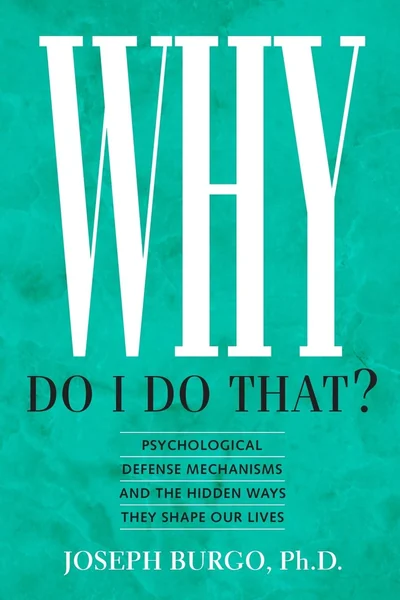
- Readers drawn to The OCD Workbook for its evidence-based approach to anxiety and behavioral change may find value in several related titles. Reid Wilson's Stopping the Noise in Your Head and Jonathan Grayson's Freedom from Obsessive-Compulsive Disorder address OCD with similarly direct behavioral frameworks, while Sally M. Winston's Overcoming Unwanted Intrusive Thoughts focuses specifically on the thought patterns central to OCD. For readers interested in the broader psychological underpinnings of their responses, Joseph Burgo's Why Do I Do That?: Psychological Defense Mechanisms and Their Role in Our Lives offers an accessible exploration of psychological self-awareness. Kristin Neff's Self-Compassion: The Proven Power of Being Kind to Yourself provides a complementary perspective for readers looking to pair behavioral work with a kinder internal stance.
- Who should read this?
- The OCD Workbook is designed for motivated adults living with OCD or OCD-spectrum conditions — including body dysmorphic disorder, trichotillomania, and other body-focused repetitive behaviors — who are ready to engage actively with a structured behavioral program. It is well suited both to those self-directing their recovery and to those using it as a supplement between professional therapy sessions. Readers seeking a light or introductory overview, or those not yet ready to confront feared situations as ERP requires, are likely to find the workbook's 352-page clinical depth more demanding than helpful.
- What are the main themes?
- The central theme of The OCD Workbook is reclaiming daily life from the grip of obsessive thoughts and compulsive behaviors, framed through the lens of cognitive behavioral therapy and exposure and response prevention. The workbook engages directly with the experience of OCD — persistent intrusive thoughts and time-consuming compulsions that prevent sufferers from 'enjoying life to the fullest' — and treats facing fear as a structured, achievable process rather than an abstract goal. Broader themes include the full OCD spectrum (encompassing BDD, trichotillomania, and body-focused repetitive behaviors), the value of active engagement over passive reassurance, and the integration of self-help tools with professional clinical practice.
- How credible is the clinical guidance?
- The workbook's clinical credibility rests on two pillars: the expertise of its authors and the endorsement of independent specialists. Bruce M. Hyman, PhD, LCSW, has directed the OCD Resource Center of Florida since 1991, specializing in CBT for OCD and anxiety disorders, and is co-author of Coping with OCD. Cherlene Pedrick, RN, brings over twenty years of nursing experience to the accessible health writing. Fred Penzel, PhD, licensed psychologist and executive director of Western Suffolk Psychological Services, independently called it one of the most complete and useful OCD self-help resources available. Publication by New Harbinger Publications, a specialist press known for clinician-reviewed evidence-based titles, further supports its standing.
- How demanding is the workbook format?
- At 352 pages, The OCD Workbook is a substantial resource built for active engagement rather than cover-to-cover passive reading. Its structured exercises and tools are intended to be worked through, and the ERP framework at its core requires sustained motivation and a genuine willingness to confront feared situations — the opposite of a comfort read. Readers should expect a meaningful time and emotional commitment; those looking for a quick-start overview or who are not yet ready for active behavioral work will find the scope demanding rather than accessible.
Summarize this book
Follow up
Synthesized from verified book data & published reviews · How we review
Press Enter to ask. Answers come from our editorial Q&A — start typing to see related questions.
Age & Reading Level
Recommended age
Adult
Reading level
Adult
Content to know about
Skip if You are looking for a brief, gentle introduction to OCD rather than a structured, demanding clinical workbook requiring active behavioral engagement.
Our Review
What the Workbook Actually Covers
The Authors and Their Credentials
Reception and Standing in the Field
Strengths: Structure, Scope, and Therapeutic Framework
Limitations and Audience Fit
Books like The OCD Workbook
Curated picks for readers who enjoyed The OCD Workbook, with our reasoning for each match.
If you liked The OCD Workbook