Skip to content
Reviewed

Read Time

7 min read

Reader rating
4.5 · 19,511 Amazon ratings, as of Nov 2026
reader ratings, not a LuvemBooks score
Curated & edited by

LuvemBooks Editorial

How we create our reviews →
Share This Review
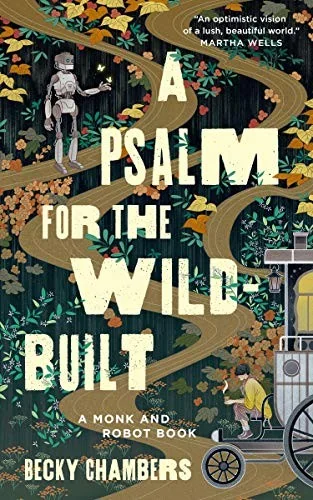
Front cover

Our review

A Psalm for the Wild-Built

A Psalm for the Wild-Built: A Monk and Robot Book Review: Gentle and Hopeful

Becky Chambers's A Psalm for the Wild-Built is a Hugo Award-winning novella in which a tea monk named Dex meets Mosscap, a robot asking what people need. Book bloggers found it warm and mindful, with one noting a slow start.

LuvemBooks Verdict

Best for

Readers who want a short, restorative story built from conversation, tea and companionship rather than conflict, and who are glad to trade plot momentum for gentle ideas about purpose and difference.

Worth it if

Worth reading if you want a warm, low-stakes novella that works overall as a comfort read, and you can settle into the opening before it finds its flow.

Skip if

Skip it if you need stakes, action or plot twists, since the conflicts between Dex and Mosscap are short-lived and the book is deliberately placid, or if you want a closed ending, as the journey is left unfinished.

Reviewers we found lean clearly positive: the book blogger behind Fanfi Addict rated it 8.5/10 and Jayne at Dear Author graded it B+, while the blogger at Tar Vol rated it 16 of 20 but found the resolution's optimism somewhat hollow and the plot light. The recurring reservations are a slow start.

Sources: Fanfi Addict, Dear Author, Tar Vol
4.5from 19,511 Amazon ratings, as of Nov 2026— reader ratings, not a LuvemBooks score

Ask LuvemBooks

Was this helpful?

A tea monk named Dex meets Mosscap, a robot asking what humans actually need, in a conflict-light novella about companionship and purpose. Book bloggers found it warm, humane and quietly thought-provoking, though one reviewer found its comfort hollow and another noted the opening takes time to engage. It suits readers who want comfort and reflection rather than stakes and action.
Is it worth reading?
Fanfi Addict's reviewer rated it 8.5/10 and Dear Author graded it B+, both praising its kindness and gentle questions. Reviewers split on the comfort itself: Books, Bones & Buffy called it a "delightful, feel good story", while Tar Vol found the conclusion hard to feel comforted by.
Similar books
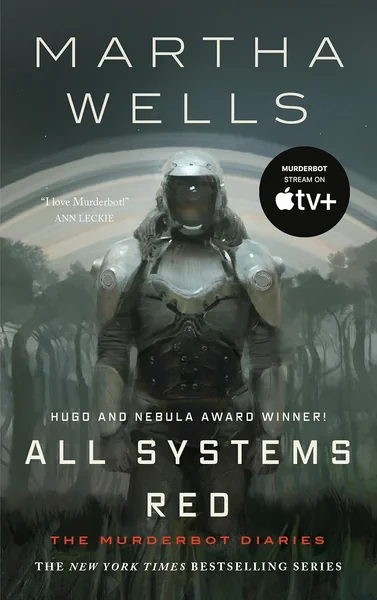
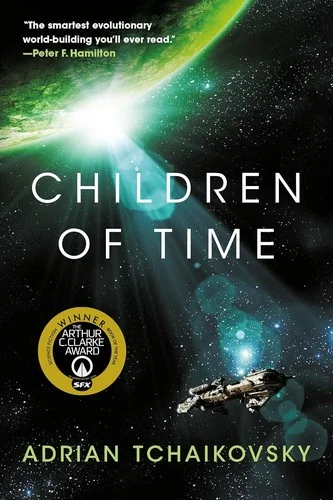
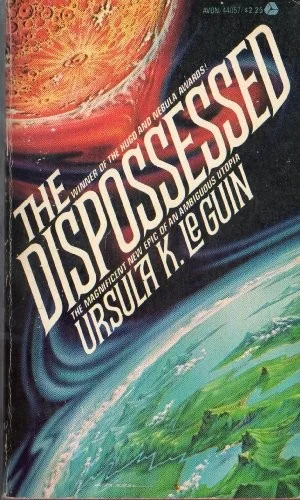
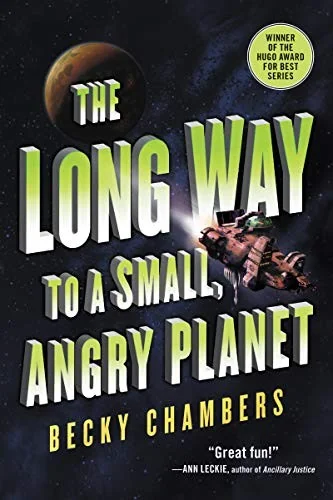
The most direct companion is Becky Chambers's own The Long Way to a Small, Angry Planet, a warmer, more crew-focused space story. Martha Wells's All Systems Red offers another thoughtful artificial being, though in a more action-driven setting. Klara and the Sun by Kazuo Ishiguro is a quieter look at a non-human mind watching people, and The Dispossessed by Ursula K. Le Guin pairs well for its questions about how a society should live. Children of Time by Adrian Tchaikovsky is a bigger-scale, more plot-heavy read for those wanting stakes.
Who should read this?
Readers will appreciate a story built on conversation, tea and companionship, trading narrative drive for gentle ideas about purpose and difference.
What age is it for?
It is published for adults, and no review we found gives a recommended age. No source we found identifies content that would restrict younger readers.
About Becky Chambers
Becky Chambers is an American science fiction writer.
What are the main themes?
Reviewers point to purpose, enough and difference: what people need, how much is enough, and whether we can sit with someone unlike ourselves. Dear Author found these questions land without moralising, and Fanfi Addict's reviewer highlighted kindness and a wish to understand across difference. One reviewer also valued a society where Dex's non-binary gender is simply unremarkable.
Is there much conflict or action?
Very little. Conflict is deliberately low-key, and the clashes between Dex and Mosscap are short-lived. Fanfi Addict's reviewer, accustomed to conflict-driven narratives where problems are settled by force, called this a welcome break from that intensity.
Summarize this book

Summarize this book

On the moon Panga, robots long ago gained self-awareness, laid down their tools and walked into the wilderness, while humans built a gentler society of farms and small communities. Dex, a non-binary tea monk who blends tea and listens to people's worries, feels dissatisfied without knowing why and travels beyond the settled lands. There Dex meets Splendid Speckled Mosscap, a robot who cannot return until it answers one question: what do people need? The two head toward an abandoned monastery together.

Follow up

Does it have a proper ending?
Can it be read on its own?

Synthesized from verified book data & published reviews · How we review

Ask LuvemBooks

What would you like to know about A Psalm for the Wild-Built?

Answers come from our editorial notes on this book. If we haven't covered something, we'll say so.

Readers often ask

Our Review

We review the evidence: published critics, reader verdicts and BookTube reviews, gathered and weighed with AI assistance and edited by LuvemBooks, rather than one reader's first-hand take.

Critics who reviewed Becky Chambers's novella largely respond to the same gentle, kind-hearted story about a tea monk and a robot, and most of the book bloggers here read it as warm, humane and quietly thought-provoking, though one reviewer found its comfort hollow. The one caveat raised is a slightly slow opening, so it suits readers who want comfort and reflection over plot momentum.
A Psalm for the Wild-Built: A Monk and Robot Book (Monk & Robot, 1)_main_0

What is A Psalm for the Wild-Built about?

The story is set on Panga, a moon where robots gained self-awareness centuries ago, laid down their tools and walked into the wilderness, never to return. Humans moved to a more sustainable way of life, with farms and small communities in place of automated factories.
Dex, a non-binary tea monk, travels from town to town blending tea to suit each person and listening to their worries. Dissatisfied without knowing why, Dex heads beyond the settled lands and meets a robot, Splendid Speckled Mosscap, who has come to honour the old promise of checking in.
Mosscap cannot go back until it has answered one question: what do people need? The pair travel into the wild together, bound for an abandoned monastery.
Wikipedia's summary lists this as the first book of the Monk & Robot duology, published by Tor Books on July 13, 2021, and winner of the 2022 Hugo Award.

What did critics find?

The book blogger behind Fanfi Addict rated it 8.5/10 and called it "mindful", praising how Dex and Mosscap meet each other's differences with kindness and a wish to understand. That reviewer, used to fantasy and space opera where conflict is settled by force, called it a break from that intensity and a warm hug in a world full of cruel intentions.
Jayne at Dear Author graded it B+. She noted a slightly slow start, after which the story "flows along like the stream in the wild".
She found its questions about how much is enough, and whether we can sit with someone unlike ourselves, land gently, with no sense of an authorial finger being wagged.
The book blogger at Books, Bones & Buffy, who came to Chambers for the first time here, praised the heart, humour and wisdom packed into under 150 pages. She singled out the tea-therapist premise, the peaceful way the robots won their independence, and a scene where Dex finds a way to share a meal with a robot that cannot eat.
The reviewer at Forever Young Adult likewise enjoyed the cosy tone and the non-binary lead, and valued a society in which Dex's gender is simply unremarkable. That reviewer's one nitpick was the cover, where the white outline round the wagon makes it look poorly cropped.

Is A Psalm for the Wild-Built worth reading?

Weighing these reviews, the tension they circle is between comfort and demand. The same quality that wins the praise, a conflict-light journey made of conversation and kindness, is what the Dear Author reviewer felt in its slower first stretch.
That points the novella towards readers who want a short, restorative book and are glad to trade plot for ideas and companionship. Fanfi Addict's reviewer framed it as relief from epic fantasy and space opera, so those who like their science fiction driven by stakes and set-pieces are the readers it points away from.
Books, Bones & Buffy's reviewer, who had never read a Chambers book before, wanted to read on.
Wikipedia's account places it in the solarpunk tradition.

How does it read on the page?

Books, Bones & Buffy's reviewer described the worldbuilding as simple yet detailed, a science-fiction setting on a moon that at times feels like fantasy because of Dex's religion, with its many gods and places of worship. She also read the winding road on the cover as a metaphor for Dex's bumpy inner journey.
The Forever Young Adult reviewer liked that even incidental characters felt distinct. Books, Bones & Buffy's reviewer also noted that the robots here are not the usual factory or war machines: they spend their time watching birds and stalagmites, and they are named for whatever they first see on waking.

Sources & Further Reading

The key facts and claims in this review are grounded in the retrieved, verified sources listed below.

  1. Cited in this review
  2. 1
  3. Further reading
  4. 2

    Becky Chambers, LuvemBooks

  5. 3
  6. 4
  7. 5
  8. 6
  9. 7
  10. 8

    Tar Vol

Age & Reading Level

Skip if you need high stakes, action or plot twists, or want an ending that closes the journey.

From our readers

Reader reviews

Be one of the first readers to answer.

Read it? Was it right for you?

Books like A Psalm for the Wild-Built

Curated picks for readers who enjoyed A Psalm for the Wild-Built, with our reasoning for each match.

Discussion

Reader comments