BOOKS
Published

Read Time

8 min read

Reader rating

4.6

· 31,580 Amazon ratings
reader ratings, not a LuvemBooks score
Curated & edited by

LuvemBooks Editorial

How we create our reviews →
Share This Review

Counting Miracles by Nicholas Sparks Review: A Heartfelt Romance of Faith and Second Chances

Counting Miracles is a #1 New York Times bestselling novel by Nicholas Sparks, published by Random House on September 24, 2024, weaving together an Army Ranger's search for roots, a doctor's guarded heart, and an elderly man's mysterious woodland vigil into a story about faith, love, and whether people can truly change. This review covers the novel's content, design, and published critical reception — not hands-on reading experience.

LuvemBooks Verdict

Best for

Devoted Nicholas Sparks readers who want his signature blend of small-town romance, spiritual reflection, and emotionally cathartic storytelling delivered with confident, well-honed craft.

Worth it if

You come to Sparks for fully realised characters, a warmly rendered Southern setting, and a dual-plot structure that lets themes of faith and mortality breathe alongside the central love story — and you're happy to be comforted rather than challenged.

Skip if

Readers approaching it as literary fiction outside genre conventions are likely to find the tidy resolution, idealized setting, and near-allegorical white deer more formulaic than transcendent.

The Washington Post described the novel as a satisfying "escape" and called it "a tidy miracle you can count on," while Booklist (as surfaced by snailonthewall.com) awarded it a starred review, praising Sparks's "fully developed, sympathetic characters with complete and compelling backstories" and predicting his many fans "will find just what they're looking for."

Sparks's new romance novel might be just the escape readers are looking for.

Washington Post
Sources: The Washington Post, Snail on the Wall (Booklist starred review via)
4.6from 31,580 Amazon ratings— reader ratings, not a LuvemBooks score
In This Review
  • What Works & What Doesn't
  • What the Novel Is About
  • Sparks's Design Intent and Craft
  • Reception and Significance
  • Genuine Strengths
  • Who This Novel Is For — and Where It Tests Patience

What Works & What Doesn't

What Works
  • Debuted as a #1 New York Times bestseller, reflecting Sparks's broad and loyal readership
  • Critics praised the setting and characters as 'postcard perfect' and 'immensely likable'
  • Booklist highlights deeply developed character backstories that give the romance its emotional weight
  • A dual-plot structure — Tanner's love story alongside an elderly man's solitary woodland vigil — adds thematic range beyond a straightforward romance
  • Rooted in a personally meaningful premise that Sparks has described as one of his favorites to develop
What Doesn't
  • Readers seeking literary fiction outside genre conventions may find the resolution and symbolic elements — including the white deer — more formulaic than surprising
  • The novel's emotional and structural ambitions remain firmly within Sparks's established template, offering little formal innovation for readers who have followed his catalog closely
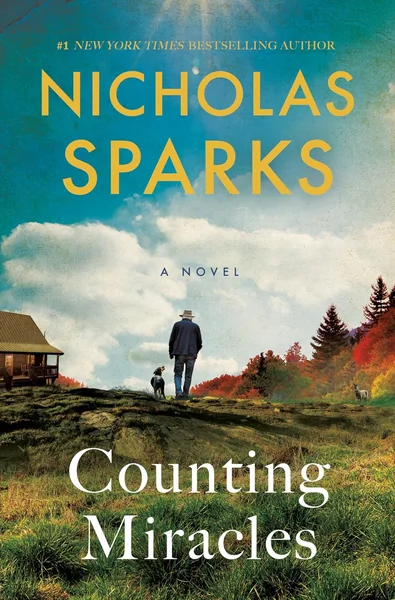
Counting Miracles is a solidly crafted Sparks novel that delivers on his signature promise of emotional resonance — critics called it "a tidy miracle you can count on."
Counting Miracles: A Novel by Nicholas Sparks front cover

What the Novel Is About

Counting Miracles centers on Tanner Hughes, an Army Ranger raised by his grandparents, who has followed his grandfather's military path through life. Returning to a small town searching for answers about his family's past, Tanner crosses paths with a local doctor whose own story runs parallel to his. At the same time, an elderly man alone in the woods with his dog — the image Nicholas Sparks has described, on his own website, as the seed from which the entire novel grew — anchors a separate but converging thread. Orbiting all of these characters is an elusive white deer that takes on a near-mythic significance within the town. As the publisher's synopsis frames it, the novel asks a central question: can people change — or at least make peace with the paths they have already taken? It is a novel about family mythologies, quiet faith, and the moments of grace that arrive without warning.
Sparks is superb at what he does. The setting is postcard perfect. The characters are immensely likable.

Sparks's Design Intent and Craft

On his own website, Sparks has written that Counting Miracles was among his favorite novels to write, explaining that the image of an old man alone in the woods had stayed with him for years before the surrounding story took shape. He has also noted that he wanted to feature a character who finds purpose and guidance through religion — a thread woven into the larger fabric of love, loss, and redemption that defines the book's emotional architecture. The novel is structured to braid its storylines together, drawing its characters' fates progressively closer until they converge around the possibility of something miraculous. That architecture reflects Sparks's established practice of building multiple character arcs with complete backstories before allowing them to collide.

Reception and Significance

Counting Miracles debuted as a #1 New York Times bestseller, affirming Sparks's enduring commercial reach more than two decades into his career. Critics described the novel as an "escape" for readers and praised it directly, writing that "Sparks is superb at what he does. The setting is postcard perfect. The characters are immensely likable." Critical coverage, as excerpted by Penguin Random House, noted that "the romance between Tanner and the doctor sizzles" and that Sparks demonstrates mastery at creating "fully developed, sympathetic characters with complete and compelling backstories," predicting that the novel will draw readers into "this touching story of hope, faith, and love." Barnes & Noble singled out the novel's blend of family mythologies and the white deer's symbolic presence as particular highlights, placing it among Sparks's most affecting recent work.

Genuine Strengths

The novel's most discussed strength in published commentary is the depth of its character construction. Booklist's assessment, surfaced by the publisher, emphasizes that Sparks's characters arrive with complete histories rather than serving as narrative placeholders — a discipline that gives the emotional payoffs their weight. Critical coverage's framing of the book as an "escape" points to another consistent Sparks strength: a Southern-small-town setting rendered with enough specificity to feel grounded. The dual-plot architecture — Tanner's romance running alongside the elderly man's solitary vigil — gives the novel structural variety unusual within the genre's conventions, allowing themes of faith and mortality to operate alongside the central love story without crowding it.

Who This Novel Is For — and Where It Tests Patience

Sparks's fans — described by critical coverage as a dedicated audience that "will find just what they're looking for" — are this novel's natural and most rewarding readership. Readers who prize the combination of romantic tension, spiritually inflected reflection, and emotionally cathartic endings that Sparks has refined across titles like The Notebook and The Longest Ride will find Counting Miracles operating squarely within that tradition. Readers who approach the book as general literary fiction, however, may find its adherence to genre conventions — tidy resolutions, idealized settings, and the near-allegorical white deer — more formulaic than transcendent. Critical coverage's framing of the novel as a satisfying "escape" is both its warmest endorsement and its most honest calibration of ambition: this is a book designed to comfort and move, not to unsettle or surprise.

Sources & Further Reading

The key facts and claims in this review are grounded in the retrieved, verified sources listed below.

  1. Cited in this review
  2. 1
  3. 2
  4. Further reading
  5. 3
  6. 4
  7. 5
  8. 6
  9. 7
  10. 8
  11. 9
  12. 10
  13. 11
  14. 12
  15. 13
  16. 14