8 min read
4.0
· 33 Amazon ratingsShare This Review
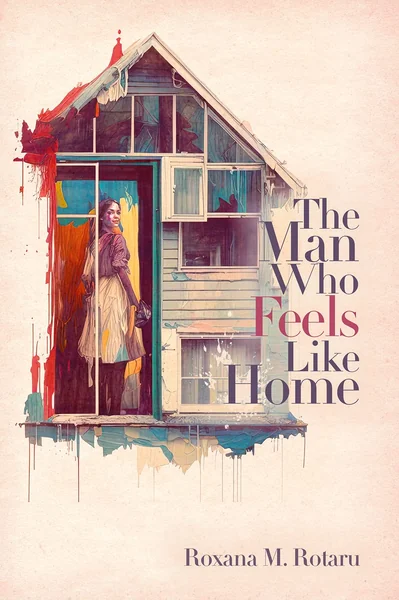
The Man Who Feels Like Home by Roxana Rotaru Review: A Coming-of-Age Romance About Finding Belonging
Roxana Rotaru's debut novel The Man Who Feels Like Home follows protagonist Allie through a coming-of-age journey centered on love, personal growth, and the search for genuine connection — a compact romantic fiction that distinguishes healthy, boundaried relationships from toxic ones, delivered in a narrative that some readers describe as quirky and vibrant.
LuvemBooks Verdict
Best for
Readers who enjoy introspective, character-driven romantic fiction and are drawn to coming-of-age stories that honestly examine what makes a relationship healthy, compatible, and genuinely comforting.
Worth it if
You're navigating or reflecting on complicated romantic relationships and want fiction that mirrors that complexity with warmth, humor, and a clear-eyed perspective on relational health.
Skip if
You're looking for a plot-driven, action-forward romance or prefer storytelling where life lessons emerge purely organically — the book's instructive thread on healthy versus toxic relationships can tip toward the prescriptive.
What readers & critics say
Readers Favorite praises the book's use of Allie's journey to explore love, heartbreak, and the courage to give love another chance, noting its central metaphor of entering a relationship as moving into a new house. On Amazon, reviewer Prasiddhi commends Rotaru for distinctly showing the difference between healthy, boundaried relationships and unhealthy, toxic ones, calling it "one sensible story" that generates consistent warmth and humor.
Sources: Readers Favorite, Amazon.co.ukAsk LuvemBooks
Was this helpful?
- Is it worth reading?
- For readers drawn to character-driven romantic fiction with genuine emotional stakes, The Man Who Feels Like Home delivers more than a standard love story. Its coming-of-age structure gives Allie's arc a clear developmental throughline, and the explicit attention to what distinguishes healthy, boundaried relationships from toxic ones gives the book thematic substance that resonates beyond the page. The novel is particularly well-suited to readers who have navigated complicated romantic relationships themselves and want fiction that mirrors that complexity with honesty and some lightness. Those looking for plot-heavy escapism or pure entertainment may find the introspective pacing less immediately gripping.
- Similar books
- Readers who enjoy The Man Who Feels Like Home may also find appeal in other contemporary romance titles with a character-driven focus. Emily Henry's People We Meet on Vacation and Beach Read share the introspective, emotionally honest tone of Rotaru's novel. Christina Lauren's The Unhoneymooners and Colleen Hoover's It Ends with Us — the latter of which also engages directly with the distinction between healthy and unhealthy relationships — are frequently mentioned alongside books in this space. For something currently in the LuvemBooks catalogue, His and Hers: Swapped at the Office by Bella May offers another lighthearted, character-centered romantic fiction worth exploring.
- Who should read this?
- The Man Who Feels Like Home is best suited to readers who enjoy character-driven romantic fiction with a coming-of-age structure and a reflective, introspective core. Its strongest audience is likely those who have personally navigated complicated romantic relationships and are drawn to fiction that mirrors that complexity back with honesty and some lightness. Readers who appreciate the blend of emotionally instructive storytelling and genuine narrative warmth — what one reviewer called a 'quirky, vibrant' tone — will find it particularly rewarding. It is less well-matched to readers seeking a heavily plot-driven narrative or pure escapism.
- What are the main themes?
- The central themes of The Man Who Feels Like Home revolve around love as a process of self-discovery rather than a simple destination — Rotaru frames romantic pursuit as something that demands interior reflection on one's own patterns and expectations. A defining thread is the contrast between relationships built on healthy boundaries and those characterized by toxicity, which Rotaru weaves through Allie's experiences organically rather than as abstract advice. The novel also engages with belonging and comfort — the question of what it truly means to 'feel at home' with another person — alongside broader coming-of-age concerns around personal growth and identity.
- Is this a good book club pick?
- The Man Who Feels Like Home has solid book club potential, particularly for groups interested in the intersection of romance and relational self-awareness. Its reflective core — which actively invites readers to examine what healthy connections look like and the work required to nurture them alongside Allie's journey — generates the kind of discussion material that makes for a lively session. The compact length is an added practical advantage, keeping the reading commitment manageable. Groups that prefer fast-paced, plot-driven reads may find less to chew on, but those drawn to character and theme will find plenty.
- Is this really a debut novel?
- Yes — The Man Who Feels Like Home is Roxana Rotaru's debut novel, published in May 2023. LuvemBooks notes that for a first work of romantic fiction at this length, the tonal balance Rotaru achieves — keeping the narrative quirky and vibrant while still landing substantive points about relational health — is no small feat. The book's focused emotional throughline and distinct narrative voice suggest a confident debut rather than a tentative first effort.
Summarize this book
Follow up
Synthesized from verified book data & published reviews · How we review
Press Enter to ask. Answers come from our editorial Q&A — start typing to see related questions.
Age & Reading Level
Recommended age
Adult
Reading level
Adult
who it suits
Skip if you want a heavily plot-driven, action-forward romance with pure escapist momentum and no instructive undertone.
Our Review
What the Book Is and What It Covers
Central Themes and Emotional Stakes
Narrative Strengths and Readability
What the Book Contributes to the Genre
Who This Book Is For — and Where It Has Limits
Sources & Further Reading
The key facts and claims in this review are grounded in the retrieved, verified sources listed below.
- Cited in this review
- 1
- 2
- 3
- Further reading
- 4
waterstones.com
Books like The Man Who Feels Like Home
Curated picks for readers who enjoyed The Man Who Feels Like Home, with our reasoning for each match.
If you liked The Man Who Feels Like Home