8 min read
4.2
· 19,568 Amazon ratingsShare This Review
Our review
Picking Daisies on Sundays
Picking Daisies on Sundays by Liana Cincotti Review: A Sweet Second-Chance Fake-Dating Rom-Com
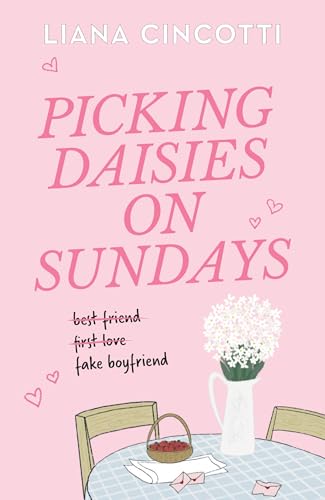
Picking Daisies on Sundays is a contemporary romance novel by Liana Cincotti, originally self-published before being acquired by Forever, in which college senior Daniella Daisy Maria agrees to pose as her childhood best friend Levi Coldwell's fake girlfriend for his sister's wedding — only to find four years' worth of buried feelings rushing back to the surface. Positioned for fans of Lynn Painter and Jenny Han, the novel blends second-chance romance with a friends-to-lovers dynamic, drawing on themes of anxiety, young love, family bonds, and the messy complexities of early adulthood.
LuvemBooks Verdict
Best for
Readers in their late teens or twenties who love emotionally earnest new-adult romance and want a single novel that layers second-chance, fake-dating, and friends-to-lovers tropes around two protagonists with genuine shared history.
Worth it if
You find comfort in familiar romance structures executed with sincerity and warmth — particularly if you enjoy the breezy, emotionally accessible register of Lynn Painter or Jenny Han.
Skip if
You're a seasoned romance reader who needs structural surprises or tonal ambition beyond the rom-com form — the beats are charming but, by Common Sense Media's own assessment, predictable.
What readers & critics say
Common Sense Media calls the novel "fun, thoughtful" and "charming if a bit predictable," describing it as "a light summer read, perfect for the beach" that "puts a light twist on romance tropes" through its pairing of a high-couture fashion student and a literature major. Reader blogs including briannamarielifestyle.com and booksthatslay.com characterise it as heartwarming and emotionally rich, with the fake-dating premise described as "executed perfectly" alongside its childhood-friends and second-chance layers.
“Fun, thoughtful, and makes for a light summer read, perfect for the beach.”
— Common Sense MediaAsk LuvemBooks
Was this helpful?
- Is it worth reading?
- For readers who enjoy emotionally earnest new-adult romance in the vein of Lynn Painter or Jenny Han, Picking Daisies on Sundays delivers reliably on its promise. The relationship between Daniella's open-hearted insecurity and Levi's quietly devoted restraint is the novel's most consistently praised asset, and Common Sense Media calls it 'fun, thoughtful.' The key caveat is predictability — the same source flags it as 'charming if a bit predictable,' so genre veterans who have read widely in fake-dating and second-chance romance will likely recognize every structural beat before it arrives.
- Similar books
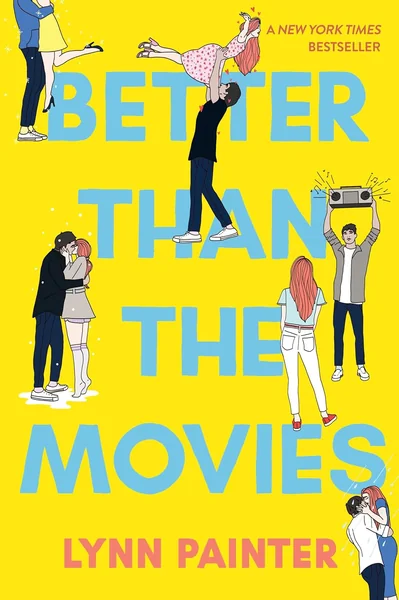
- Readers drawn to Picking Daisies on Sundays will find natural companions in the curated selections below. Lynn Painter's Better Than the Movies shares the same breezy, emotionally earnest register and is one of the direct comparisons publishers use to position Cincotti's work. Roxana Rotaru's The Man Who Feels Like Home and Bella May's His and Hers: Swapped at the Office both lean into the friends-and-slow-burn dynamic that anchors Daniella and Levi's story. Jenny Han's To All the Boys I've Loved Before (not currently in catalogue) rounds out the obvious companion reads for anyone who appreciates that nostalgic, warmth-driven new-adult romance tone.
- Who should read this?
- Picking Daisies on Sundays is aimed squarely at fans of new-adult and contemporary romance who find comfort in familiar tropes rendered with sincerity — particularly readers who enjoy Lynn Painter or Jenny Han. Its protagonists are college seniors grappling with post-graduation uncertainty alongside romantic confusion, so the novel's concerns — self-discovery, the fear of misreading a lifelong friendship, what comes after school — will feel most specific and resonant to readers in or near that life stage. Those seeking genre-bending ambition or unconventional structure will want to look elsewhere.
- What age is it for?
- Best for readers 16 and up. The novel's protagonists are college seniors navigating post-graduation anxiety, romantic confusion, and the complexities of early adulthood — concerns that will resonate most with older teen and young-adult readers comfortable with new-adult romance as a form. Younger readers can engage with it, but the emotional register and life-stage themes are pitched at an older teen and college-age audience.
- How do the tropes work together?
- Rather than using a single romance trope as its engine, Picking Daisies on Sundays stacks three — second-chance romance, fake dating, and friends-to-lovers — into one emotionally cohesive narrative. The wedding-party setting, including a softball game that forces both protagonists into uncomfortable proximity, acts as a pressure-cooker that activates all three simultaneously. Sources note that this layering is executed with warmth rather than structural ambition — the goal is to deliver familiar pleasures with sincerity, not to subvert genre expectations.
- Where should I start with Liana Cincotti?
- Picking Daisies on Sundays is the logical starting point — it is the anchor title of the Heartstrings series and introduces Daniella and Levi, whose relationship carries across the subsequent books. From there, readers can continue with Don't Be In Love and then the novella Daisy & Levi's Christmas Special for more time with the same world and characters.
Summarize this book
Follow up
Synthesized from verified book data & published reviews · How we review
What would you like to know about Picking Daisies on Sundays?
Answers come from our editorial notes on this book. If we haven't covered something, we'll say so.
Readers often ask
Our Review
What the Book Is and What Happens
The Book's Origins and Place in the Genre
Strengths: Character Dynamics and Tonal Range
Limitations: Predictability and Convention
Who It Is Genuinely For
Sources & Further Reading
The key facts and claims in this review are grounded in the retrieved, verified sources listed below.
- Cited in this review
- 1
books.apple.com
- 2
hachettebookgroup.com
- Further reading
- 3
newbookrecommendation.com
- 4
commonsensemedia.org
- 5
- 6
- 7
app.thestorygraph.com
- 8
highlandpiper-sc.com
- 9
booksthatslay.com
- 10
- 11
barnesandnoble.com
Age & Reading Level
Recommended age
Ages 12–18
Reading level
Young adult
Heat level
Closed door · kisses and passionate moments only, no explicit content; rated 1/5 spice
Tropes
From how readers and romance sites describe it, not our own reading.
1 content note · who it suits
Content to know about
Best for: Ages 16+ — protagonists are college seniors navigating post-graduation uncertainty and early-adulthood relationships; the emotional register and life-stage concerns are pitched at older teen and young-adult readers
Skip if you're looking for romance that subverts genre conventions or offers emotional depth beyond light beach-read fare
Reader reviews
Be one of the first readers to answer.
Read it? Was it right for you?
Books like Picking Daisies on Sundays
Curated picks for readers who enjoyed Picking Daisies on Sundays, with our reasoning for each match.
If you liked Picking Daisies on Sundays