
BOOKS
Published

Read Time

8 min read

Reader rating

4.7

· 606 Amazon ratings
reader ratings, not a LuvemBooks score
Curated & edited by

LuvemBooks Editorial

How we create our reviews →
Share This Review

Psychology of the Unconscious by C. G. Jung Review: The Landmark Text of the Freud Split

C. G. Jung's Psychology of the Unconscious (1911–12; Dover paperback, 2003) analyzes the published fantasies of American Miss Frank Miller through comparative mythology, marking Jung's break with Freud over libido and seeding his theory of the collective unconscious. A dense primary text, essential as intellectual history rather than introduction.

LuvemBooks Verdict

Best for

Students of the history of psychoanalysis and Jung scholars who want the primary-source record of the Freud–Jung split and the first stirrings of archetype theory, in an affordable single-volume edition.

Worth it if

Worth it if you're prepared to read 600-plus dense pages as intellectual history — the document of a schism and of an idea at the moment of its breaking — rather than as a guide to Jung's mature system.

Skip if

Skip it if you're new to Jung and want an accessible introduction to his thought, or if you want his settled position — he thoroughly revised this material in 1952 as Symbols of Transformation, leaving this an early, superseded statement.

Princeton University Press calls it "a landmark work that marks the beginning of Jung's divergence from the psychoanalytical school of Freud" and "a key text for understanding the formation of Jung's ideas" at a crucial point in his life. Wikipedia documents Jung's own later acknowledgment that he was, without admitting it, analyzing his own psyche through the Miller material, and Google Books' account notes the break with Freud came with this book's 1912 publication.

Sources: Princeton University Press, Wikipedia, Google Books
4.7from 606 Amazon ratings— reader ratings, not a LuvemBooks score
Buy on Amazon

Age & Reading Level

Recommended age

Adult

Reading level

Adult

Content to know about

extensive discussion of sexual symbolism and libido theory
early-20th-century ethnological and mythological framings that reflect their era

Best for: Adults — dense scholarly prose, extensive mythological and ethnological reference, and psychoanalytic theory demand advanced reading stamina

Skip if you're new to Jung and want an accessible introduction to his ideas — this is a demanding 600-plus-page primary text, not a primer

In This Review
  • What Works & What Doesn't
  • What the book is
  • The rupture with Freud
  • Method and content
  • Limitations
  • Who it is for

What Works & What Doesn't

What Works
  • The primary-source record of Jung's break with Freud over the nature of libido — a defining moment in psychology's history
  • Foreshadows the collective unconscious and the archetypes, the core of Jung's mature theory
  • Rich comparative method drawing on mythology, religion, ethnology, art, and literature
  • Contemporary Psychology praised Jung as 'readable in this first exciting bloom of his extraordinary journey into the unconscious'
  • Complete early English text in an affordable single-volume Dover paperback
What Doesn't
  • Dense and demanding at over 600 pages — not an introduction to Jung's thought
  • Jung thoroughly revised the material in 1952 as 'Symbols of Transformation', so this edition represents an early, superseded position
  • Early-20th-century ethnological and mythological framings reflect their era
  • Based on a published account rather than clinical contact — Jung never met Miller, limiting it as case study
A foundational but demanding primary text — essential for students of Jung's development, best approached as history rather than introduction. This review covers the book's content and documented reception from published sources; LuvemBooks has not independently assessed it as a study text.
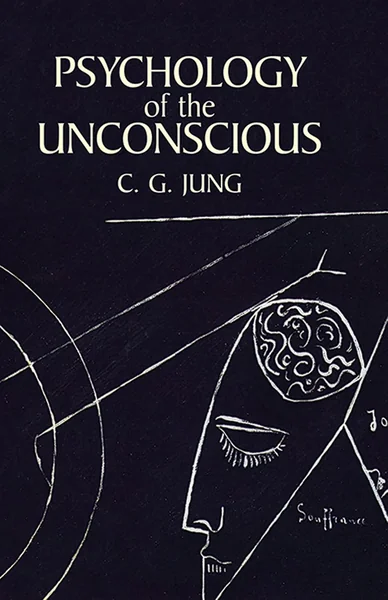
Psychology of the Unconscious by C. G. Jung front cover

What the book is

Psychology of the Unconscious is one of Carl Jung's earliest major works, first published in German as Wandlungen und Symbole der Libido in two installments of the Jahrbuch für Psychoanalytische und Psychopathologische Forschungen in 1911 and 1912. Beatrice M. Hinkle's English translation appeared in 1916 under the full title Psychology of the Unconscious: a study of the transformations and symbolisms of the libido, a contribution to the history of the evolution of thought, and that early English text is the version Dover Publications keeps in print in this 624-page paperback edition (published January 27, 2003). The book is not a general theory of the unconscious in the way its short title might suggest. Its spine is a single case: Jung's extended analytical commentary on the published fantasies of Miss Frank Miller, a young American woman whose account of her poetic mental images — recorded without any personal contact between analyst and subject — became the raw material for Jung's redefinition of libido and his deep turn toward mythology.
a key text for understanding the formation of Jung's ideas and his personal and psychological development at a crucial time in his life

The rupture with Freud

The book's historical weight lies in what it cost. Its argument that libido could not be reduced to sexuality marked a decisive theoretical divergence from Sigmund Freud, and its publication effectively ended the friendship and intellectual partnership between the two men, with each concluding the other had gone wrong. That makes this less a neutral treatise than a document of a schism — the point at which Jung's analytical psychology began to separate from the psychoanalytic school. Jung himself later acknowledged, in retrospect, that he had been unconsciously examining his own psyche through the Miller material, which gives the book a double identity: clinical commentary on one level, disguised self-analysis on another. Princeton University Press, which reissued Hinkle's translation in 1992 as supplementary volume B to the Collected Works, describes it as "a key text for understanding the formation of Jung's ideas and his personal and psychological development at a crucial time in his life" — a fair summary of why it continues to be read.

Method and content

Around the Miller fantasies Jung builds what Princeton characterizes as a complex study of symbolic parallels drawn from mythology, religion, ethnology, art, literature, and psychiatry. This comparative-symbolic method — tracing an individual fantasy through its echoes in world myth — is the book's signature, and it foreshadows the concepts that would define Jung's mature work: the collective unconscious and its contents, the archetypes. Readers encountering Jung's later, more systematic writings will find the germs of those ideas here in expansive, exploratory form. Reception has noted the energy of this early phase: Contemporary Psychology's Joseph C. Mark, in a line Princeton quotes, calls the book Jung "readable in this first exciting bloom of his extraordinary journey into the unconscious." The sheer range of reference — classical myth, religious symbolism, comparative ethnology — is both the book's richness and its bulk.

Limitations

The book's strengths are inseparable from real obstacles. At over 600 pages of densely argued comparative material, it is not an entry point into Jung; readers new to his thought are far better served by later, more accessible works and can return here for origins. There is also a supersession issue that no honest review can skip: Jung thoroughly revised this material in 1952 as Symbols of Transformation, which became the canonical version in the Collected Works. Psychology of the Unconscious is therefore read today primarily as a historical document — the record of an idea at the moment of its breaking — rather than as Jung's settled position. Some of its early-twentieth-century ethnological and mythological framings are also of their era, and the absence of any clinical relationship with Miller (Jung never met her, and analyzed a published text) limits it as case study while enlarging it as speculative psychology.

Who it is for

This Dover paperback makes the complete early English text available in a low-cost, single-volume format, and that is its practical niche: students of the history of psychoanalysis, Jung scholars tracing the development of archetype theory, and readers interested in the Freud–Jung split who want the primary source rather than a summary of it. It rewards those prepared to read it as intellectual history — a young analyst working out, at great length and at personal cost, a new way of thinking about the unconscious mind.

Sources & Further Reading

The key facts and claims in this review are grounded in the retrieved, verified sources listed below.

  1. Cited in this review
  2. 1
  3. 2
  4. 3
  5. 4
  6. Further reading
  7. 5