8 min read
4.5
· 2,101 Amazon ratings, as of Oct 2026Share This Review

Our review
A World Appears
A World Appears: A Journey into Consciousness by Michael Pollan Review: A Wide-Ranging, Personal Exploration of Mind
A World Appears: A Journey into Consciousness is Michael Pollan's nonfiction exploration of one of science's most stubborn puzzles — what consciousness is, who possesses it, and why subjective experience exists at all. The book became an instant New York Times bestseller and one of Barack Obama's Favorite Books of the Summer, confirming Pollan's standing as a writer capable of making the most daunting ideas feel urgent and alive.
LuvemBooks Verdict
Best for
Curious general readers who want a guided tour of one of science's most intractable puzzles — consciousness — and are drawn to a writer who moves fluidly across neuroscience, philosophy, Buddhism, and psychedelic experience without demanding prior expertise in any of them.
Worth it if
Worth reading if you are comfortable following an inquiry that deliberately leaves the central mystery open, valuing the quality of the questions asked over any settled explanatory framework.
Skip if
Skip it if you want a tightly argued, single-thesis book that builds to a definitive explanation of consciousness, or if the AI angle is your primary draw — most reviewers that discuss it flag that thread as intermittent rather than sustained.
What readers & critics say
Bookmarks.reviews describes the book as "highly pleasurable to read" and credits Pollan with delivering the material "through the sharp mind of a writer and the questioning heart of a seeker," while johnwalterswriter.com notes that the difficulty lies in its abstractions — "there are no easy answers, and Pollan is trying to figure things out as he goes along."
Sources: bookmarks.reviews, johnwalterswriter.comAsk LuvemBooks
Was this helpful?
- Is it worth reading?
- For readers who find the journey as rewarding as any destination, A World Appears delivers: it brings genuine intellectual range — spanning neuroscience, philosophy, Buddhism, AI, and psychedelic science — and Pollan's signature skill at cultural diagnosis, which Charles Finch in The Atlantic described as fully intact here. The book's most affecting passages, where Pollan recounts ego dissolution during psilocybin and Zen practice, keep the subject from remaining purely abstract. The honest caveat, acknowledged by reviewers across the board, is that no one can furnish definitive answers to the questions the book raises — and the book does not pretend otherwise.
- Similar books
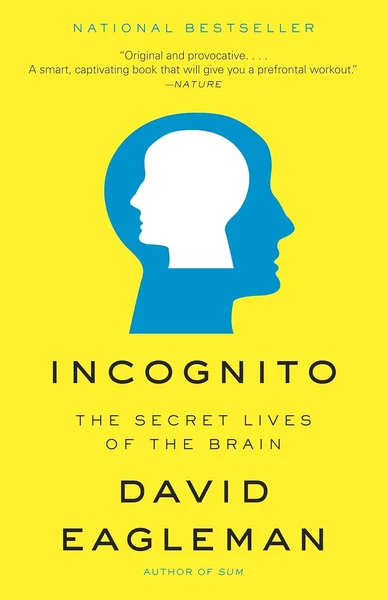
- Readers drawn to A World Appears will find a natural companion in David Eagleman's Incognito, which probes the hidden machinery of the brain driving conscious experience — similarly accessible and similarly unsettling about the self. Anil Seth's Being You and Christof Koch's The Feeling of Life Itself both tackle the hard problem of consciousness from a neuroscience-grounded perspective, offering a more thesis-driven complement to Pollan's panoramic approach. Pollan's own How to Change Your Mind and This Is Your Mind on Plants share the book's interest in psychedelic experience and altered states of awareness, and serve as useful context for the psilocybin passages here.
- Who should read this?
- A World Appears is best suited to intellectually curious general readers who want guided entry into consciousness research without needing prior expertise in neuroscience or philosophy. It will particularly reward those already interested in Pollan's earlier psychedelics work, readers drawn to the intersection of science and contemplative practice, and anyone comfortable following an open-ended inquiry where the quality of the question matters more than a settled answer. Those wanting a single-thesis book built to a decisive conclusion, or readers whose specific interest is in AI and machine consciousness, are likely to find the book's breadth more frustrating than satisfying.
- About Michael Pollan
- Michael Kevin Pollan is an American journalist specializing in food, who is a professor and the first Lewis K. — per his verified biography. A World Appears extends his journalism into the territory of consciousness science, drawing on his established background as a writer capable of making complex ideas accessible to general audiences.
- How does this compare to Pollan's earlier work?
- Where Pollan's food-focused books like In Defense of Food built toward clear, actionable conclusions — eat food, not too much, mostly plants — A World Appears is by design more open-ended, matching the nature of a subject where, as Pollan himself put it, no one can yet furnish answers. Charles Finch in The Atlantic argued that Pollan's core gift for sensing the direction the culture is headed is fully intact here, even as the territory is further from his original specialties. The psychedelic thread connecting this book to How to Change Your Mind gives it a biographical continuity, but A World Appears casts a wider net — adding plant biology, AI research, and Zen practice alongside the psilocybin experience.
- What is the 'hard problem' of consciousness?
- The hard problem of consciousness — a term from philosophy of mind — refers to the difficulty of explaining why physical processes in the brain give rise to subjective experience: why seeing red feels like something, rather than just being a neural computation. Pollan frames this challenge with characteristic precision, asking what a scientific investigation of inner life could look like when we have as little distance and perspective on it as fish do of the sea. The book takes that epistemic difficulty seriously and builds its entire structure around it, drawing on neuroscience, philosophy, Buddhism, and psychedelic experience as different approaches to the same resistant puzzle.
Summarize this book
Follow up
Synthesized from verified book data & published reviews · How we review
What would you like to know about A World Appears?
Answers come from our editorial notes on this book. If we haven't covered something, we'll say so.
Readers often ask
Our Review
What the Book Actually Is
Scope and Terrain
The Personal Dimension
Scope, Limits, and Who It's For
Sources & Further Reading
The key facts and claims in this review are grounded in the retrieved, verified sources listed below.
- Cited in this review
- 1
en.wikipedia.org
- 2
- Further reading
- 3
Michael Pollan, LuvemBooks
- 4
- 5
michaelpollan.com
- 6
bookbrowse.com
- 7
- 8
- 9
penguinrandomhouse.com
Age & Reading Level
Recommended age
Adult
2 content notes · who it suits
Content to know about
Skip if you want a tightly argued, single-thesis book that builds to a definitive explanation of consciousness.
Reader reviews
Be one of the first readers to answer.
Read it? Was it right for you?
Books like A World Appears
Curated picks for readers who enjoyed A World Appears, with our reasoning for each match.
More by Michael Pollan


If you liked A World Appears