
9 min read
4.3
· 600 Amazon ratingsShare This Review
Our review
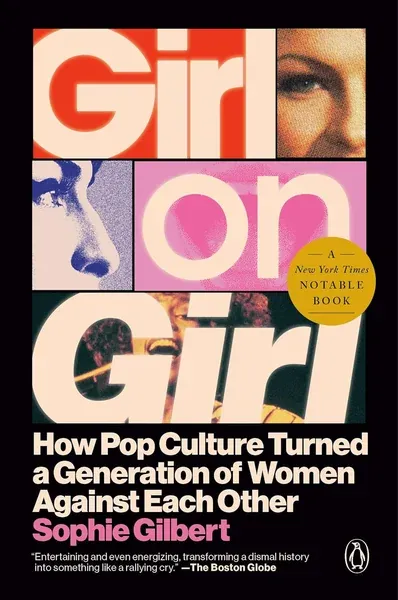
Girl on Girl by Sophie Gilbert Review: A Blazing, Rigorously Researched Feminist Reckoning
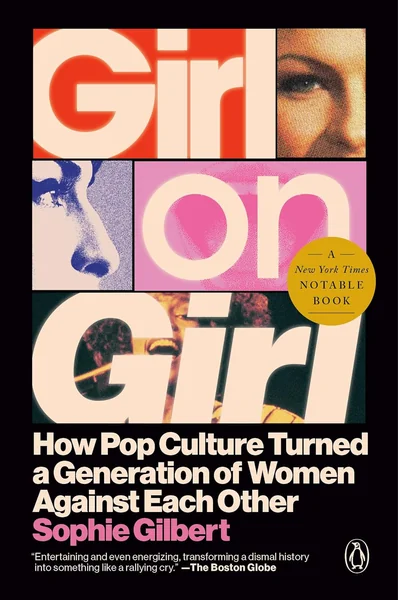
Girl on Girl: How Pop Culture Turned a Generation of Women Against Themselves is a landmark work of cultural criticism from Atlantic staff writer and Pulitzer Prize finalist Sophie Gilbert — a New York Times and Washington Post Notable Book, and one of the Best Books of the Year according to TIME, NPR, Elle, and The Boston Globe. Spanning ten chapters, the book traces how the feminist energy of the late 1980s and early 1990s was gradually dismantled by the hyper-objectifying, commercially driven pop culture of the late 1990s and 2000s, and connects that history to the rollback of women's gains in the present day.
LuvemBooks Verdict
Best for
Readers with a serious interest in feminist media criticism, the social history of the early internet era, and the cultural roots of today's backlash against women's rights — particularly those who came of age in the late 1990s and 2000s and want a rigorous, coherent framework for what they lived through.
Worth it if
You're ready to confront an uncomfortable reckoning with a cultural history you may have partly absorbed as normal, and want analysis that is both rigorously researched and grounded in specific, recognisable figures and moments rather than abstract theory.
Skip if
If relentless, unflinching documentation of sustained institutional misogyny — including detailed treatment of internet pornography, tabloid cruelty, and the public humiliation of women in crisis — is likely to exhaust rather than galvanise you, or if the primarily American and Anglo-American cultural frame limits its resonance for your own context.
What readers & critics say
The book is a New York Times and Washington Post Notable Book and was named one of the Best Books of the Year by TIME, NPR, Elle, and The Boston Globe, according to penguinrandomhouse.com, which also carries praise calling it "searing… rigorously researched but never stuffy" and potentially the first comprehensive examination of turn-of-the-millennium pop culture's impact on women. Bookmarks.reviews praised the chapter-by-chapter structure as building methodically from riot grrrl's backlash through to incel culture and trad wives, noting that "this ground is well-trod, but rarely trod so well."
“Gilbert connects the humiliation culture of the aughts to the present political moment, building to a crescendo of doom.”
— theguardian.comAsk LuvemBooks
Was this helpful?
- Is it worth reading?
- The critical consensus is emphatically yes, for readers prepared to engage with its subject matter. Girl on Girl received exceptional reviews across major news, culture, and literary publications — named a New York Times and Washington Post Notable Book and a Best Book of the Year by TIME, NPR, Elle, and The Boston Globe. Critics called it 'searing… rigorously researched but never stuffy,' 'so clear-eyed that it's startling,' and, per The Boston Globe, 'entertaining and even energizing, transforming a dismal history into something like a rallying cry.' The AP judged it well worth the effort. The primary consideration is the book's relentless focus on sustained institutional misogyny, which is not softened for comfort — but Gilbert's craft and the breadth of cultural territory she covers make it a significant critical event rather than a niche feminist text.
- Similar books
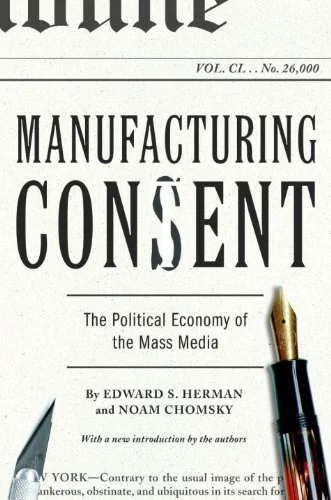
- Readers drawn to Girl on Girl's analysis of how media systems shape public consciousness may also find Edward S. Herman and Noam Chomsky's Manufacturing Consent: The Political Economy of the Mass Media valuable — a foundational text on how mass media constructs and sustains ideological frameworks in service of power. For a broader feminist perspective on the tension between work, family, and systemic inequality, Anne-Marie Slaughter's Unfinished Business: Women Men Work Family offers a complementary policy-oriented lens. Hannah Ewens' Fangirls: An Obsession approaches the cultural landscape of female fandom with a similarly deep cultural-critical interest in how women and girls invest in and are shaped by pop culture.
- Who should read this?
- Girl on Girl is essential reading for those interested in feminist media criticism, the political and social history of the early internet era, and the roots of the current backlash against women's rights. It is particularly resonant for readers who grew up in the late 1990s and 2000s and absorbed that era's pop culture as normal — Gilbert reframes those experiences within a history of systemic misogyny. Critics and the publisher frame it primarily around American and broadly Anglo-American pop culture, so readers outside that cultural context may find its resonance somewhat limited. Those who prefer abstract theory over case-study-driven analysis, or who find relentless catalogues of institutional harm difficult to sustain, may want to approach with care.
- About Sophie Gilbert
- Sophie Gilbert is a British-born writer and journalist who works at The Atlantic in Washington, D.C., United States.
- What are the main themes?
- The book's central themes include the systematic dismantling of feminist momentum in the late 1990s and early 2000s, the repackaging of self-objectification as empowerment, and the normalisation of sexism as comedy. Gilbert examines how internet pornography gained widespread cultural influence and helped reshape the frameworks through which women were expected to see themselves. She also traces the cultural machinery of tabloid cruelty and public humiliation — using figures like Britney Spears, Lindsay Lohan, and Kate Moss as case studies — and connects these historical patterns to the present-day political rollback of women's rights, building to what The Guardian described as a 'crescendo of doom.'
- How was it received by critics?
- Girl on Girl received exceptional critical reception across a wide range of major outlets. It was named a New York Times and Washington Post Notable Book, and a Best Book of the Year by TIME, NPR, Elle, and The Boston Globe. Critics called it 'searing… rigorously researched but never stuffy' and credited Gilbert with producing perhaps the first comprehensive examination of turn-of-the-millennium mainstream trends and their impact on women. The Boston Globe called it 'entertaining and even energizing, transforming a dismal history into something like a rallying cry'; critical coverage offered the pointed verdict 'so clear-eyed that it's startling'; and The Millions described Gilbert as one of the essential voices on gender and womanhood, calling the book a certain standout. The AP noted that it offers much to unpack and judged it well worth the effort.
Summarize this book
Follow up
Synthesized from verified book data & published reviews · How we review
Press Enter to ask. Answers come from our editorial Q&A — start typing to see related questions.
Age & Reading Level
Recommended age
Adult
Reading level
Adult
3 content notes · who it suits
Content to know about
Best for: Adults — the book's detailed treatment of internet pornography, tabloid exploitation, and sustained institutional misogyny makes it suitable for adult readers only.
Skip if you're looking for an uplifting or solutions-focused feminist read rather than an unsparing historical diagnosis of systemic misogyny.
Our Review
What the Book Actually Argues
Scope and Specificity: Who and What Gilbert Examines
Critical Reception and Cultural Standing
The Book's Strengths as Cultural Criticism
Who This Book Is For — and Where It Demands Something of the Reader
Sources & Further Reading
The key facts and claims in this review are grounded in the retrieved, verified sources listed below.
- Cited in this review
- 1
- 2
omnivorous.substack.com
- 3
- 4
- Further reading
- 5
Sophie Gilbert, Wikipedia
- 6
- 7
- 8
penguinrandomhouse.com
Books like Girl on Girl
Curated picks for readers who enjoyed Girl on Girl, with our reasoning for each match.
Why It’s Trending
Readers Are Revisiting Girl on Girl as Its Critique of Pop Culture Feels More Relevant Than Ever
Sophie Gilbert's cultural criticism of how pop culture turned women against themselves keeps finding new audiences. With ongoing conversations about women's rights and media representation, readers — especially millennial women — are calling it essential reading right now.