
8 min read
4.8
· 187 Amazon ratingsShare This Review
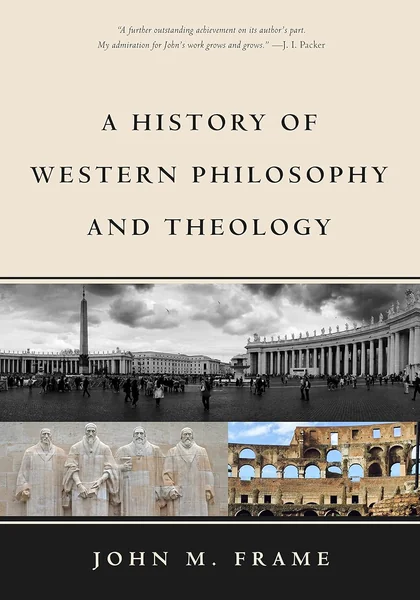
A History of Western Philosophy and Theology by John M. Frame Review: A Landmark Reformed Guide to Western Thought
A History of Western Philosophy and Theology is a 912-page hardcover reference and textbook by John M. Frame, published by P&R Publishing in November 2015, that surveys major figures and movements in Western philosophy from a distinctly Reformed, Scripture-anchored perspective. This review is based on the book's content as described by its publisher and published sources, not hands-on use. Praised by theologians including D. A. Carson and J. I. Packer, it is designed as both a comprehensive historical overview and a model for integrating philosophy with Christian theology — an ambitious undertaking that has earned significant acclaim in Reformed academic and pastoral circles, while its unapologetically confessional standpoint will not suit every reader equally.
LuvemBooks Verdict
Best for
Seminary students, pastors, and Reformed theology scholars who want a comprehensive, critically evaluative tour of Western philosophy assessed explicitly against the standard of Christian Scripture and the presuppositional Kuyper-Van Til tradition.
Worth it if
You want a single-volume resource that doesn't just map Western philosophical history but actively guides you through it with a coherent, Bible-grounded theological framework — and you're prepared to engage Frame's Reformed presuppositionalism on its own terms across 900-plus pages of structured academic depth.
Skip if
You're looking for a philosophically pluralist or secular survey of Western thought — Frame's unapologetically confessional, Scripture-first standpoint is the organizing principle of the entire work, not a marginal feature, making it a fundamental mismatch for readers who want neutral description.
What readers & critics say
Reception in Reformed and evangelical academic circles has been strongly positive: wtsbooks.com describes it as "a further outstanding achievement by John Frame" whose "solid brilliance" makes it "a most effective advocacy for the Kuyper-Van Til perspective," while sharperiron.org identifies Frame as exactly "the kind of guide, the kind of teacher, you want on a journey through Western philosophy," praising his evaluative depth over mere description. Booksataglance.com singles out Frame's lucidity — noting it is "very rare to find a book that is both insightful in terms of analysis and clear in terms of presentation" — and heritagebooks.org calls it "a model for how to integrate philosophy and theology." Commentary on its reception outside confessional Reformed circles remains limited in available public sources.
Sources: WTS Books, Sharper Iron, Books at a Glance, Heritage Books, Servants of Grace, Emerging Scholars Blog, The Aquila Report, What Then Shall I ReadAge & Reading Level
Recommended age
Adult
Reading level
Adult
Skip if you want a neutral, secular, or philosophically pluralist survey of Western thought rather than one evaluated through a Reformed, Scripture-first theological framework.
In This Review
- What Works & What Doesn't
- What the Book Actually Is and Does
- Significance and Place in the Field
- Strengths: Evaluation Over Mere Description
- Audience and Practical Scope
- Limitations and Honest Caveats
What Works & What Doesn't
What Works
- Covers the full sweep of Western philosophy from ancient to modern figures, including Peirce, James, Dewey, Husserl, Heidegger, and Sartre, in a single volume designed for systematic study
- Praised by J. I. Packer and D. A. Carson for combining historical overview with sustained theological evaluation — a model for integrating philosophy and Christian theology
- Explicitly structured as a seminary or college textbook, making it practical for academic use in Reformed theological education
- Draws on Frame's long-standing Theology of Lordship project, offering a unified, well-developed presuppositional framework rather than an ad hoc survey
What Doesn't
- Its unapologetically Reformed, Scripture-first standpoint means it is not designed as a neutral survey — readers seeking a secular or pluralist philosophical history will find the framework a fundamental mismatch
- At 912 pages, the scope and density are calibrated for structured academic or seminary use, not casual or introductory reading
What the Book Actually Is and Does
Significance and Place in the Field
Strengths: Evaluation Over Mere Description
Audience and Practical Scope
Limitations and Honest Caveats
Frequently Asked Questions
Sources & Further Reading
The key facts and claims in this review are grounded in the retrieved, verified sources listed below.
- Cited in this review
- 1
- 2
- 3
theaquilareport.com
- 4
blog.emergingscholars.org
- Further reading
- 5
- 6
- 7
- 8
- 9
pcabookstore.com
- 10
Reader Comments
No comments yet
Be the first to share your thoughts!