BOOKS
Published

Read Time

7 min read

Reader rating

4.4

· 10,696 Amazon ratings
reader ratings, not a LuvemBooks score
Curated & edited by

LuvemBooks Editorial

How we create our reviews →
Share This Review

Our review

What I Talk About When I Talk About Running by Haruki Murakami Review: A Meditative Memoir on Discipline and Art

What I Talk About When I Talk About Running is a memoir by Haruki Murakami, born out of a journal he kept while training for the New York City Marathon, exploring how his twin obsessions with long-distance running and writing illuminate each other. Penguin Random House describes it as "an illuminating glimpse into the solitary passions of one of our greatest artists" — and for readers drawn to the inner life of a creative mind in motion, it delivers something genuinely rare.

LuvemBooks Verdict

Best for

Readers curious about how a globally celebrated literary novelist actually structures his creative life — particularly those drawn to the intersection of physical discipline and artistic practice.

Worth it if

You come to it with genuine interest in Murakami's inner world and an appetite for slow, ruminative reflection on solitude, endurance, and the unglamorous daily labour behind a sustained creative career.

Skip if

You're looking for practical running advice, a motivational athletic manual, or the surreal narrative complexity of Murakami's fiction — this memoir's deliberately spare, inward pace and narrow dual-subject focus will likely disappoint.

Kirkus Reviews found it "a slight but pleasant combination" of memoir, essay, and training diary, noting that while the insights don't quite resonate at the level of his novels, Murakami's "artful, lucid prose" carries the work. The Guardian observed that the book moves with "a long-distance runner's" physique and pace — "light and whippety" — and that most of the memoir is simply about running and writing, with Murakami's familiar novelistic quirks present "in compact form." BookBrowse concluded that Murakami "offers precious little insight into much of his life as a writer, but what he does provide should be of value to those trying to understand the author's long and fruitful career."

“A slight but pleasant combination of all three forms — though the insights don't resonate on the level of his novels, Murakami employs his artful, lucid prose to good effect.”

— Kirkus Reviews

“The book's physique and pace are a long-distance runner's, light and whippety, seldom slowing to anything less than a breezy, pop-existentialist jog.”

— The Guardian
Sources: Kirkus Reviews, The Guardian, BookBrowse
4.4from 10,696 Amazon ratings— reader ratings, not a LuvemBooks score
Buy on Amazon

Age & Reading Level

Recommended age

Adult

Reading level

Adult

Skip if you're looking for practical running advice, athletic instruction, or the surreal narrative energy of Murakami's fiction.

In This Review
  • What Works & What Doesn't
  • What the Book Actually Is
  • The Central Argument: Motion as Discipline
  • Strengths: Tone and Dual Perspective
  • Significance and Reach
  • Limitations and Who May Struggle

What Works & What Doesn't

What Works
  • Rare autobiographical work from a globally celebrated novelist, offering direct insight into his creative process
  • Penguin Random House describes its tone as 'by turns funny and sobering, playful and philosophical' — an unusually wide emotional range for a focused memoir
  • Explores the parallel disciplines of running and writing in a way that resonates beyond either subject alone
  • Philip Gabriel's translation brings the work into English with a well-established literary pedigree
What Doesn't
  • Readers seeking practical running advice or athletic instruction will find the book's focus almost entirely philosophical and personal
  • The deliberately slow, ruminative pace and narrow dual-subject focus may feel restrictive to readers expecting broader literary autobiography
This review is based on the book's published content and available reception from named sources, not hands-on use or application.
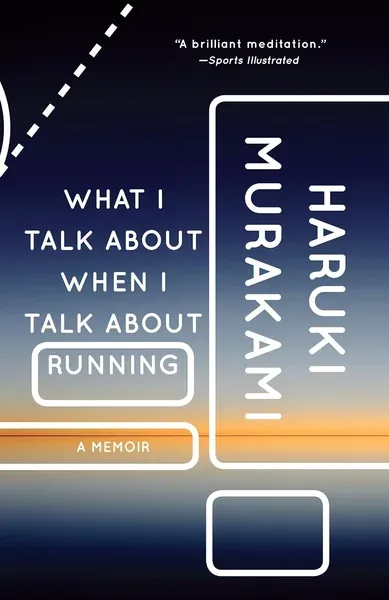
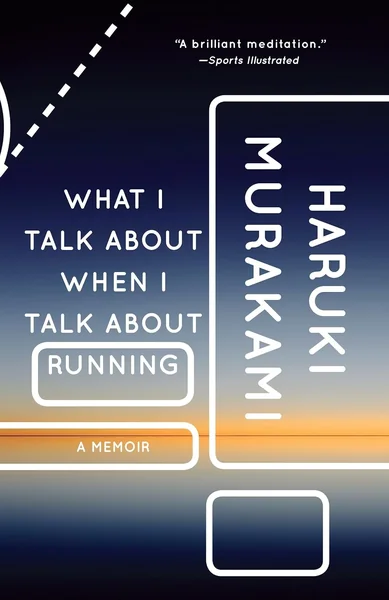
What I Talk About When I Talk About Running: A Memoir (Vintage International), Book Cover May Vary by Haruki Murakami front cover

What the Book Actually Is

What I Talk About When I Talk About Running began as a running journal. While training for the New York City Marathon, Haruki Murakami — born in Kyoto in 1949 and the author of a body of fiction translated into more than fifty languages — chose to document not just the miles but the meaning behind them. The result, translated from the Japanese by Philip Gabriel and first published in the United States in 2008 before a paperback reprint in 2009, is a memoir that holds both pursuits — running and writing — up to the same light. Murakami recounts vivid personal episodes, among them the eureka moment when he first decided to become a writer, and works outward from those memories into broader meditations on solitude, endurance, and what it costs to sustain a creative life over decades.
“by turns funny and sobering, playful and philosophical.”

The Central Argument: Motion as Discipline

The book's animating idea is that running and writing are not merely parallel hobbies but expressions of the same underlying character: a willingness to do solitary, repetitive, unglamorous work day after day with no guarantee of reward. Penguin Random House's synopsis describes the memoir as one that "elevates the human need for motion to an art form," and that phrase captures the book's ambition accurately. Murakami does not romanticize the long run; he examines what it demands, and then finds the same demands at the desk. The memoir's structure follows this logic rather than a strictly chronological one — it circles, returns, and accumulates meaning the way a training season does.

Strengths: Tone and Dual Perspective

What distinguishes the memoir, according to Penguin Random House's account of it, is its range of emotional registers: it is described as "by turns funny and sobering, playful and philosophical." That tonal dexterity is notable because the subject matter — a famous novelist reflecting on his own routines — could easily tip into self-absorption. Instead, the book sustains a genuine tension between its two subjects, using each to interrogate the other. Murakami's reflections on embracing solitude as a necessary component of both his creative process and his personal growth give the memoir a texture that extends well beyond sports writing, and well beyond conventional literary autobiography. Readers interested in how artists actually structure their working lives will find the dual lens unusually productive.

Significance and Reach

Murakami is among the most widely read literary novelists of the modern era, with work translated into more than fifty languages and a record of major international honors that includes the Cino Del Duca World Prize — a distinction shared with previous recipients such as Jorge Luis Borges, Mario Vargas Llosa, and Joyce Carol Oates. What I Talk About When I Talk About Running occupies a specific place in his output: it is one of the few works in which he writes directly about himself and his process rather than through fictional surrogates. For that reason alone, it functions as a rare primary document — an account of how one of contemporary fiction's most distinctive voices was built and maintained, told in his own words.

Limitations and Who May Struggle

The memoir's very qualities define its limits. Readers expecting a conventional runner's guide or a motivational manual for athletic performance will find little practical instruction here — this is not a training book. Equally, those coming to Murakami for the surreal, labyrinthine plotting of his fiction will encounter a register that is deliberate, spare, and inward. The pace is slow by design; the insights accumulate rather than arrive. Some readers, as various reader responses note, find the book's narrowness of focus — the relentless return to the same two subjects — more limiting than meditative. The memoir rewards patience and a genuine interest in the inner life of creative discipline; it does not offer the wider scope of a full literary autobiography.

Sources & Further Reading

The key facts and claims in this review are grounded in the retrieved, verified sources listed below.

  1. Cited in this review
  2. 1
  3. 2
  4. 3
  5. Further reading
  6. 4
  7. 5
  8. 6
  9. 7
  10. 8