BOOKS
Published

Read Time

10 min read

Reader rating

4.5

· 50,661 Amazon ratings
reader ratings, not a LuvemBooks score
Curated & edited by

LuvemBooks Editorial

How we create our reviews →
Share This Review

Strangers: A Memoir of Marriage by Belle Burden Review: A Phenomenon About Privilege, Betrayal, and Divorce

Belle Burden's debut memoir debuted at #1 on the New York Times Best Seller List and became one of the most-talked-about books of 2026, expanding a viral "Modern Love" essay into a full account of her marriage's sudden collapse during the COVID-19 pandemic — a story that is at once intimate and inescapably entangled with old money, elite social worlds, and the financial choices women make inside marriage.

LuvemBooks Verdict

Best for

Readers drawn to memoir at the intersection of marriage, identity, and money — particularly those following the wider cultural conversation about women's financial vulnerability inside long-term partnerships.

Worth it if

You're interested in the emotional and psychological anatomy of marital collapse, or in the documented public debate about financial autonomy within marriage that this book sparked — even if Burden's rarefied world feels distant from your own.

Skip if

If multimillion-dollar real estate, inherited trust funds, and private clubs as the backdrop for victimhood will test your patience, or if factual tensions flagged by The New Yorker's review of court documents would undermine your ability to take the cautionary-tale framing at face value.

The New Yorker described Strangers as a book that "weaves a tale of financial peril" while also reporting that a review of court documents complicates Burden's narrative — a factual tension critics note deflates some of the cautionary-tale framing. Bookmarks Reviews rates the overall critical reception as Positive across nine reviews, with critics citing its unsparing emotional clarity alongside recurring questions about the limits of its universality given the author's exceptional wealth.

Sources: The New Yorker, Bookmarks Reviews
4.5from 50,661 Amazon ratings— reader ratings, not a LuvemBooks score
In This Review
  • What Works & What Doesn't
  • What the Memoir Is and What It Covers
  • Cultural Footprint and Publishing Significance
  • Strengths: Emotional Resonance and Financial Reckoning
  • The Privilege Problem: A Specific Critical Tension
  • Who This Book Is For

What Works & What Doesn't

What Works
  • Debuted at #1 on the New York Times Best Seller List and sustained major cultural momentum, signaling unusually wide reader resonance
  • The New Yorker praised it as a poignant account of marital collapse that captures panic and sorrow in ways that resonate beyond the author's specific circumstances
  • Rooted in a June 2023 viral New York Times 'Modern Love' essay, the memoir offers an expanded, more fully realized version of a story that already proved its emotional pull
  • Sparked a documented public conversation — including financial-literacy initiatives in schools, per Burden's own interviews — about women's financial vulnerability inside marriage
  • Adapted for Netflix with a bidding war for rights, reflecting strong crossover appeal beyond the literary audience
What Doesn't
  • The New Yorker noted that Burden's inherited wealth substantially protected her from the financial peril the narrative implies, complicating the cautionary-tale framing that drove much of the book's public reception
  • A New Yorker piece reported that a review of court documents raises questions about certain claims in the memoir, a factual tension that readers should be aware of entering the text
  • The world the memoir inhabits — Tribeca apartments, Martha's Vineyard second homes, inherited trust funds, private clubs — is so rarefied that some readers will struggle to find a foothold, as several critics acknowledged
  • Critics observed that privilege and status are 'inescapably' Burden's worlds, meaning the memoir's emotional universality is persistently in tension with its social specificity
This review covers the content of Strangers: A Memoir of Marriage and its reception as documented by published sources; it is not based on hands-on reading or personal use of the text.
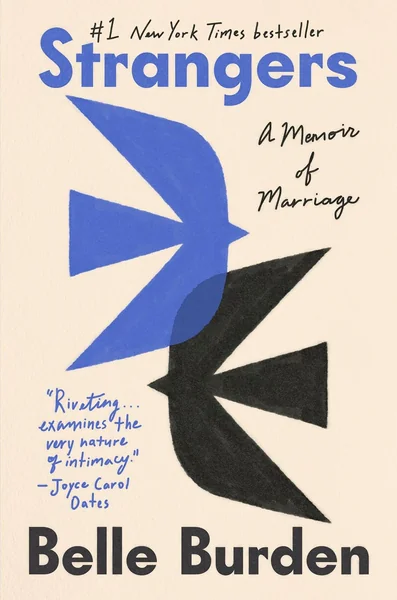
Strangers: A Memoir of Marriage by Belle Burden front cover

What the Memoir Is and What It Covers

Strangers: A Memoir of Marriage is Belle Burden's account of the sudden end of her twenty-year marriage, set against the disorienting backdrop of the first weeks of the COVID-19 pandemic in 2020. Burden is a Harvard-educated lawyer and the child of Amanda Burden and Carter Burden, with deep roots in American old money — a Vanderbilt descendant on her father's side and connected to Henry Morgan Tilford, a founder of Standard Oil, on her mother's. She and her husband — referred to throughout the book by the alias James — met as colleagues at a large New York City law firm, married after a quick courtship, and built a life together that included three children, a Tribeca apartment, and a second home on Martha's Vineyard. The memoir documents how that life came apart: one evening early in the pandemic, Burden received a message from a stranger revealing that James was having an affair. He admitted to it, left the island by the next morning, and asked for a divorce — relinquishing any desire for custody of their children. The book traces the psychological aftermath of that rupture, the divorce process itself, and its reverberations through their social circle and family.
no matter who you talk to — your mom, your friend, your co-worker — they're all telling you, 'You've just got to read this book.'

Cultural Footprint and Publishing Significance

Few memoirs in recent memory have arrived with the momentum that Strangers generated. It debuted at No. 1 on critical coverage hardcover nonfiction list, and The New Yorker noted that four months after its January 2026 publication the book was in its ninth printing and still hovering near the top of the rankings — calling it "the runaway publishing phenomenon of the year." Burden appeared on Good Morning America and sat for interviews with Oprah Winfrey, Billy Bush, and Drew Barrymore. On NPR's All Things Considered, co-host Juana Summers captured the book's word-of-mouth reach by asking whether listeners had encountered that rare book "no matter who you talk to — your mom, your friend, your co-worker — they're all telling you, 'You've just got to read this book.'" After a bidding war, Netflix acquired the rights to adapt the memoir, with Gwyneth Paltrow set to star in and executive-produce, and playwright Heidi Schreck writing the screenplay.

Strengths: Emotional Resonance and Financial Reckoning

The New Yorker described Strangers as "a poignant account of how the end of a relationship can cast everything that came before it into shadow and uncertainty," crediting it with capturing "the panic and sorrow of suddenly not being able to recognize the person you are closest to." That emotional core — universal in its grief even when specific to Burden's rarefied circumstances — is widely cited as central to the book's broad appeal. Beyond the personal, the memoir prompted substantive public conversation about the financial structures of marriage. Burden chronicles her decisions to stop practicing law and cede full financial management of the couple's lives to James, including granting him 50% ownership of properties purchased partly with her own inherited trust funds. CNBC and the Wall Street Journal both engaged with the book as a cautionary tale about the financial vulnerabilities women can accumulate inside marriage — a reading Burden herself has encouraged in interviews, expressing hope that the book would prompt women to examine their own financial lives. The book grew from a viral essay Burden published in critical coverage "Modern Love" column in June 2023, and The New Yorker noted that the memoir's opening chapter — which expands that essay — is "fittingly cinematic."

The Privilege Problem: A Specific Critical Tension

No serious engagement with Strangers sidesteps the question of Burden's extraordinary wealth, and the most pointed criticism of the memoir clusters around this tension. Critics wrote that "while Strangers is not necessarily about privilege and status, those are, inescapably, Burden's worlds" — a framing that captures both the book's social texture and the limits of its universality. The New Yorker went further, observing that Burden's considerable inherited wealth ultimately protected her from the financial ruin that the narrative at times implies — a complication that, for some readers, deflates the cautionary-tale framing. A separate New Yorker piece noted that a review of court documents raised further questions about the accuracy of certain financial claims in the memoir. Critical coverage's review, by Jennifer Reese, described the book as a "hypnotic nail-biter" while also noting, per Wikipedia's reception summary, "there is an admirable gracio—" (the excerpt cuts off), suggesting that Reese found grace in Burden's telling even where the backdrop is gilded. Readers who find it difficult to engage with accounts of multimillion-dollar real estate, private clubs, and inherited trust funds as the backdrop for victimhood may find their patience tested.

Who This Book Is For

Strangers is designed for readers drawn to memoir at the intersection of marriage, identity, and money — and for anyone who has followed the cultural conversation the book sparked about women's financial autonomy within partnership. Its origins as a viral essay give the opening a cinematic compression, and the full memoir expands that into a broader reckoning with how Burden made the choices she did and what she lost — and retained — when they unravelled. Readers interested in the sociology of elite American life will find a specific and closely observed portrait of that world. Those looking for a financial self-help guide will find the book's personal narrative a richer, if less systematic, vehicle for that conversation than a manual would offer. Given the scale of its reception, Strangers has clearly connected with readers well beyond the demographic it depicts — though the extent to which any individual reader bridges Burden's world and their own remains, as the critics note, an open question.

Sources & Further Reading

The key facts and claims in this review are grounded in the retrieved, verified sources listed below.

  1. Cited in this review
  2. 1
  3. 2
  4. 3
  5. 4
  6. Further reading
  7. 5
  8. 6
  9. 7
  10. 8