9 min read
4.4
· 5,926 Amazon ratingsShare This Review

Our review
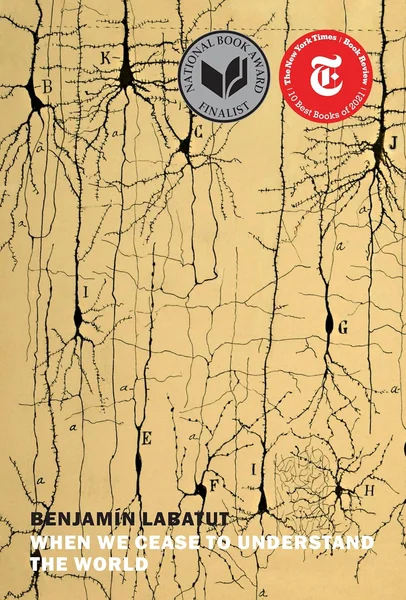
When We Cease to Understand the World
When We Cease to Understand the World by Benjamín Labatut Review: A Haunting Blend of Science and Fiction
When We Cease to Understand the World is a work of hybrid fiction-nonfiction by Chilean writer Benjamín Labatut, originally published in Spanish as Un Verdor Terrible and translated into English by Adrian Nathan West. Named one of the 10 Best Books of 2021, it weaves together the lives of revolutionary scientists — among them Fritz Haber and Werner Heisenberg — exploring the moral costs and psychological toll of pursuing knowledge to its outermost limits. Its deliberate blurring of historical fact and invented detail is both its most distinctive achievement and its most contested quality.
LuvemBooks Verdict
Best for
Readers drawn to meditative, formally unconventional literary fiction — particularly those interested in the moral and psychological costs of scientific discovery — who are comfortable with a Sebaldian blend of documented history and invented interiority.
Worth it if
Worth reading if you are drawn to hybrid literary forms that accumulate dread and wonder rather than resolve them, and can sit with the deliberate uncertainty of not knowing where historical fact ends and fiction begins.
Skip if
Skip it if you want clear boundaries between biography and fiction, narrative momentum, or moral resolution — this book offers none of those, by design.
What readers & critics say
The New Yorker's Ruth Franklin reviewed the book as a "Sebaldian blend of history and fiction" that "grapples with science's moral quandaries," while raising pointed questions about what is real and what is imagined. Bookmarks Reviews reports an overall Positive rating across six book reviews, with critics noting that "Labatut's imagination may run lurid, but his prose is masterfully paced and vividly rendered in Adrian Nathan West's magnetic translation."
“Labatut's high-concept approach makes room for an emotional impact; you can feel the center stop holding as scientific triumphs become Pyrrhic victories.”
— Kirkus Reviews“A Sebaldian blend of history and fiction — but what is real and what is imagined?”
— The New YorkerAsk LuvemBooks
Was this helpful?
- Is it worth reading?
- For readers drawn to formally unconventional literary fiction willing to sit with ambiguity, the critical record makes a strong case: the book was named one of the New York Times Book Review's 10 Best Books of 2021, ranked 83rd on the Times' 2024 list of the 100 Best Books of the 21st Century, and shortlisted for the International Booker Prize. Critics described it as "haunting" and compared it to W.G. Sebald — a lineage that signals meditative, morally serious work rather than plot-driven storytelling. Readers who come expecting narrative momentum, clear ethical conclusions, or clean separation between biography and fiction are unlikely to find satisfaction, but those comfortable with ambiguity and compression will find a work whose cumulative effect is widely regarded as its defining achievement.
- Similar books
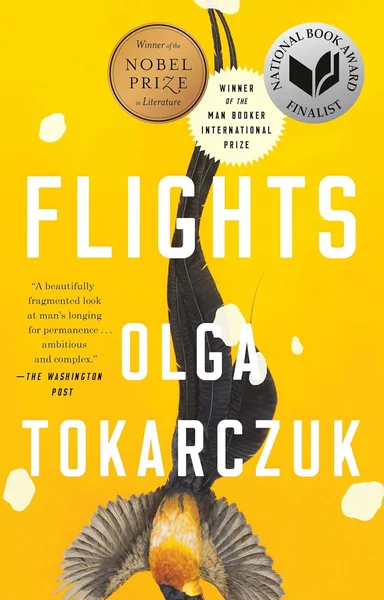
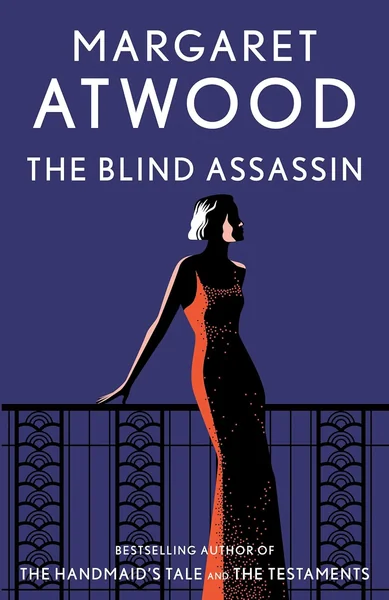
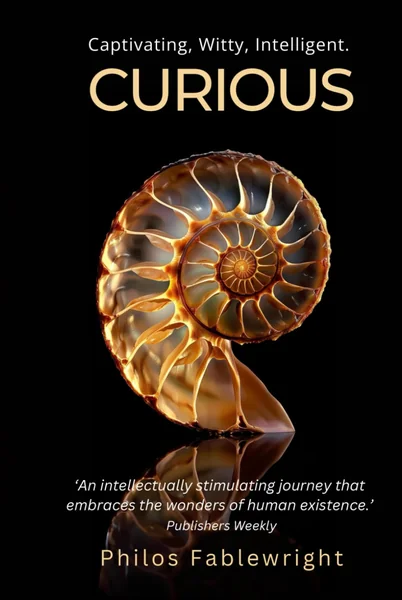
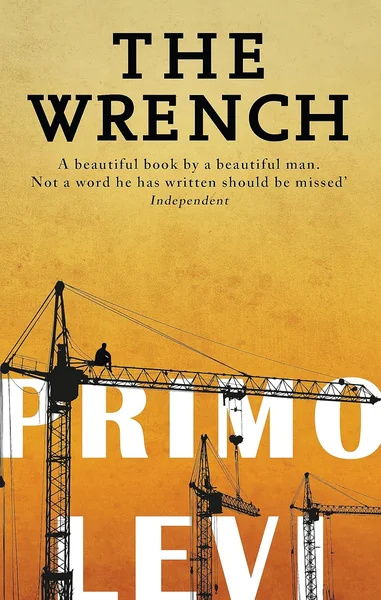
- Readers drawn to When We Cease to Understand the World's blend of fact, invention, and philosophical inquiry will find kindred works among the titles curated below. Curious by Philos Fablewright offers a similarly captivating fusion of fiction, philosophy, science, and history. Olga Tokarczuk's Flights shares Labatut's formally fragmented, essayistic structure and its willingness to sit with unanswered questions. Primo Levi's The Wrench engages seriously with the human dimension of technical and scientific labor, though in a warmer register. For readers who appreciate hybrid literary ambition more broadly, Margaret Atwood's The Blind Assassin and Junot Díaz's The Brief Wondrous Life of Oscar Wao — both formally inventive works — are also gathered in the cards below.
- Who should read this?
- When We Cease to Understand the World is best suited to adult readers already comfortable with hybrid, formally unconventional literary fiction — those who respond to what critics called the "Sebaldian" mode: meditative, essayistic, and willing to sit with ambiguity rather than demand resolution. A background interest in the history of science is helpful but not required; the book uses figures like Fritz Haber and Werner Heisenberg as moral and psychological case studies rather than instructional subjects. Readers who require clear demarcation between biography and fiction, or who come expecting a conventional narrative arc, are likely to find the book's method frustrating rather than rewarding.
- What are the main themes?
- The book's thematic spine is sacrifice — specifically the psychic and ethical costs borne by those who push at the outermost boundaries of knowledge. Labatut traces how discoveries that transform civilization can simultaneously corrode or destroy the people who make them: Fritz Haber's synthesis of nitrogen fertilizer fed billions, yet his work also enabled chemical weapons; Werner Heisenberg's physics reshaped the understanding of reality at the quantum level, at enormous psychological cost. Running through every piece is not triumphalism about scientific genius but a reckoning with the darkness that can accompany it — what critics described as exploring "the dark side of science." The book also engages with the nature of uncertainty itself, asking what it means to pursue knowledge past the point where intuition can follow.
- How much of it is true?
- This is the book's central and most discussed quality. Labatut draws on historically documented figures and events — the lives of Fritz Haber and Werner Heisenberg, for instance, are real — but he deliberately weaves invented scenes and imagined interior states alongside verified facts, without signaling the transitions. As critic Ruth Franklin framed it in her coverage, the question of "what is real and what is imagined" is central to the reading experience. This is a feature of the book's design: it asks readers to inhabit the same uncertainty the scientists themselves faced as their theories outran intuition. The ethical stakes of fictionalizing real figures' inner lives are ones the book invites but does not fully resolve.
- How is the English translation?
- The English translation is by Adrian Nathan West, published by New York Review Books in 2021. West's translation has drawn no notable criticism from the sources available to LuvemBooks, and the book's English-language critical reception — including the New York Times Book Review's 10 Best Books recognition and the International Booker Prize shortlist — has been as strong as its Spanish-language origins would suggest. For readers concerned about something being "lost in translation," the evidence from reviewers points to a successful rendering.
Summarize this book
Follow up
Synthesized from verified book data & published reviews · How we review
What would you like to know about When We Cease to Understand the World?
Answers come from our editorial notes on this book. If we haven't covered something, we'll say so.
Readers often ask
Our Review
What the Book Actually Is
The Central Argument and Moral Architecture
Its Place in Contemporary Literature

The Deliberate Blurring of Fact and Invention
Who This Book Is For
Sources & Further Reading
The key facts and claims in this review are grounded in the retrieved, verified sources listed below.
- Cited in this review
- 1
claytondavis.substack.com
- Further reading
- 2
en.wikipedia.org
- 3
- 4
- 5
litreadernotes.com
- 6
- 7
- 8
Age & Reading Level
Recommended age
Adult
2 content notes · who it suits
Content to know about
Skip if you want clear narrative resolution, clean separation between biography and fiction, or a conventional story arc with moral verdicts.
Reader reviews
Be one of the first readers to answer.
Read it? Was it right for you?
Books like When We Cease to Understand the World
Curated picks for readers who enjoyed When We Cease to Understand the World, with our reasoning for each match.

If you liked When We Cease to Understand the World