BOOKS
Published

Read Time

8 min read

Reader rating

4.4

· 59,590 Amazon ratings
reader ratings, not a LuvemBooks score
Curated & edited by

LuvemBooks Editorial

How we create our reviews →
Share This Review

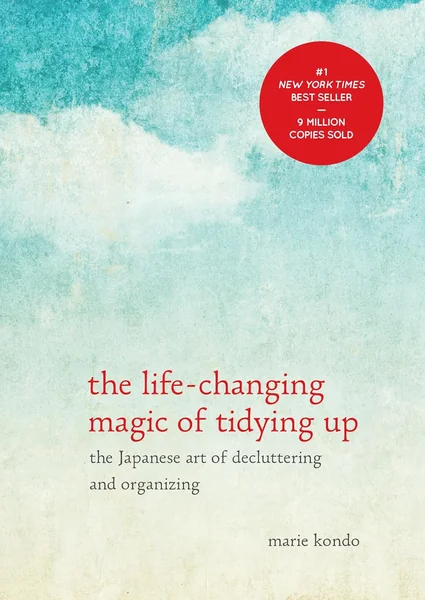
The Life-Changing Magic of Tidying Up by Marie Kondō Review: A Revolution in Home Organization

Marie Kondō's The Life-Changing Magic of Tidying Up, published by Ten Speed Press in its first North American edition in 2014 and translated from Japanese by Cathy Hirano, is a self-help guide built around the KonMari Method — a systematic, philosophy-driven approach to decluttering that promises a permanent, rather than cyclical, transformation of the home. A #1 New York Times bestseller that CNN named one of the most influential books of the decade, it has sparked a genuine cultural movement, inspiring a hit Netflix series and reshaping how millions of people think about the objects they own.
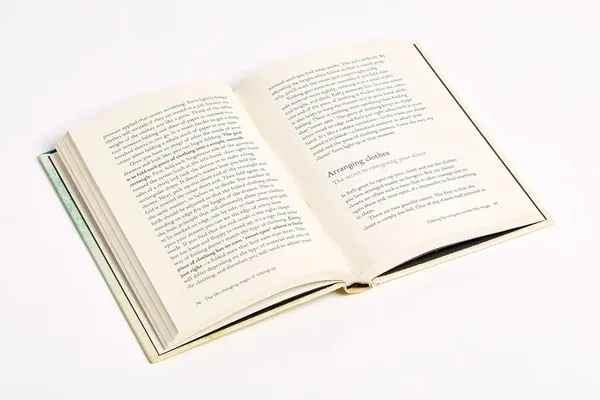
Open book showing interior pages with dense text in multiple paragraphs, demonstrating the organizational guide's written content.Tap to enlarge

LuvemBooks Verdict

Best for

Readers fatigued by cyclical clutter who are ready to commit to a single, comprehensive overhaul of their relationship with possessions — particularly those drawn to minimalism, intentional living, or Japanese domestic philosophy.

Worth it if

You're willing to engage with the KonMari Method as a complete philosophy — not just a set of tips — and can dedicate time to a thorough, category-by-category reckoning with everything you own.

Skip if

You live in a shared household, have limited time for a large-scale single session, prefer gradual room-by-room progress, or are put off by animistic ideas such as thanking objects before discarding them.

Barnes & Noble's product page confirms the book is a "#1 New York Times Bestseller" and "one of the most influential books of the decade," and notes it inspired the hit Netflix series Tidying Up with Marie Kondō. Independent reviewers at headbutler.com and hoardinghomesolutions.com.au broadly affirm the method's practical impact, though thedeepdish.org raises a pointed critical irony: that the book itself is "hopelessly cluttered and repetitive," and notes that critical reviewers of the English translation have flagged similar reservations.

Sources: Barnes & Noble, headbutler.com, hoardinghomesolutions.com.au, thedeepdish.org
4.4from 59,590 Amazon ratings— reader ratings, not a LuvemBooks score
In This Review
  • What Works & What Doesn't
  • What the Book Actually Is and Argues
  • Cultural Significance and Reach
  • Strengths: Specificity and Philosophical Coherence
  • Limitations and Who May Resist It
  • Who This Book Is Genuinely For

What Works & What Doesn't

What Works
  • A #1 New York Times bestseller with documented decade-long cultural influence, including a Netflix series adaptation
  • Presents a structured, category-sequenced method (clothes, books, papers, komono, mementos) rather than vague motivational advice
  • Explicitly addresses and refutes common but ineffective tidying habits, giving the method clear logical grounding
  • Integrates practical techniques — such as vertical folding — with a coherent philosophy of intentional ownership
  • Translated by Cathy Hirano from a Japanese original, bringing a distinctive organizational tradition to a broad English-language audience
What Doesn't
  • The all-or-nothing methodology — a single comprehensive declutter rather than gradual progress — sets a high practical bar that will not suit every reader's schedule or living situation
  • Animistic elements, such as thanking objects before discarding them, are integral to the method and may be a point of resistance for more skeptical readers
Marie Kondō's The Life-Changing Magic of Tidying Up is a rigorously argued, philosophy-first self-help guide that treats the act of decluttering as a path to personal transformation — and the cultural record shows it resonated far beyond the organization shelf.

What the Book Actually Is and Argues

Open book showing interior pages with dense text in multiple paragraphs, demonstrating the organizational guide's written content.
This is not a room-by-room cleaning manual. Translated from Japanese by Cathy Hirano — the original, Jinsei ga tokimeku katazuke no maho, was published by Sunmark Publishing in Tokyo in 2011 — the book lays out Kondō's KonMari Method as a complete philosophy of ownership and order. At its center is a single repeating question: does this item spark joy? That test drives an entire structured sequence for discarding: clothes first, then books, then papers, then komono (miscellaneous items), and finally mementos, which carry the heaviest emotional weight and are addressed last deliberately. As the book itself states, "The KonMari Method I describe in this book is not a mere set of rules on how to sort, organize, and put things away. It is a guide to acquiring the right mindset for creating order and becoming a tidy person." The ambition is explicitly once-and-for-all — not incremental maintenance, but a single, thorough transformation.
a sacred space, a power spot filled with pure energy

Cultural Significance and Reach

Few self-help books in recent memory have crossed into genuine cultural phenomena, and this one demonstrably did. Ten Speed Press published the first North American edition on October 14, 2014, and the book went on to become a #1 New York Times bestseller. CNN designated it one of the most influential books of the decade. It inspired the Netflix series Tidying Up with Marie Kondō, extending the KonMari framework to a mainstream television audience and introducing a new generation to Kondō's ideas. Good Housekeeping (UK), as quoted in retail reception summaries, described Kondō as "the new decluttering queen" and credited the book with prompting "a craze for tidying in homes across the world." The verb "KonMari" has entered everyday English usage — a lexical achievement that marks genuine cultural penetration.

Strengths: Specificity and Philosophical Coherence

What distinguishes the KonMari Method from the crowded field of organizing advice is the systematic reasoning Kondō applies against conventional wisdom. The book explicitly names popular tidying habits — decluttering one room at a time, getting rid of one item per day, discarding by time-since-last-use — and explains why each fails to produce lasting results. Kondō also offers concrete techniques, such as vertical folding, which is designed to make the contents of a drawer visible at a glance and prevent the re-accumulation of piles. The philosophical architecture is equally deliberate: Kondō frames the home as "a sacred space, a power spot filled with pure energy," treating tidying as a means of reshaping one's relationship to objects and, by extension, to daily life. This integration of the practical and the conceptual is what reviewers and readers have consistently pointed to as the book's distinguishing quality.

Limitations and Who May Resist It

The method's greatest strength — its totality — is also the source of its most discussed friction. The KonMari approach asks readers to undertake a comprehensive, category-by-category reckoning with their possessions rather than a gradual, low-commitment process. Readers who live in shared households, have limited time for a large-scale single session, or who are skeptical of the book's more animistic ideas — such as thanking objects before discarding them — may find the framework difficult to adopt wholesale. The book's prescribed sequence and its insistence that partial or piecemeal tidying cannot achieve lasting results sets a high bar for entry, and some readers will find the all-or-nothing framing more challenging than motivating.

Who This Book Is Genuinely For

The Life-Changing Magic of Tidying Up is designed for readers ready to commit to a structural change in how they relate to their possessions, not for those seeking quick organizational fixes or room-specific tips. Its reading age designation of 16 and up reflects an audience capable of engaging with its philosophical underpinnings alongside its practical instructions. Readers drawn to minimalism, intentional living, or Japanese concepts of domestic order will find the book's argument coherent and well-developed. For those fatigued by cyclical clutter — the book's opening observation that papers still accumulate "like snowdrifts" and clothes pile up "like a tangled mess of noodles" despite constant effort — the KonMari Method offers a genuinely different premise: that the problem is not discipline, but approach.

Sources & Further Reading

The key facts and claims in this review are grounded in the retrieved, verified sources listed below.

  1. Cited in this review
  2. 1
  3. 2
  4. 3
  5. Further reading
  6. 4
    Marie Kondō — author profileHigh-authority source

    Marie Kondō, Wikipedia

  7. 5
  8. 6
  9. 7
  10. 8
  11. 9
  12. 10