Skip to content
Marie Kondō, author portrait
Photo:RISE·CC BY 2.0·
Commons

Marie Kondō

Japanese
Marie Kondo (近藤 麻理恵, Kondō Marie; pronounced [kondoː maɾie], born 9 October 1984), also known as Konmari (こんまり), is a Japanese organizing consultant, author, and TV presenter.
Kondo has written four books on organizing, which have collectively sold millions of copies around the world. Her books have been translated from Japanese into several languages, and her book The Life-Changing Magic of Tidying Up (2011) has been published in more than 30 countries. It was a best-seller in Japan and in Europe, and was published in the United States in 2014.
In 2015 she was named to the TIME 100 list of the world's most influential people.
In the United States and the United Kingdom, the profile of Kondo and her methods were greatly promoted by the success of the Netflix series Tidying Up with Marie Kondo, released in 2019, which gained Kondo a nomination for the Primetime Emmy Award for Outstanding Host for a Reality or Competition Program. Kondo opened an online store called KonMari the same year. In August 2021, Netflix released a follow-up show, Sparking Joy with Marie Kondo.
On LuvemBooks, we've reviewed The Life-Changing Magic of Tidying Up.
1
Books Reviewed

In Marie Kondō's own words

Marie Kondō delivers a presentation and demonstration of the KonMari method at the Japan Society, followed by an interview and audience Q&A.

Uploaded by JapanSocietyNYC, 2016 · Watch on YouTube ·

Also in conversation

Sorting by category, not location

Kondō stresses the importance of gathering every item of a category from the entire house into a single pile, which helps owners confront that they often possess three times more than they realized.

Folding clothes to stand upright

Kondō explains that folding should not merely compress fabric, but serve as an intentional act of conveying appreciation through the palms so that clothes can stand upright in drawers.

American homes hold far more toys

Kondō notes that while clutter issues are fundamentally universal across cultures, American households possess an overwhelmingly greater volume of children's toys compared to Japanese homes.

Teaching children to tidy with clothing

Kondō recommends starting children on tidying with folding their everyday clothes rather than organizing toys, approaching the technique playfully as if doing origami.

In order

Marie Kondō books in order

1 books; 1 reviewed on LuvemBooks. Dates and covers from Amazon.
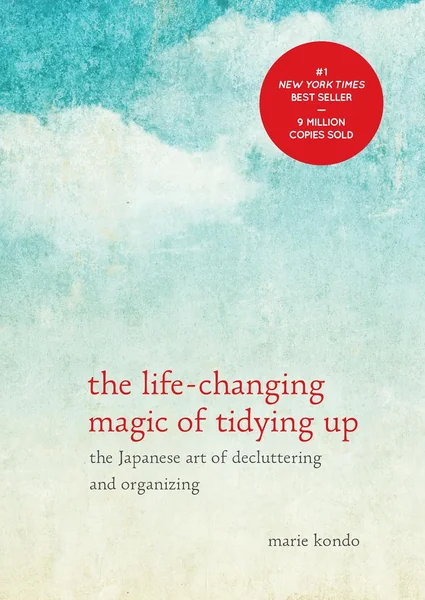
  1. The Life-Changing Magic of Tidying Up cover
    2014
    Our review →

Ask LuvemBooks about Marie Kondō

Marie Kondō is the Japanese organizing consultant whose KonMari Method — decluttering by category rather than by room, and keeping only items that "spark joy" — turned a tidying manual into a global phenomenon. We have reviewed 1 of her books, The Life-Changing Magic of Tidying Up, which lays out that philosophy-driven system and promises a permanent, one-time transformation of the home rather than endless cycles of re-cleaning. It holds a 4.4/5 reader rating from over 59,000 Amazon ratings.
Where should I start?
Start with The Life-Changing Magic of Tidying Up — it's the only Marie Kondō book we've reviewed, and it's her foundational text. It introduces the full KonMari Method, so it works as both a practical guide and an entry point into her philosophy. It carries a 4.4/5 reader rating from 59,590 Amazon ratings.
What's their writing style?
Kondō writes in a direct, encouraging self-help register, blending practical instruction with a personal philosophy about how we relate to our possessions. In The Life-Changing Magic of Tidying Up, that means systematic, category-by-category guidance delivered with the conviction that tidying is a one-time, life-altering event rather than an ongoing chore. Her tone is firm about discarding but warm about the emotional side of letting go.
Books we've reviewed
We've reviewed 1 Marie Kondō book so far: The Life-Changing Magic of Tidying Up (2014, translated by Cathy Hirano), the self-help guide that introduced the KonMari Method — tidying by category, keeping only what sparks joy — to North American readers. It was a #1 New York Times bestseller and holds a 4.4/5 reader rating from 59,590 Amazon ratings.
What genre do they write?
Marie Kondō writes in the Home & Garden and self-help space — specifically practical guides to organizing and decluttering. Her reviewed book, The Life-Changing Magic of Tidying Up, combines a concrete tidying system with a broader philosophy about living with less. It's aimed at general readers rather than professional organizers.
What is the KonMari Method?
The KonMari Method is the organizing system at the heart of The Life-Changing Magic of Tidying Up. Its two signature principles: tidy by category (all clothes at once, then all books, and so on) rather than by room, and evaluate each item by whether it sparks joy. Kondō presents it as a one-time, philosophy-driven event that permanently changes how you live, instead of an endless cycle of tidying up.
What should I read after The Life-Changing Magic of Tidying Up?
Within our reviews, The Life-Changing Magic of Tidying Up is the only Marie Kondō title we've covered, so there's no in-catalog sequel to point you to yet. If you finished it and want more, Kondō has written additional books that build on the KonMari Method beyond our current coverage. For now, re-reading the category-by-category chapters as you work through your own home is the most practical next step.
Who is Marie Kondō?

Who is Marie Kondō?

Marie Kondō, also known as Konmari, is a Japanese organizing consultant, author, and TV presenter. She became an international household name through her KonMari Method of decluttering, which asks people to tidy by category and keep only belongings that "spark joy." Her book The Life-Changing Magic of Tidying Up was a #1 New York Times bestseller.

Follow up

What is the KonMari Method?
Where can I start with her books?

Synthesized from verified book data & published reviews · How we review

​

Press Enter to ask. Answers come from our editorial Q&A — start typing to see related questions.