BOOKS
Published

Read Time

3 min read

Curated & edited by

LuvemBooks Editorial

How we create our reviews →
Share This Review

Trust by Hernán Díaz Review: A Pulitzer-Winning Metafictional Masterwork

Trust is Hernán Díaz's Pulitzer Prize-winning novel — a metafictional puzzle set in the world of New York high finance that constructs four competing fictional texts around the same secretive financier, dismantling myth, capital, and the very nature of narrative authority one layer at a time.

LuvemBooks Verdict

Best for

Readers of formally ambitious literary fiction who are drawn to novels that use structure as argument — particularly those interested in capitalism, American wealth mythology, and the politics of who controls the historical record.

Worth it if

Worth it if you're willing to engage actively with a four-part metafictional architecture where each new layer destabilises everything that came before, and you find intellectual density in literary puzzles rewarding rather than exhausting.

Skip if

Skip it if you're after a straightforward, linearly plotted historical novel — the early sections are deliberately deceptive about the book's true design, and the sustained thematic weight around capitalism and narrative unreliability makes this a demanding rather than light read.

What readers & critics say

Trust is among the most decorated American literary novels of recent years: NPR praised its metafictional maneuvers as serving the novel's larger themes about money and power, while the Pulitzer Prize organisation described it as "at once an immersive story and a brilliant literary puzzle" that confronts "the reality-warping force of capital, and the ease with which power can manipulate facts." Pull-quotes assembled by Penguin Random House reflect broad critical enthusiasm, with Oprah Daily calling it "a glorious novel about empires and erasures… Fun as hell to read," Vanity Fair labelling it "a genre-bending, time-skipping story," and Esquire describing it as "a riveting story of class, capitalism, and greed."

Trust is one of those novels that's always pulling a fast one on a reader — metadramatic maneuvers that serve the novel's larger themes.

NPR
Sources: NPR, Pulitzer Prize, Penguin Random House
4.1from 39,784 Amazon ratings— reader ratings, not a LuvemBooks score
In This Review
  • What Works & What Doesn't
  • What the Novel Is and How It Is Built
  • Significance, Awards, and Critical Standing
  • Thematic Depth: Capital, Power, and the Ownership of Story
  • Craft and Structure: The Literary Puzzle
  • Who This Novel Is For — and Where It Demands the Most

What Works & What Doesn't

What Works
  • Winner of the Pulitzer Prize for Fiction and longlisted for the 2022 Booker Prize, representing the highest level of literary recognition
  • Four-part metafictional structure — comprising a novel, an incomplete autobiography, a memoir, and a diary — makes the architecture itself the argument about power and narrative
  • Praised by Oprah Daily, the New York Times, Esquire, and Vanity Fair, reflecting broad critical enthusiasm across major outlets
  • Named one of the New York Times's 100 Best Books of the 21st Century and one of Barack Obama's favorite books of 2022
  • Engages substantively with themes of capitalism, class, the 1929 crash, and who controls the historical record — through the vivid, specific figures of Benjamin Rask, Andrew Bevel, and Ida Partenza
What Doesn't
  • The four-part, mutually exclusive structure demands active, patient reading — those expecting a conventional linear narrative may find the early sections misleading about the novel's true design
  • The novel's intellectual density around capitalism, American wealth mythology, and narrative unreliability makes it a demanding read rather than a light historical entertainment
A novel that earns every superlative thrown at it, Trust is one of the most structurally inventive American novels of recent years — and one of the most decorated.

What the Novel Is and How It Is Built

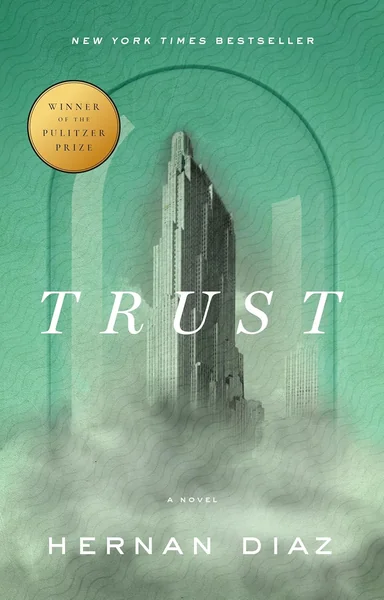
Trust (Pulitzer Prize Winner) by Hernan Diaz front cover
Trust is a 2022 literary novel by Hernán Díaz, published by Riverhead Books and set predominantly in New York City at the height of the 1920s and through the Great Depression. Its central subject is the world of high finance, refracted through four distinct fictional texts bound together under one cover. The first, Bonds, is a successful novel about the legendary Wall Street tycoon Benjamin Rask and his wife Helen, the daughter of eccentric aristocrats, whose fortune survives the 1929 crash intact even as the world collapses around them. The second, My Life, is an incomplete autobiography in which a financier named Andrew Bevel writes back against Bonds, insisting it is a slanderous portrait of his own life and offering a competing account built on two guiding principles: making one's own conditions for success and conflating personal gain with public virtue. The third, A Memoir, Remembered, is the completed memoir of Ida Partenza, who at twenty-three — her Italian anarchist-typesetter father no longer able to support them — took a job working for Bevel and eventually became the ghostwriter of his unfinished autobiography. The fourth, Futures, is a diary. Each text focuses on overlapping characters, yet the information across all four is frequently mutually exclusive, leaving the question of what actually happened — and who truly held power — entirely in the reader's hands.

Significance, Awards, and Critical Standing

The novel's reception places it among the most celebrated American literary novels of the decade. Trust won the Pulitzer Prize for Fiction and was longlisted for the 2022 Booker Prize. Penguin Random House lists it as a New York Times bestseller, one of The New York Times's 100 Best Books of the 21st Century, and one of Barack Obama's favorite books of 2022. Díaz is no stranger to major recognition — according to the Pulitzer Prize organization, his debut novel In the Distance was a finalist for both the Pulitzer Prize and the PEN/Faulkner Award — but Trust represents the full arrival of that earlier promise. Oprah Daily called it "a glorious novel about empires and erasures, husbands and wives, staggering fortunes and unspeakable misery… Fun as hell to read," while the New York Times called it "exhilarating" and Esquire described it as "a riveting story of class, capitalism, and greed."

Thematic Depth: Capital, Power, and the Ownership of Story

At its core, Trust is a sustained interrogation of who gets to write history and who gets erased from it. The Rask/Bevel figure — the self-made financier who weathers catastrophe while others are ruined — functions as an archetype of American wealth mythology, a man whose version of events is not merely self-serving but actively world-shaping. Penguin Random House's synopsis frames the novel's central preoccupation precisely: it confronts "the deceptions that often live at the heart of personal relationships, the reality-warping force of capital, and the ease with which power can manipulate facts." The figure of Ida Partenza — the young woman who literally wrote the rich man's words and then reclaims her own voice — places the question of narrative ownership at the novel's beating center. A Kirkus snippet (via Penguin Random House) notes that Díaz's development of themes including money, power, class, and marital and filial relations is "deeply insightful," and describes the novel as "cleverly constructed and rich in surprises." Barnes & Noble characterizes it as "an exploration of capital and greed and the making of myths — and what it means to trust the story you're being told."

Craft and Structure: The Literary Puzzle

What distinguishes Trust from a straightforwardly themed novel about Gilded Age excess is the formal ingenuity of its construction. The four-text architecture is not an ornament; it is the argument. As each new layer arrives, the "facts" established by the previous text are placed under pressure, destabilized, or revealed as deliberate construction. NPR noted that the novel is "constantly pulling a fast one on the reader" — a description that captures the active, puzzle-solving experience the structure demands. Vanity Fair called it "a genre-bending, time-skipping story," and that label holds: Trust moves between the registers of a gilded-age society novel, an unreliable memoir, a ghostwriter's confession, and a private diary, with each shift recalibrating the reader's understanding of everything that came before. The result, as Penguin Random House's publisher synopsis puts it, is a novel that "becomes more exhilarating with each new revelation."

Who This Novel Is For — and Where It Demands the Most

Readers drawn to formally ambitious literary fiction — novels that treat structure as meaning rather than decoration — will find Trust a genuinely rewarding experience. The four-part architecture rewards patience and active engagement; readers who prefer linear, plot-driven narratives may find the early sections of Bonds deceptively conventional before the novel's design fully asserts itself. The thematic weight placed on capitalism, the 1929 crash, and the mythology of American wealth is consistent and substantive, meaning readers seeking a lighter historical entertainment may be surprised by the novel's intellectual density. These are not flaws so much as calibrations: Trust is designed as a layered literary puzzle, and it delivers on that design at the level of both craft and ambition.

Sources & Further Reading

The key facts and claims in this review are grounded in the retrieved, verified sources listed below.

  1. Cited in this review
  2. 1
  3. 2
  4. Further reading
  5. 3
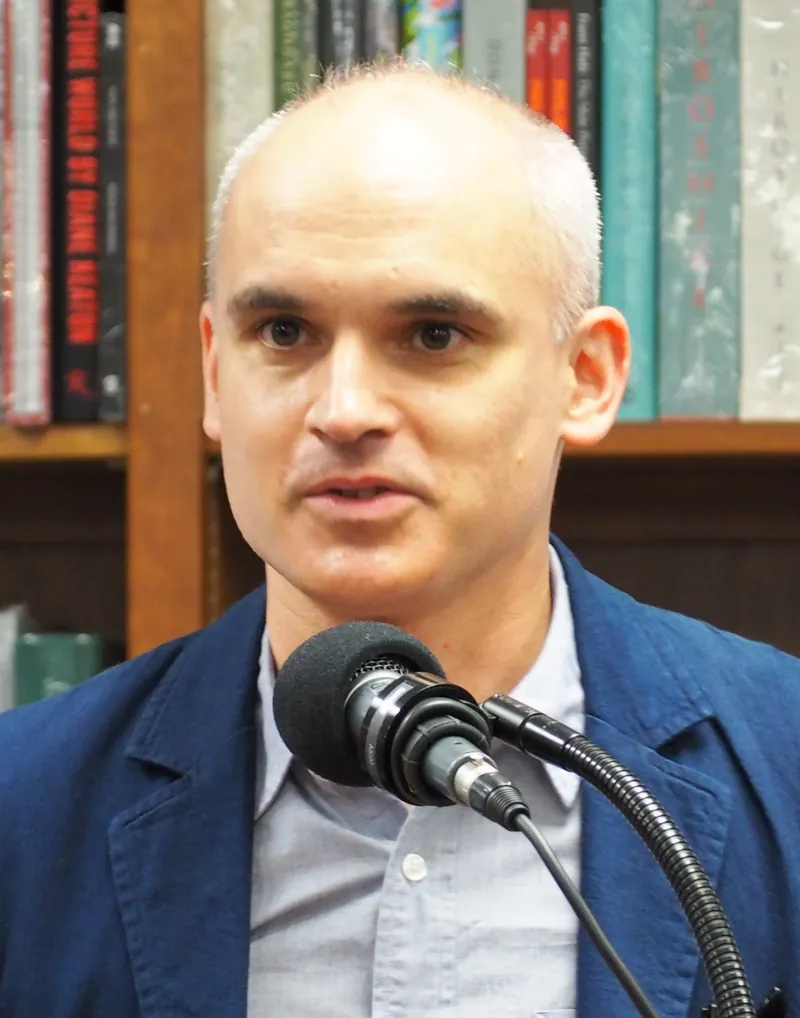
    Hernan Diaz — author profileHigh-authority source

    Hernan Diaz, Wikipedia

  6. 4
  7. 5
  8. 6
  9. 7

    hernandiaz.net

  10. 8
  11. 9
  12. 10
  13. 11
  14. 12