
8 min read
4.3
· 12,242 Amazon ratingsShare This Review
Our review
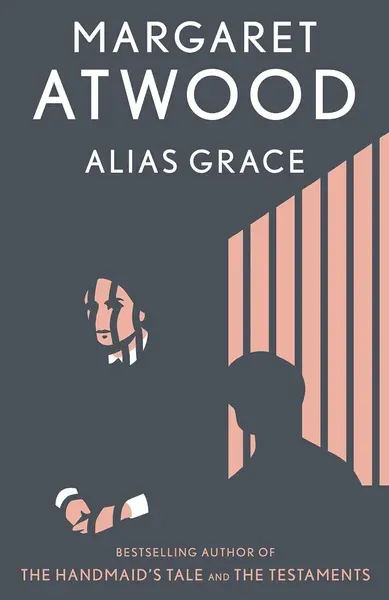
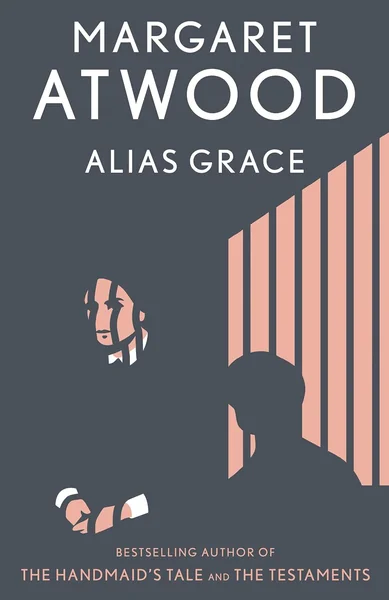
Alias Grace
Alias Grace by Margaret Atwood Review: A Gripping Historical Fiction Masterwork
Alias Grace is Margaret Atwood's historical fiction novel fictionalizing the 1843 murders of Thomas Kinnear and Nancy Montgomery in Canada West, centered on convicted servant Grace Marks and the fictional psychiatrist Dr. Simon Jordan who interviews her years into her life sentence. It won the Giller Prize, was shortlisted for the Booker Prize, and stands as one of Atwood's most celebrated works of long-form fiction.
LuvemBooks Verdict
Best for
Readers drawn to literary historical fiction who relish unreliable narrators, feminist analytical depth, and sustained moral ambiguity — particularly those interested in how gender shapes the perception of guilt and innocence in nineteenth-century colonial Canada.
Worth it if
Worth reading if you want a richly layered historical novel that combines the pacing of a crime narrative with serious literary purpose, and you're comfortable — even energised — by a central question of guilt that is never definitively resolved.
Skip if
Skip it if you're looking for a propulsive psychological thriller with a satisfying criminal conclusion, as Atwood deliberately withholds resolution and the multi-perspective structure makes for an unhurried, sometimes demanding read.
What readers & critics say
Kirkus Reviews praised Alias Grace for its "characteristically elegant prose and a mix of narrative techniques," calling it both an "eerie, unsettling tale of murder and obsession" and "a stunning portrait of the lives of women in another time," while also noting it as "a fascinating elaboration — and somewhat of a departure" from Atwood's prior work. Quill & Quire, though more measured, acknowledged the novel's deep engagement with questions of identity and truth, reflecting the broader critical conversation around how it fictionalises a real case whose facts remain irretrievably ambiguous.
“Atwood not only crafts an eerie, unsettling tale of murder and obsession, but also a stunning portrait of the lives of women in another time.”
— Kirkus Reviews“A fascinating elaboration — and somewhat of a departure for Atwood — of the life of Grace Marks, one of Canada's more infamous killers.”
— Kirkus ReviewsAsk LuvemBooks
Was this helpful?
- Is it worth reading?
- For readers drawn to literary historical fiction with genuine intellectual depth, Alias Grace is a standout. The Washington Post Book World called it a novel with "all the pacing of a commercial novel and all the resonance of a classic," and the Houston Chronicle praised its "lyrical, assured" writing, "evocative of time and place." The central caveat is the deliberately unresolved ending: Grace's guilt or innocence is never confirmed, and readers expecting a satisfying psychological or criminal conclusion will find that frustrating. Those willing to engage with sustained ambiguity — and with the novel's feminist interrogation of how women are perceived in mid-nineteenth-century colonial Canada — will find it unusually rich.
- Similar books
- Readers who respond to Alias Grace's blend of historical atmosphere, feminist inquiry, and moral ambiguity have several strong options. Margaret Atwood's own The Blind Assassin shares the layered, formally ambitious storytelling and its preoccupation with women constrained by their historical moment. The Girl Behind the Gates offers another narrative built around an institutionalised woman whose inner life and testimony are filtered through an unreliable institutional record. Hannah Kent's Burial Rites and Sara Collins' The Confessions of Frannie Langton both closely parallel Alias Grace — each fictionalises the final days or incarcerated life of a woman convicted of murder in the nineteenth century, forcing readers to weigh complicity, class, and gender against the criminal record.
- Who should read this?
- Alias Grace is best suited to adult readers of literary historical fiction who are comfortable with moral ambiguity and an unresolved ending. It will particularly reward those interested in the unreliable narrator as a formal device, the ethics of storytelling, and the position of women in mid-nineteenth-century colonial Canada. Readers drawn to true-crime adjacent narratives with serious literary intent — rather than straightforward genre thrillers — will find it a compelling fit. People magazine's summary captures the core appeal: "Villain or victim, Atwood's Grace is intriguing company."
- About Margaret Atwood
- Margaret Eleanor Atwood is a Canadian novelist, poet, literary critic, and inventor.
- Tell me about the adaptation
- Alias Grace was adapted as a Netflix miniseries in 2017, produced by CBC and written by Atwood herself. The series stars Sarah Gadon as Grace Marks and Edward Holcroft as Dr. Simon Jordan, and closely follows the novel's structure and central ambiguity. The adaptation received strong critical attention and introduced the novel to a new generation of readers, while largely preserving the book's refusal to resolve the question of Grace's guilt or innocence.
- What are the main themes?
- The novel's central themes include the unknowability of guilt and innocence, the unreliable narrator, and the ethics of storytelling when institutional records — legal, medical, journalistic — are themselves unreliable. Atwood is also deeply concerned with the position of women in mid-nineteenth-century colonial Canada: how Grace is perceived alternately as innocent dupe and cold-blooded manipulator along strictly gendered lines. Kirkus Reviews described it as "a stunning portrait of the lives of women in another time," while the recurring image of the patchwork quilt — which Grace herself sews — functions, as Kirkus noted, as "a fitting metaphor for the multiplicity of truths that Grace exemplifies."
- How does it compare to Atwood's other books?
- Kirkus Reviews identified Alias Grace as "a fascinating elaboration — and somewhat of a departure" from Atwood's prior work, noting that readers expecting a tidier psychological resolution may find the ending deliberately and provocatively open. Compared to The Blind Assassin — which LuvemBooks has also reviewed — Alias Grace is more directly grounded in documented historical events and carries a stronger crime-narrative undercurrent, while sharing that novel's layered structure and preoccupation with women whose voices are mediated or suppressed. Against The Testaments, Alias Grace is the more formally experimental of the two, assembling competing documentary sources rather than building toward a resolved narrative arc.
Summarize this book
Follow up
Synthesized from verified book data & published reviews · How we review
What would you like to know about Alias Grace?
Answers come from our editorial notes on this book. If we haven't covered something, we'll say so.
Readers often ask
Our Review
What the Novel Is and What It Does
The Historical Foundation and Atwood's Approach
Narrative Structure and Craft
Reception and Significance
Who This Novel Is For and Where It Challenges
Sources & Further Reading
The key facts and claims in this review are grounded in the retrieved, verified sources listed below.
- Cited in this review
- 1
en.wikipedia.org
- 2
kirkusreviews.com
- Further reading
- 3
Margaret Atwood, Wikipedia
- 4
bookbrowse.com
- 5
julias-books.com
- 6
penguinrandomhouse.com
Age & Reading Level
Recommended age
Adult
Tropes
From how readers and romance sites describe it, not our own reading.
3 content notes · who it suits
Content to know about
Best for: Adults — the novel's thematic content, including murder, the sexual exploitation of women in service, and sustained moral ambiguity, is best suited to mature adult readers.
Skip if you want a crime narrative that definitively resolves the question of the killer's identity and guilt.
Reader reviews
Be one of the first readers to answer.
Read it? Was it right for you?
Books like Alias Grace
Curated picks for readers who enjoyed Alias Grace, with our reasoning for each match.
More by Margaret Atwood

If you liked Alias Grace