7 min read
4.7
· 120 Amazon ratingsShare This Review
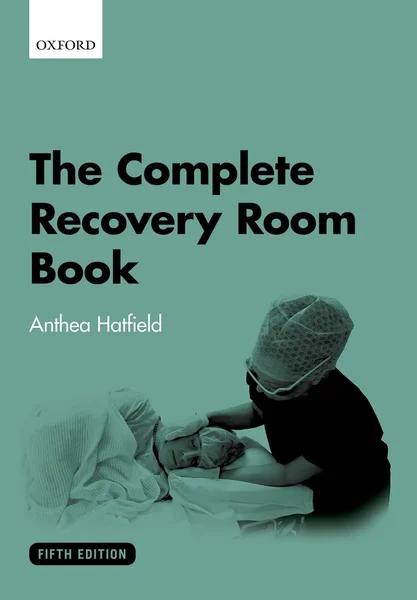
The Complete Recovery Room Book by Anthea Hatfield Review: An Essential Clinical Reference for Post-Anaesthesia Care
The Complete Recovery Room Book, now in its fifth edition from Oxford University Press, is a comprehensive clinical reference designed to guide nurses, surgeons, and anaesthetists through the complex demands of post-operative patient management. This review covers the book's content and structure as documented by the publisher and public library sources, and draws on published reception — not hands-on clinical use.
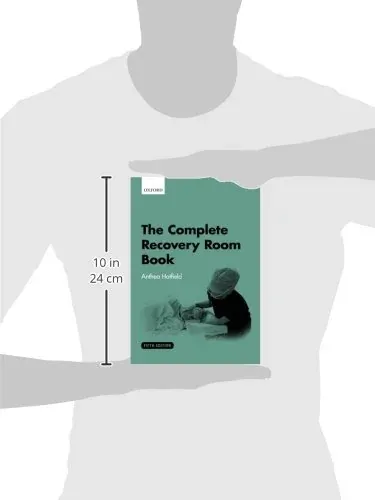 Tap to enlarge
LuvemBooks Verdict
Best for
Nurses, anaesthetists, and surgeons who need a comprehensive, science-grounded reference specifically covering the immediate post-operative recovery period and post-anaesthesia care unit practice.
Worth it if
You work in or alongside a recovery room and need a standalone, chapter-navigable resource that integrates physiology, pharmacology, equipment, and surgery-specific guidance in one volume — particularly given its sustained revision across multiple Oxford University Press editions.
Skip if
You need coverage of the broader surgical nursing pathway beyond the immediate recovery period, or require a verified prescribing reference — the publisher explicitly cautions that drug dosages must be independently cross-checked against current formularies.
What readers & critics say
A ResearchGate-hosted review of the fourth edition opens by enthusing that it is "one of those rare books" that lives up to its title, describing it as a genuinely good book. Blackwells characterises the sixth edition as "an essential resource for health care professionals involved in post-operative care."
Sources: ResearchGate (book review), BlackwellsAsk LuvemBooks
Was this helpful?
- Is it worth reading?
- For recovery room nurses, anaesthetists, and surgeons who need a structured, science-grounded reference for post-anaesthesia patient management, The Complete Recovery Room Book offers substantive depth across the full scope of the recovery period — a level of detail that goes well beyond a pocket guide. Its chapter-by-chapter standalone structure makes it genuinely usable under clinical time pressure, not just as background reading. The important caveat is Oxford University Press's own explicit warning: drug dosage information in the text must be independently verified against current formularies and local protocols, so it should not be treated as a standalone prescribing source. Practitioners needing coverage of broader surgical pathways — pre-operative or ward-level care — would need to supplement it with additional resources.
- Similar books
- Readers drawn to The Complete Recovery Room Book from a health and wellbeing angle may also find value in titles that explore the body's resilience and the connections between physical health and psychological states. Gabor Maté's When the Body Says No examines how chronic stress and suppressed emotion contribute to serious illness, offering a compelling counterpart to the clinical management perspective Hatfield provides. Jon Kabat-Zinn's Full Catastrophe Living presents mindfulness-based approaches to chronic pain and stress that complement the acute clinical focus of recovery room care with a longer-term patient wellness lens. For a more direct clinical parallel, Oxford Handbook of Anaesthesia by Keith Allman and Iain Wilson, Perioperative Care: Competencies in Nursing Practice by Suzanne Hughes, and Smith and Aitkenhead's Textbook of Anaesthesia by Alan Aitkenhead, David Rowbotham, and Graham Smith each address adjacent aspects of anaesthetic and perioperative care for professional clinical audiences.
- Who should read this?
- The Complete Recovery Room Book is written explicitly for the recovery room team: nurses, surgeons, and anaesthetists who manage patients in the immediate post-operative period. Its cross-disciplinary design — confirmed by library cataloguing records categorising it under anaesthesiology, recovery rooms, post-operative care, and post-anaesthesia nursing methods — means it functions as a shared reference across medical and nursing audiences rather than being siloed to one profession. Practitioners or advanced students seeking a science-grounded, practically structured guide to post-anaesthesia care will find it a substantive resource; those looking for a broad surgical nursing manual or pre-operative care guide are better served by a wider-scope text.
- Is the drug information safe to use clinically?
- Oxford University Press includes an explicit notice in the book: the publisher makes no representation, express or implied, that the drug dosages in the text are correct. This is standard practice for clinical references, but it is a meaningful caution — all pharmacological information should be verified against current formularies and local protocols before clinical application. The book is best understood as a guide to clinical decision-making and underlying pharmacological understanding, not a substitute for verified prescribing sources.
- Why has this book been updated so many times?
- The book's multi-edition history — reaching a fifth edition and subsequently a sixth (2020) with Oxford University Press — reflects the ongoing evolution of the field it covers. Post-anaesthesia care is a discipline where monitoring technology and pharmacology continue to advance, requiring clinical references to keep pace. Oxford University Press describes the sixth edition as bringing new drugs and monitoring techniques into the text, and the co-authorship of Dr. Anne Craig, anaesthetist at Auckland City Hospital and Greenlane Surgical Unit, signals a continued investment in keeping the content current and clinically relevant.
- What are the book's limitations?
- The book's primary limitation is intentional: it is tightly scoped to the immediate post-operative recovery period, and the publisher makes clear that depth within that defined window — rather than breadth across the wider surgical pathway — is its explicit purpose. Practitioners needing guidance on pre-operative care, intraoperative management, or ward-level post-operative care would need additional resources. The drug dosage caveat from Oxford University Press is a further practical limitation, requiring practitioners to cross-check all pharmacological information against current formularies rather than relying on the text as a standalone prescribing guide.
Summarize this book
Follow up
Synthesized from verified book data & published reviews · How we review
Press Enter to ask. Answers come from our editorial Q&A — start typing to see related questions.
Age & Reading Level
Recommended age
Adult
Reading level
Adult
Skip if you need a broad surgical nursing manual covering pre-operative, intraoperative, or ward-level post-operative care beyond the immediate recovery room window.
Our Review
What the Book Is and What It Covers
Structure and Design Intent
Significance and Longevity
Scope and Intended Audience
An Important Clinical Caveat
Sources & Further Reading
The key facts and claims in this review are grounded in the retrieved, verified sources listed below.
- 1
- 2
Books like The Complete Recovery Room Book
Curated picks for readers who enjoyed The Complete Recovery Room Book, with our reasoning for each match.