

8 min read
4.8
· 2,354 Amazon ratingsShare This Review
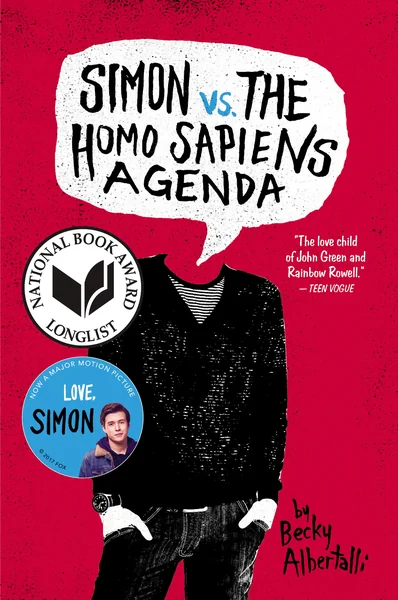
Simon vs. the Homo Sapiens Agenda by Becky Albertalli Review: A Landmark YA Coming-Out Story
Becky Albertalli's debut young adult novel follows Simon Spier, a closeted gay sixteen-year-old whose secret email correspondence with a classmate named Blue is weaponized against him by a blackmailer — a premise that earned the book the American Library Association's William C. Morris Award, a place on the National Book Award Longlist, and a celebrated film adaptation. Kirkus Reviews called it "funny, moving and emotionally wise," and the novel stands as one of the most decorated YA debuts of the past decade.
LuvemBooks Verdict
Best for
Young adult readers aged fourteen and up who are navigating questions of identity, disclosure, and belonging — particularly those who want an LGBTQ+ coming-of-age story that treats sexuality as one dimension of a fully drawn teenager's life rather than a problem to be solved.
Worth it if
You want a YA novel that pairs genuine emotional stakes — courtesy of a blackmail-driven plot — with a comedic, warm voice and a dual-format structure that builds romantic tension through both prose chapters and in-novel email exchanges.
Skip if
Readers who gravitate primarily toward high-concept or genre-driven YA (fantasy, science fiction) may find the contemporary suburban high school setting underwhelming, and those seeking a darker, more unflinching portrayal of LGBTQ+ experience may find the novel's consistently warm tone lighter than they'd hoped.
What readers & critics say
Kirkus Reviews praised the novel as "funny, moving and emotionally wise," highlighting how Albertalli renders Simon's social world with careful, seemingly effortless detail across its dual prose-and-email structure. The Guardian's children's books site captured a recurring note in the book's wider reception — that it balances warmth with credibility, with a protagonist who is genuinely funny and sweet but also fallible, and a blackmailer who earns a measure of redemption rather than serving as a flat antagonist.
“Funny, moving and emotionally wise — Simon's social world is carefully and seemingly effortlessly drawn.”
— Kirkus Reviews“Quirky and endearing, but to the point where it still feels real — Simon is funny and sweet but also makes mistakes and tries his best to make up for them.”
— The Guardian children's books siteAge & Reading Level
Recommended age
Ages 12–18
Reading level
Young adult
2 content notes · who it suits
Content to know about
Best for: Ages 14+ — themes of blackmail, coercion around sexual identity, and the ethics of disclosure suit high school readers and above
Skip if you're looking for a darker or more unflinching portrayal of LGBTQ+ experience, or for a high-concept genre plot
In This Review
- What Works & What Doesn't
- What the Novel Is and What Actually Happens
- Significance and Recognition
- Craft and Character Construction
- The Novel's Emotional Register and Authenticity
- Who This Book Is For and Where It Fits
What Works & What Doesn't
What Works
- Won the ALA William C. Morris Award and the German Youth Literature Prize, and appeared on the National Book Award Longlist — an exceptional debut haul
- Kirkus Reviews praised the novel as 'funny, moving and emotionally wise,' with character dynamics described as carefully and seemingly effortlessly drawn
- The dual-format structure — alternating prose chapters with Simon and Blue's email exchanges — builds romantic tension through two distinct narrative voices
- Secondary characters, including Nora, Abby, Leah, and Martin, pursue their own arcs rather than serving only as backdrop to Simon's story
- The blackmail-driven plot gives the coming-out narrative genuine stakes and forward momentum beyond introspective reflection alone
What Doesn't
- Readers who prefer high-concept or genre-driven YA (fantasy, science fiction) may find the contemporary suburban high school setting offers less spectacle
- The novel's warm, comedic tone means readers seeking a more unflinching or darker treatment of LGBTQ+ experience may find it lighter than expected
What the Novel Is and What Actually Happens
Significance and Recognition
Craft and Character Construction
The Novel's Emotional Register and Authenticity
Who This Book Is For and Where It Fits
Frequently Asked Questions
Sources & Further Reading
The key facts and claims in this review are grounded in the retrieved, verified sources listed below.
- Cited in this review
- 1
- 2
meanwhilebackatthelibrary.com
- Further reading
- 3
Becky Albertalli, Wikipedia
- 4
en.wikipedia.org
- 5
- 6
kirkusreviews.com
- 7
- 8
beckyalbertalli.com
- 9
themelodramaticbookworm.com
- 10
- 11
youngcreativepress.com
- 12
foreverbookish.com
Related Reviews
Reviews of books we picked for readers who enjoyed Simon vs. the Homo Sapiens Agenda.

Reader Comments
No comments yet
Be the first to share your thoughts!