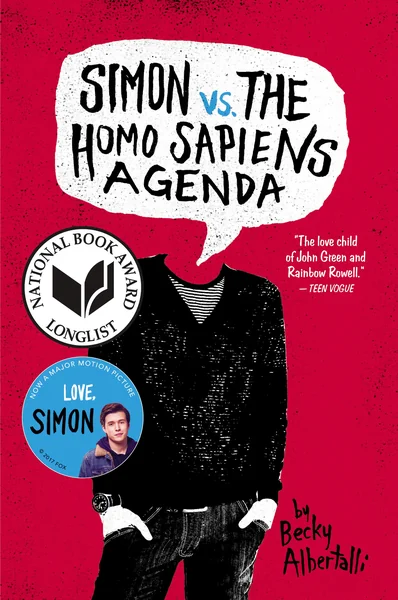
At a glance

Simon vs. the Homo Sapiens Agenda
LuvemBooks Verdict
Best for: Young adult readers aged fourteen and up who are navigating questions of identity, disclosure, and belonging — particularly those who want an LGBTQ+ coming-of-age story that treats sexuality as one dimension of a fully drawn teenager's life rather than a problem to be solved.
Worth it? Skip it? Read the full verdict →Ask LuvemBooks
Was this helpful?
- Is it worth reading?
- For readers drawn to contemporary YA, Simon vs. the Homo Sapiens Agenda is widely regarded as a defining example of the form — its awards record (the ALA William C. Morris Award, the German Youth Literature Prize, a National Book Award Longlist nod) and celebrated film adaptation confirm a reception well beyond the typical debut. The blackmail-driven plot gives it genuine forward momentum that purely introspective coming-of-age fiction can lack, and the dual structure of prose chapters interspersed with Simon and Blue's email exchanges builds romantic tension in a distinctly satisfying way. The key caveat: readers who prefer fantasy or high-concept YA may find the contemporary suburban high school setting offers less spectacle, and those seeking an unflinching or darker treatment of LGBTQ+ experience may find the tone lighter than expected.
- Similar books
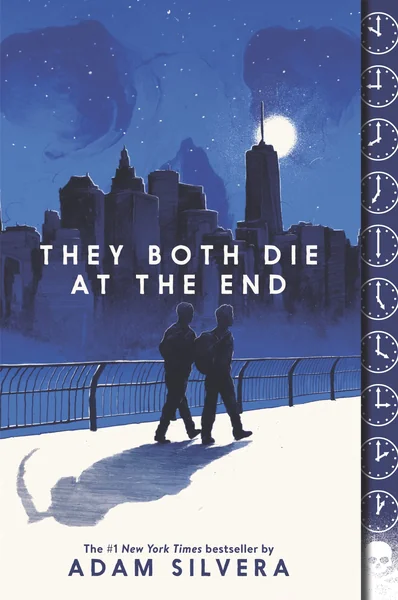
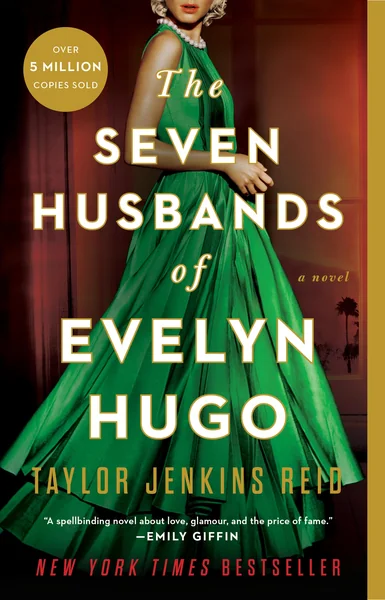
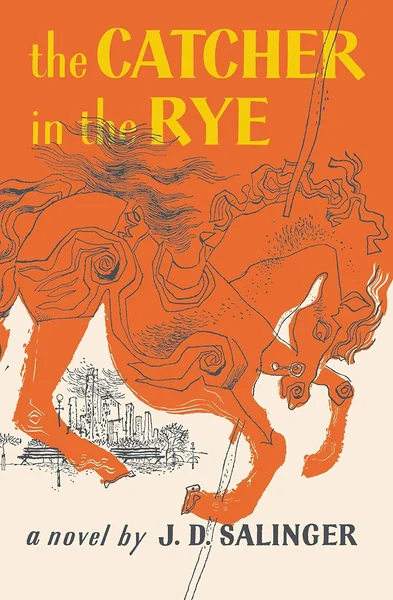
- Readers who connect with Simon vs. the Homo Sapiens Agenda will find strong company in several directions. Adam Silvera's More Happy Than Not shares the YA LGBTQ+ coming-of-age territory but takes a considerably darker, more high-concept science-fiction approach — a useful contrast for readers who want to explore how differently queer teen stories can be told. Jandy Nelson's I'll Give You the Sun (not currently in the LuvemBooks catalogue) is another critically lauded YA novel that weaves identity and art into a dual-voice narrative with a similar emotional generosity. For readers drawn to the romantic mystery element, David Levithan's Boy Meets Boy (also not in catalogue) is a foundational queer YA text. Taylor Jenkins Reid's The Seven Husbands of Evelyn Hugo and J. D. Salinger's The Catcher in the Rye, both in the LuvemBooks catalogue, offer adjacent pleasures — Reid's novel for readers who love identity, secrets, and a compulsively readable structure; Salinger's for those drawn to the authentic teenage voice at the heart of Simon's narration.
- Who should read this?
- Simon vs. the Homo Sapiens Agenda is most directly for young readers aged fourteen and up who are navigating questions of identity, disclosure, and belonging — but its awards record and crossover film adaptation confirm a reception well beyond that core audience. It is particularly well-suited to anyone who wants a YA novel that handles LGBTQ+ identity not as a problem to be solved but as one dimension of a fully drawn teenager's life. Readers who come to YA primarily for fantasy or science fiction may find the contemporary suburban high school setting offers less spectacle, and those seeking a more unflinching or darker treatment of queer experience may find the tone lighter than expected.
- What age is it for?
- Best for ages 14 and up, corresponding to grades nine through twelve. The novel's themes of sexual identity, peer blackmail, and navigating disclosure make it most appropriate for high school readers and above, and the emotional complexity of the situations Simon faces — including the ethics of his own complicity in the blackmail scheme — suits readers with the maturity to engage with moral nuance alongside the romance.
- About Becky Albertalli
- Rebecca Albertalli is an American author of young adult fiction and former psychologist.
- Tell me about the adaptation
- Simon vs. the Homo Sapiens Agenda was adapted into the film Love, Simon, released in 2018 by 20th Century Fox to both critical and commercial success. It was notably a rare mainstream theatrical debut for a gay teen love story, and the adaptation significantly broadened the novel's cultural footprint. Readers coming to the book after the film will find the source material adds a second narrative layer — the actual text of Simon and Blue's email exchanges — that the film cannot fully replicate, deepening the romantic tension through two distinct written voices.
- What are the main themes?
- The novel's central themes are identity, disclosure, and belonging — specifically, who gets to control their own coming-out story, and what it costs to have that control taken away. The blackmail plot makes these stakes concrete rather than merely introspective: Simon risks both his own secret and the trust of Blue, the boy he has fallen for through their anonymous correspondence. A secondary but important theme is moral complexity — Simon is not simply a victim; his complicity in the scheme against Abby and Martin means he must reckon with his own ethical failures. Albertalli also weaves in a pointed critique of the social expectation to come out at all, encoded in the novel's very title.
Summarize this book
Follow up
Synthesized from verified book data & published reviews · How we review
Press Enter to ask. Answers come from our editorial Q&A — start typing to see related questions.
Age & Reading Level
Recommended age
Ages 12–18
Reading level
Young adult
2 content notes · who it suits
Content to know about
Best for: Ages 14+ — themes of blackmail, coercion around sexual identity, and the ethics of disclosure suit high school readers and above
Skip if you're looking for a darker or more unflinching portrayal of LGBTQ+ experience, or for a high-concept genre plot
Editorial Review
Becky Albertalli's debut young adult novel follows Simon Spier, a closeted gay sixteen-year-old whose secret email correspondence with a classmate named Blue is weaponized against him by a blackmailer — a premise that earned the book the American Library Association's William C. Morris Award, a place on the National Book Award Longlist, and a celebrated film adaptation.…
Read the Full ReviewBooks like Simon vs. the Homo Sapiens Agenda
Curated picks for readers who enjoyed Simon vs. the Homo Sapiens Agenda, with our reasoning for each match.
If you liked Simon vs. the Homo Sapiens Agenda