BOOKS
Published

Read Time

3 min read

Reader rating

4.5

· 7,033 Amazon ratings
reader ratings, not a LuvemBooks score
Curated & edited by

LuvemBooks Editorial

How we create our reviews →
Share This Review

Soul Music by Terry Pratchett Review: Rock, Death, and Discworld Chaos

Soul Music, the sixteenth book in Terry Pratchett's beloved Discworld series, is a fantasy satire that sends rock and roll crashing into the Disc's vaguely medieval world, while Death goes absent without leave and his granddaughter Susan must grapple with fate, duty, and a destiny she never asked for. Critical coverage called the Discworld novels "comic masterpieces," describing this entry as "unfailingly amusing and sometimes hysterically funny." Available as an unabridged audiobook from Transworld Digital, narrated by Sian Clifford, Peter Serafinowicz, and Bill Nighy, the recording runs eleven hours and twenty-two minutes and was released on October 27, 2022.

LuvemBooks Verdict

Best for

Discworld fans — particularly those following the Death sub-series — who want a funny, emotionally resonant satire of rock-and-roll culture, and newcomers looking for an accessible entry point into Pratchett's world.

Worth it if

You value Pratchett's blend of satirical invention and genuine emotional warmth, especially in the Susan storyline, and can appreciate the rock-and-roll parody as gleeful fun rather than thematic depth.

Skip if

You're a seasoned Discworld reader hoping for a novel that pushes the series forward structurally — both major plot threads reprise frameworks Pratchett had already used, and the Music With Rocks In storyline runs out of steam before the end.

Kirkus Reviews calls it "unfailingly amusing and sometimes hysterically funny," placing it among a canon of Discworld novels that are "comic masterpieces," while critics at reviews.metaphorosis.com and eyrie.org find it a relative disappointment — noting that the rock-music parody feels forced and that Pratchett seems uncertain of his goals, making it one of the weaker entries in the Death sub-series.

Unfailingly amusing and sometimes hysterically funny — recommended for anyone with the slightest trace of a sense of humor.

Kirkus Reviews
Sources: Kirkus Reviews, Metaphorosis Reviews, eyrie.org, musewithmeblog.com, patricktreardon.com
4.5from 7,033 Amazon ratings— reader ratings, not a LuvemBooks score
In This Review
  • What Works & What Doesn't
  • What the Book Is and What It Contains
  • Satire, Parody, and Cultural Commentary
  • The Death Strand: Susan and Deeper Themes
  • Structural Strengths and Acknowledged Limitations
  • The 2022 Audiobook and Who This Edition Is For

What Works & What Doesn't

What Works
  • Critical coverage called the Discworld novels 'comic masterpieces,' describing Soul Music as 'unfailingly amusing and sometimes hysterically funny'
  • Susan's storyline delivers genuine emotional depth, exploring fate, duty, and mortality with Pratchett's characteristic warmth
  • The rock-and-roll satire is inventive, treating music's cultural power as a literal, world-threatening force in classic Discworld fashion
  • The 2022 audiobook features an exceptional three-narrator cast — Sian Clifford, Peter Serafinowicz, and Bill Nighy — across an unabridged 11-hour runtime
  • Accessible as a standalone entry: the publisher confirms Discworld novels can be enjoyed in any order
What Doesn't
  • Both major plot threads — Death abdicating his role and a modern phenomenon disrupting the Disc — reprise frameworks Pratchett had already used in earlier Discworld novels, giving some readers a sense of structural familiarity
  • The Music With Rocks In storyline is described by some readers as lighter and less thematically ambitious than the Death sub-series at its strongest
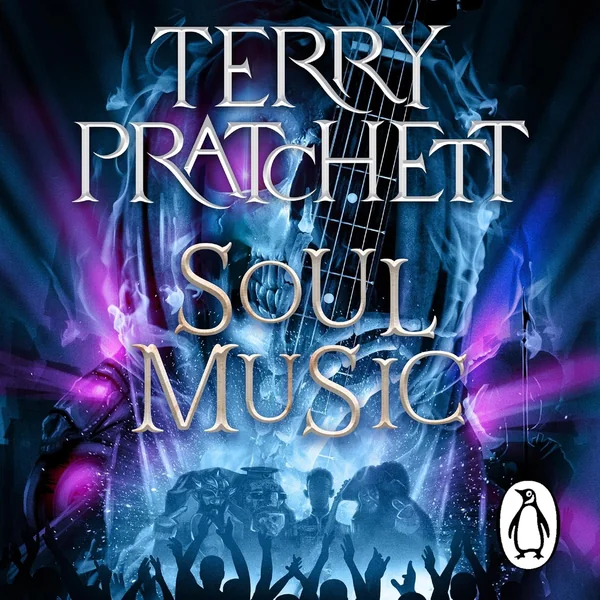
Soul Music is a rich, funny, and occasionally uneven entry in the Discworld canon — a book that fires on many cylinders while leaning on structural templates Pratchett had already established.
Soul Music: (Discworld Novel 16)_main_0

What the Book Is and What It Contains

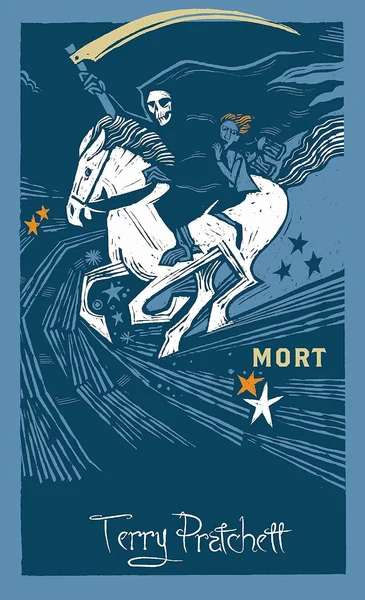
First published in 1994, Soul Music is the sixteenth Discworld novel and the third instalment in the Death sub-series, following Mort and Reaper Man. It runs two parallel storylines. In one, a young musician named Imp y Celyn arrives in Ankh-Morpork and, through a mysterious instrument, accidentally invents Music With Rocks In — a force so potent and addictive that it takes on a life of its own, reshaping everyone it touches and ultimately threatening the existence of the universe. In the other, Death — overwhelmed by grief — walks away from his duties, and his granddaughter Susan Sto Helit is pressed into taking over the reaping of souls, a role that forces her to confront questions of fate, duty, and the nature of mortality. The publisher's own description captures the premise succinctly: this is, as the official site puts it, "a story about sex and drugs and Music With Rocks In."
a story about sex and drugs and Music With Rocks In.

Satire, Parody, and Cultural Commentary

The novel's central comic engine is Pratchett's wholesale transplanting of rock-and-roll mythology — its lifestyle, its mythology of doomed genius, and its social disruption — into the Discworld's pseudo-medieval setting. As some readers have noted, Pratchett parodies the social unrest caused by the rise of rock and roll in the US and UK, treating the genre's world-altering cultural power as a literal, almost supernatural force. This is consistent with one of Pratchett's signature methods across the series: taking a modern institution or phenomenon and releasing it into the Disc to watch the chaos unfold. Critical coverage assessment, as relayed by Barnes & Noble, credits the Discworld novels as a whole with being "comic masterpieces," and singles out Soul Music as "unfailingly amusing and sometimes hysterically funny" — a verdict that reflects the satirical energy Pratchett brings to both the music storyline and the Death sub-plot.

The Death Strand: Susan and Deeper Themes

Where the Music With Rocks In plot is described by some readers as a light-hearted romp, the Susan storyline carries more emotional weight. Susan's arc examines themes that run through the entire Death series — fate, duty, and the inevitability of death — grounded by Pratchett's distinctive capacity to make mortality feel, as one reader put it, "beautiful, clean, simple." Even minor characters in this strand, such as the Death of Rats, are noted for being more than gimmicky comic relief; Pratchett consistently populates his Discworld with personalities rendered in depth regardless of their scale or role. It is in this thread that Soul Music most clearly demonstrates the emotional range that distinguishes Pratchett's best work from pure parody.

Structural Strengths and Acknowledged Limitations

Critical commentary from readers familiar with the full series points to a genuine structural tension in the novel. The "Death takes a break, and a family member steps in" framework had already powered Mort and Reaper Man, and the concept of a modern phenomenon sweeping the Disc had similarly driven Moving Pictures. Some readers describe a "writing by numbers feel" — a sense that both major plot threads are variations on patterns Pratchett had already executed. It is worth noting the context: Pratchett was producing Discworld novels at a remarkable pace in the early 1990s, and Soul Music arrived as his sixteenth novel in roughly eight years. The ambition and craft were present, but the architecture was, by some accounts, familiar. That said, the same commentary acknowledges that Pratchett was still refining his art at this stage, and that no dedicated Discworld reader would find the novel a disappointment — only that it does not push the series forward as boldly as some of its neighbours.

The 2022 Audiobook and Who This Edition Is For

The Transworld Digital audiobook, released in October 2022, brings a notably strong cast to the material. Sian Clifford, Peter Serafinowicz, and Bill Nighy share narration duties across an unabridged runtime of eleven hours and twenty-two minutes, with Whispersync for Voice compatibility for readers who move between text and audio. The ensemble casting is well-suited to a novel with two distinct narrative threads and a large cast of Discworld personalities. The official publisher guidance is that the Discworld novels can be read — or listened to — in any order, though readers arriving via the Death sub-series will have the most context for Susan and her grandfather. For those new to Discworld entirely, Soul Music is an accessible point of entry into the series' satirical worldview, even if veteran readers will find the structural echoes most pronounced here.

Sources & Further Reading

The key facts and claims in this review are grounded in the retrieved, verified sources listed below.

  1. Cited in this review
  2. 1
  3. 2
  4. 3
  5. Further reading
  6. 4

    Terry Pratchett, Wikipedia

  7. 5
  8. 6