8 min read
4.6
· 9,337 Amazon ratingsShare This Review

Our review
Snuff
Snuff: A Discworld Novel by Terry Pratchett Review: Sharp Satire Wrapped in Rural Mystery
Snuff is the 39th Discworld novel and the eighth City Watch story by Terry Pratchett, following Commander Sir Sam Vimes as a forced countryside holiday at the Ramkin estate quickly becomes a murder investigation tangled up in class prejudice and the persecution of goblins. A New York Times bestseller, it sold over 55,000 copies in its first three days — a figure that reflects the series' enduring pull on readers worldwide.
LuvemBooks Verdict
Best for
Fans of satirical fantasy and police-procedural fiction who enjoy social commentary woven into comic plotting — particularly readers already invested in the City Watch arc of the Discworld series.
Worth it if
Worth reading if you enjoy the intersection of comic fantasy and moral seriousness, especially when class prejudice and justice are skewered through the eyes of a stubbornly principled copper transplanted into English country-house territory.
Skip if
Skip it if you are entirely new to Discworld and unwilling to accept that some plot payoffs — particularly around Vimes's supernatural abilities introduced in Thud! — will carry less weight without the accumulated series context behind them.
What readers & critics say
Publishers Weekly awarded the novel a starred review, calling it "a lively outing, complete with sly shout-outs to Jane Austen and gritty police procedurals," as quoted on ampersandbooks.org. Kirkus Reviews, whose own retrieved page describes the book as a treat no Discworld fan will want to miss, and The Guardian, whose retrieved review notes Pratchett's dual use of "snuff" to connect refined social privilege with arbitrary death, both contributed to a broadly positive critical picture.
“A treat no fan of Discworld — and there are boatloads of them — will want to miss.”
— Kirkus Reviews“Pratchett's novel turns on the connection between snuff as an old-fashioned social stimulant and snuff meaning arbitrary, unpleasant deaths.”
— The GuardianAsk LuvemBooks
Was this helpful?
- Is it worth reading?
- For readers already engaged with the City Watch arc, Snuff is, as Kirkus Reviews put it, unmissable — a richly contextualised entry packed with payoffs that reward series familiarity. Publishers Weekly awarded it a starred review, calling it 'a lively outing, complete with sly shout-outs to Jane Austen and gritty police procedurals,' and the novel was a finalist for both the 2012 Locus Award and the Prometheus Award. The rural setting gives a long-running series a fresh structural frame, and the goblin-prejudice plot produces one of the City Watch series' sharpest statements on class and justice. First-time Discworld readers will find the self-contained mystery navigable, but some backstory — particularly around the Summoning Dark ability Vimes acquired in Thud! — lands with less force without prior acquaintance.
- Who should read this?
- Snuff is best suited to readers who have followed the City Watch series — ideally from Guards! Guards! onward — and who enjoy satirical fantasy that takes its social themes as seriously as its comedy. Fans of the intersection between police procedural and comic fiction, or readers drawn to the country-house mystery tradition of Austen and Agatha Christie seen through a fantastical lens, will find it a distinctive and rewarding combination. Those approaching Discworld for the first time can follow the rural mystery plot, but will miss the full significance of Vimes's accumulated character history and supernatural abilities.
- Similar books
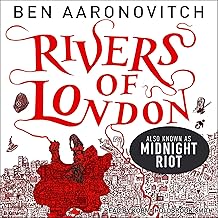
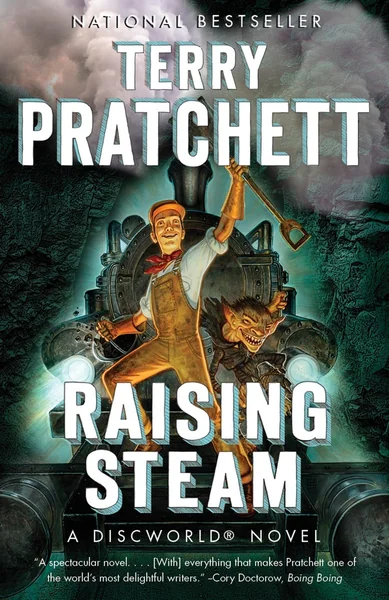
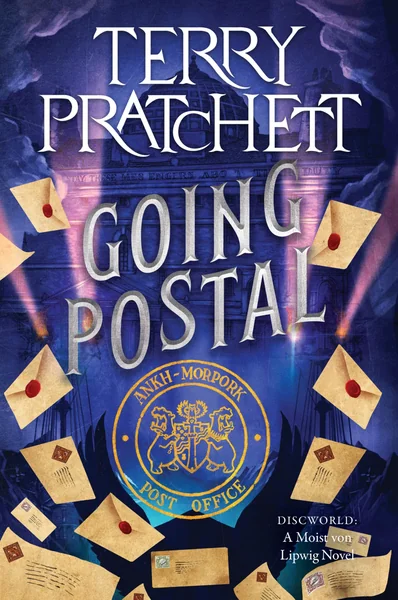
- Readers who enjoy Snuff's blend of satirical fantasy and social commentary within the Discworld universe will find more of the same in Raising Steam by Terry Pratchett, another late-series Discworld novel, and Going Postal by Terry Pratchett, which shares the City Watch world's interest in institutional reform and the redemption of unlikely heroes. For urban fantasy with a similar police-procedural flavour, Rivers of London by Ben Aaronovitch is a natural companion, while The Eyre Affair by Jasper Fforde and Howl's Moving Castle by Diana Wynne Jones offer comparable wit and literary playfulness for fans of British comic fantasy.
- About Terry Pratchett
- Sir Terry Pratchett OBE (1948–2015) was an English author born in Beaconsfield, Buckinghamshire, best known for the satirical fantasy Discworld series.
- What's this book about?
- Snuff follows Commander Sir Sam Vimes of the Ankh-Morpork City Watch, who is dispatched by Lord Vetinari on a family holiday to the Ramkin rural estate. What begins as a fish-out-of-water comedy quickly becomes a murder investigation: dinner with the local gentry exposes deep contempt for goblins, a nocturnal trip to Hangman Hill turns up a severed goblin finger, and local constable Feeney Upshot arrives to arrest Vimes himself. The novel is simultaneously a country-house mystery, a police procedural, and a pointed satire of class prejudice, with the persecution of goblins serving as its moral backbone.
- Who is it for?
- Snuff is most rewarding for readers who have followed the City Watch arc from Guards! Guards! onward and enjoy satirical fantasy that takes its social themes — class, justice, prejudice — as seriously as its comedy. Fans of police procedurals, country-house mysteries in the tradition of Austen and Agatha Christie, and British comic fantasy will find its genre-blending particularly satisfying. First-time Discworld readers can follow the plot, but will miss nuances tied to Vimes's accumulated history and the Summoning Dark backstory from Thud!
- What are the main themes?
- The central theme of Snuff is the relationship between power and prejudice, dramatised through the treatment of goblins — dismissed by the local gentry as vermin rather than people — and Vimes's instinctive resistance to that consensus on behalf of the powerless. Pratchett uses the country-house setting to satirise the English class system with specific targets drawn from the traditions of Austen and Agatha Christie, with Vimes's urban-copper sensibility providing the ethical counterweight to the landed gentry's assumptions. The dual meaning of 'snuff' — as a refined social stimulant and as arbitrary, unpleasant death — ties the novel's comedy and its moral argument together. The Prometheus Award nomination recognised its libertarian-leaning themes around the rights and recognition of an oppressed group.
- What format or source is it?
- Snuff: A Discworld Novel is available as a print book (hardcover and paperback), an e-book, and an audiobook. It was originally published in 2011 and is a New York Times bestseller, widely stocked in major retailers. LuvemBooks' assessment is grounded in the book's contents and its published critical reception, including starred reviews from Publishers Weekly and coverage in The Guardian.
Summarize this book
Follow up
Synthesized from verified book data & published reviews · How we review
Press Enter to ask. Answers come from our editorial Q&A — start typing to see related questions.
Our Review
What the Book Is and What Happens
Its Place in the Discworld and City Watch Series
Critical Reception and Recognition
Themes: Class, Prejudice, and the Thin Blue Line
Who This Book Is For
Sources & Further Reading
The key facts and claims in this review are grounded in the retrieved, verified sources listed below.
- Cited in this review
- 1
Open Library
- Further reading
- 2
Terry Pratchett, Wikipedia
- 3
Age & Reading Level
Recommended age
Adult
Reading level
Adult
Tropes
From how readers and romance sites describe it, not our own reading.
2 content notes · who it suits
Content to know about
Skip if you want a standalone fantasy with no prior-series context required
Reader reviews
Be one of the first readers to answer.
Read it? Was it right for you?
Books like Snuff
Curated picks for readers who enjoyed Snuff, with our reasoning for each match.
More by Terry Pratchett
If you liked Snuff